This could be because auto-adapt knows it doesn’t need as much heat and isn’t pushing the heat pump as hard. Note when compressor frequency starts at 40 Hz and drops to 25 Hz pretty quickly it’s pretty stable, whereas earlier it’s starting at 50 Hz and exceeding the target flow temp too soon.
If you can increase the speed of the primary pump, that will bring down the dT and may help the heat pump operate within max/min flow temps. With AA mode enabled, you can adjust these limits in the service menu under Operation settings > Heating operation:
I changed the Thermo diff setting from 5C/-5C to 5C/-9C.
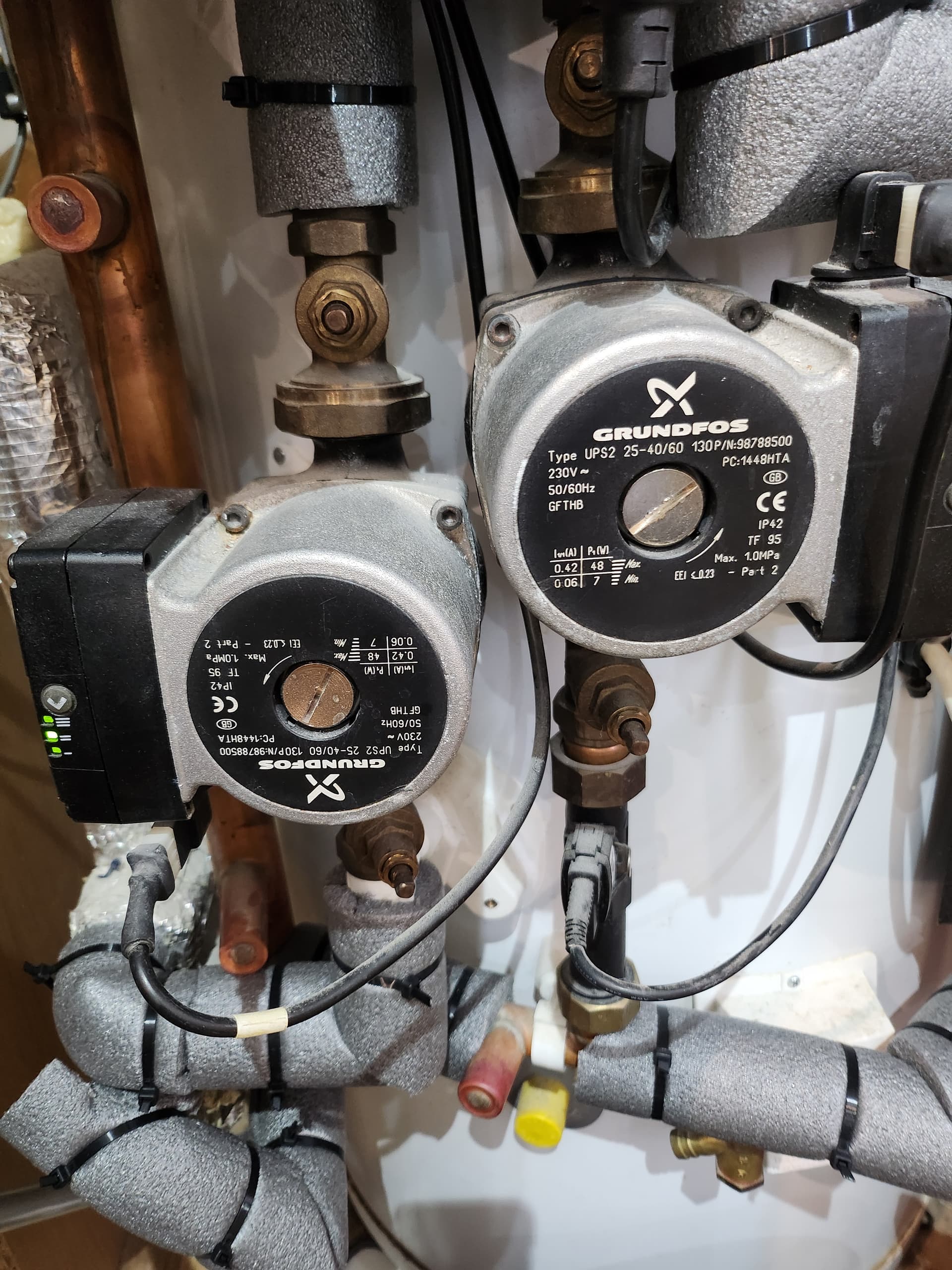
I noticed that the primary pump and secondary pump were running at different speeds. Primary -3 Secondary -1 Im given to understand that this causes distortion and a loss of efficiency?
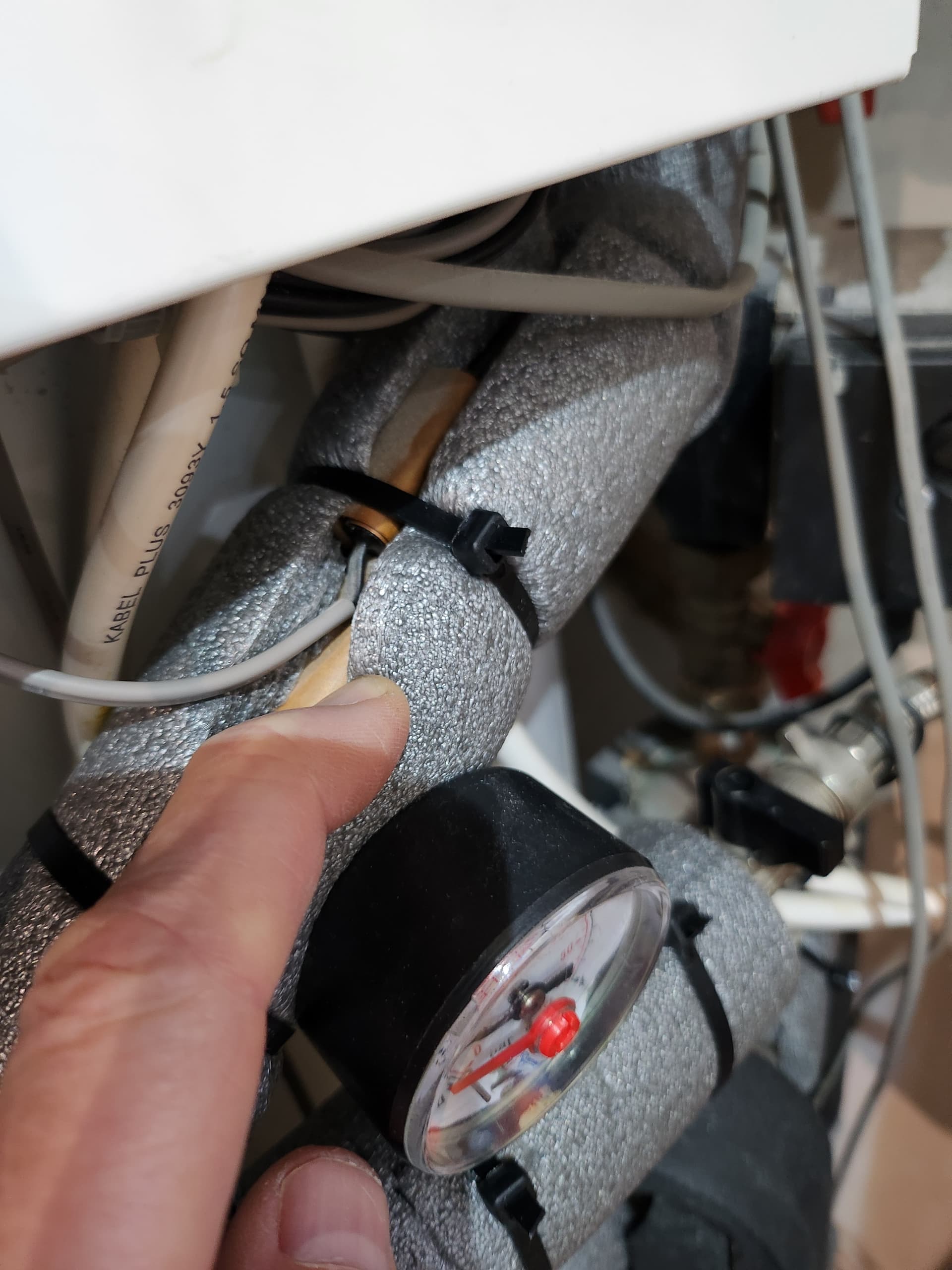
The second temperature sensor could do with insulating, but that won’t affect how the unit operates. Will just make dT seem bigger than it really is.
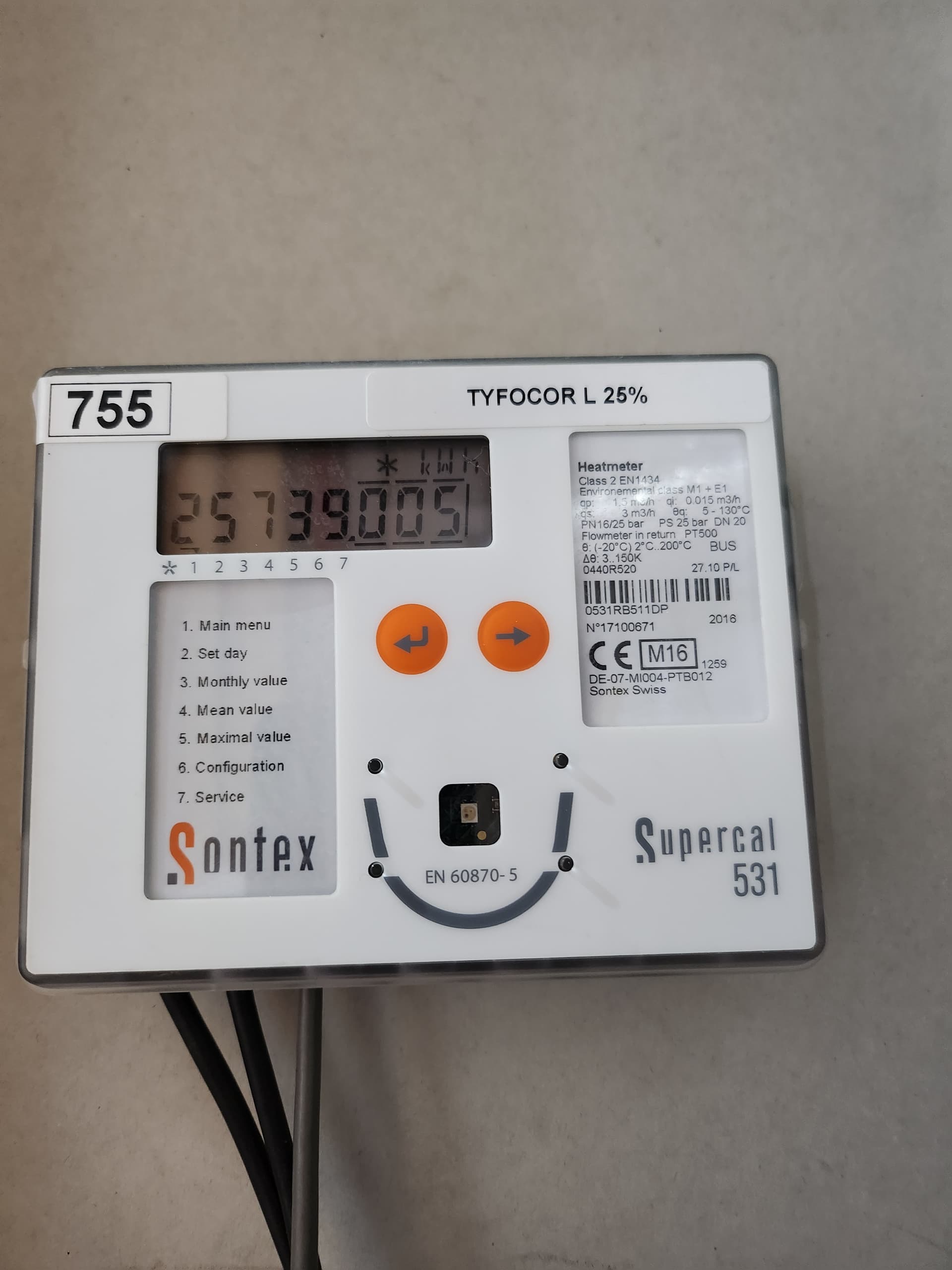
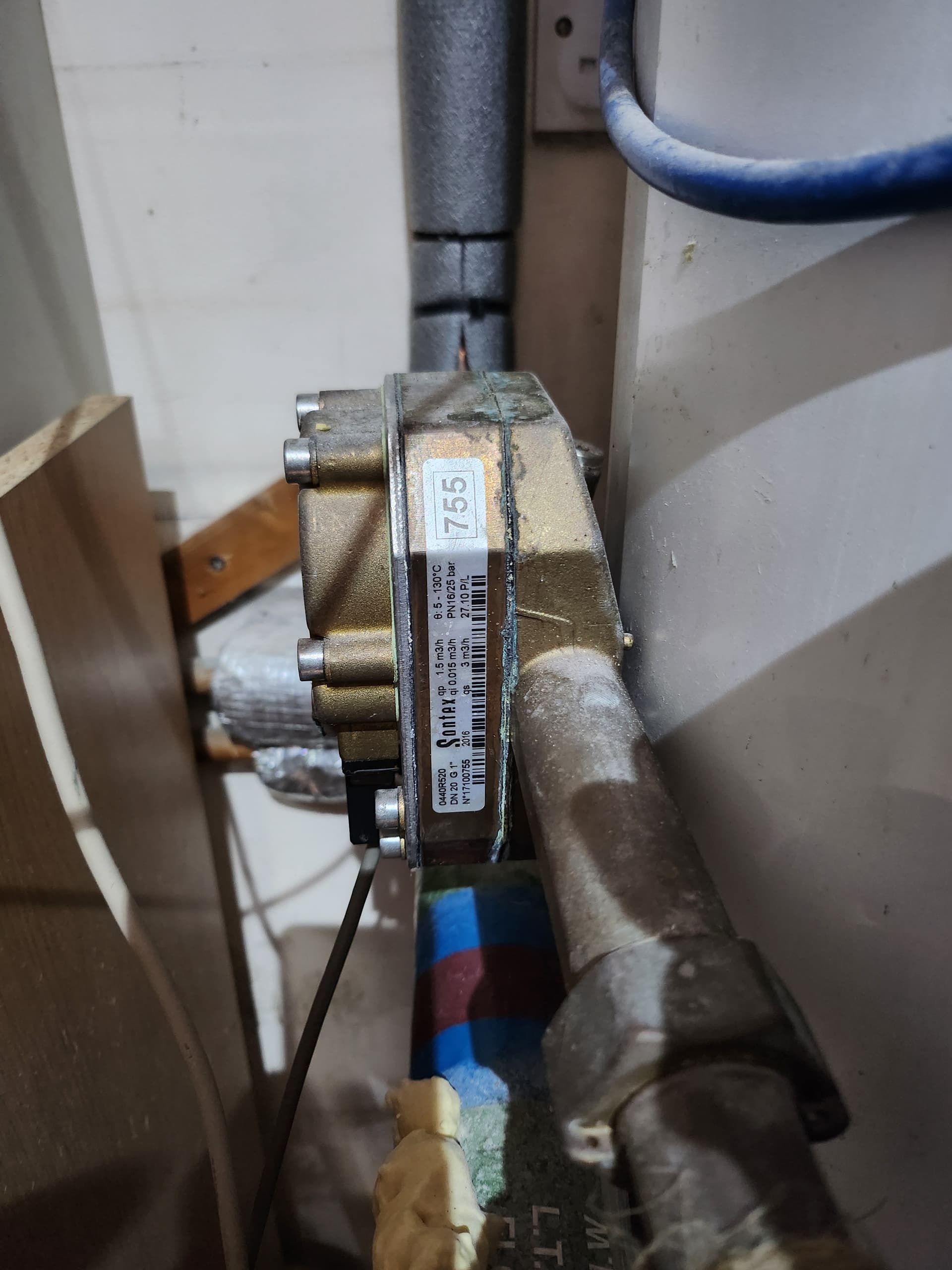
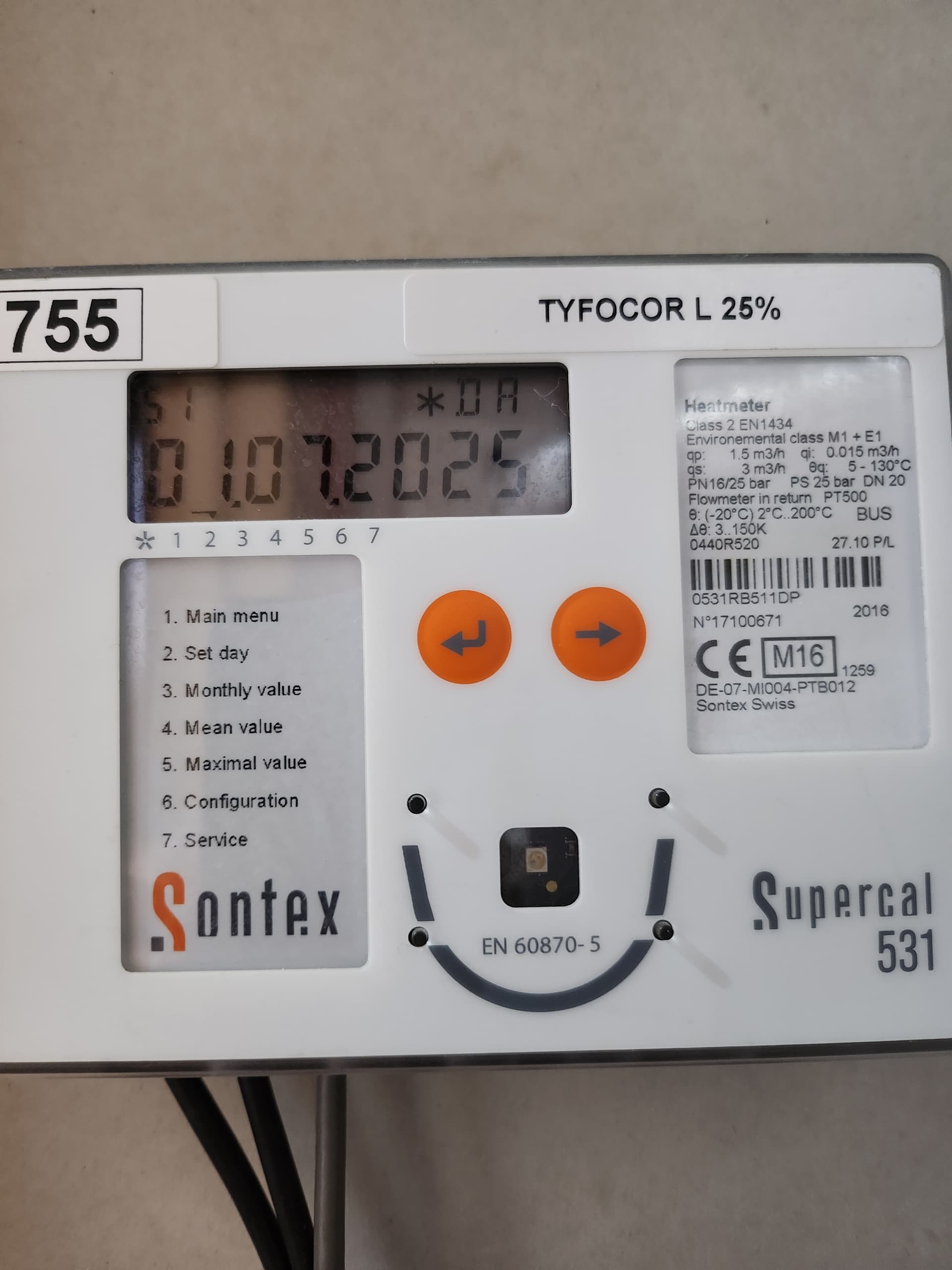
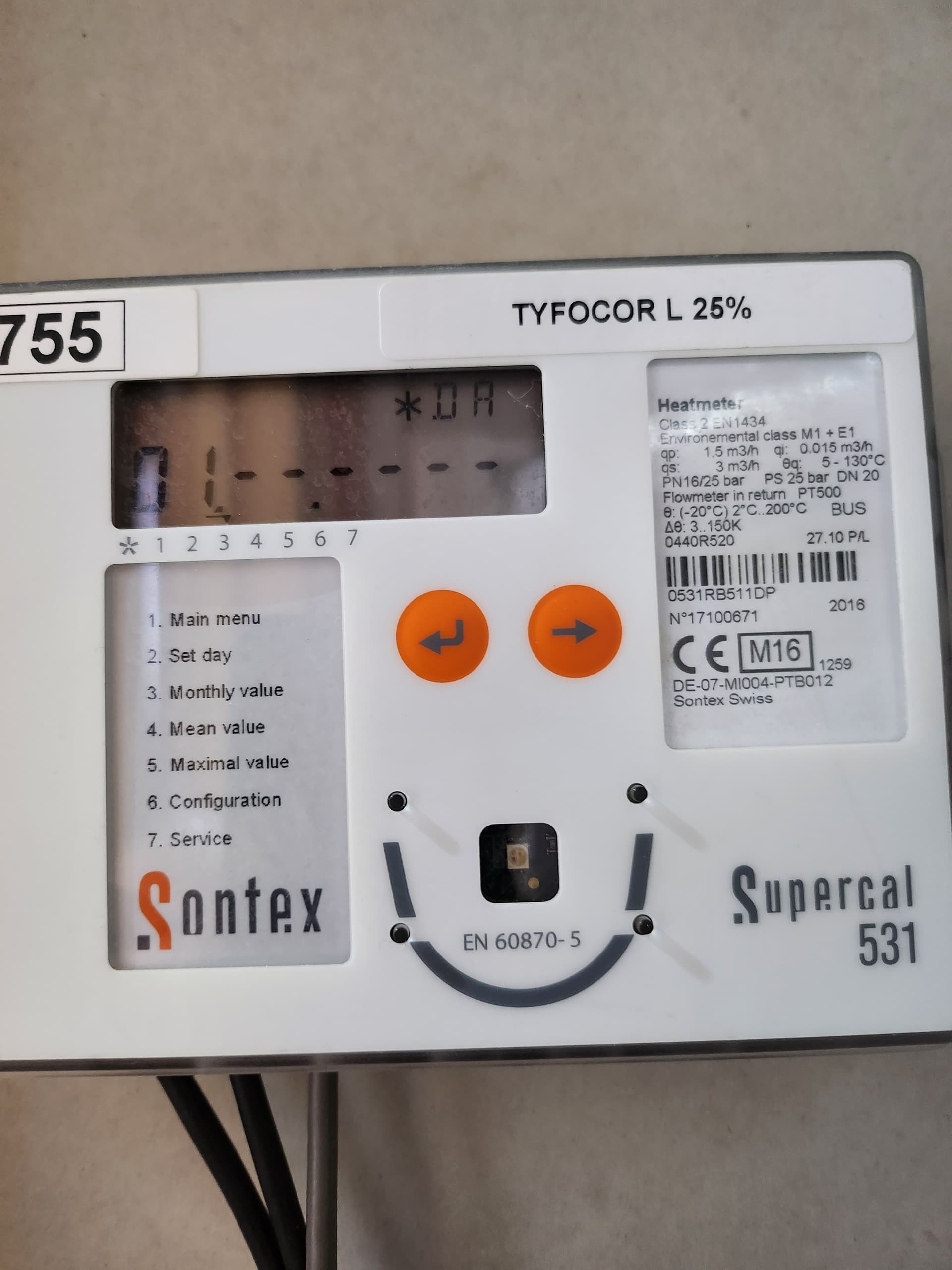
Is the Sontex heat meter wired into the Ecodan? If so, then that may be where heat power measurements are coming from, and will be affected by how well its temp sensors are installed.
Did you check the pump speed settings in the service menu?
I note that the Sontex is calibrated for Tyfocor L 25%, a solution of glycol, so heat calculations will need to be adjusted accordingly (specific heat capacity is reduced from 4180 to 3940 kJ/kg.K at 50°.
I misunderstood you about the pump speeds and thought you just meant the Thermo diff was there. The pumps seemed to controlled by the push switch on their sides with 3 settings I, II and III
Yes they are using glycol, I would like to change this to anti frost valves once the home batteries are installed.
Yes, that’s right. I have the exact same setup, and it’s wired to my Ecodan so it reports actual measured heat rather than estimating it. If this is the same for yours, this will mean that the flow and return temperatures will not be directly related to the heating power presented on Melpump. Not a problem, but worth bearing in mind.
The heat meter is showing total 25,739 kWh since installation. There will be an electric meter nearby (possibly also connected to Ecodan) that will report total consumption since installation, which will give average COP.
Ah. Looking at your photo, there are only 3 wires: flow + 2 temps. Mine has a 4th wire connecting it to the Ecodan, which yours does not. So Melpump is estimating heat power only from Ecodan’s sensors.
Probably straight forward if you follow the Ecodan FTC4 installation manual. There are a couple inputs on the controller plus a couple DIP switches. Don’t know if the electric meter bit would need to be done by a qualified electrician…
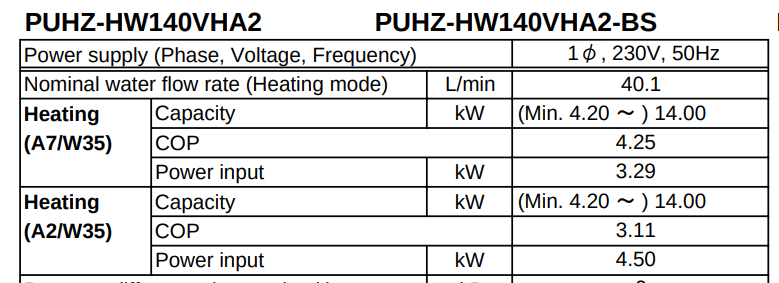
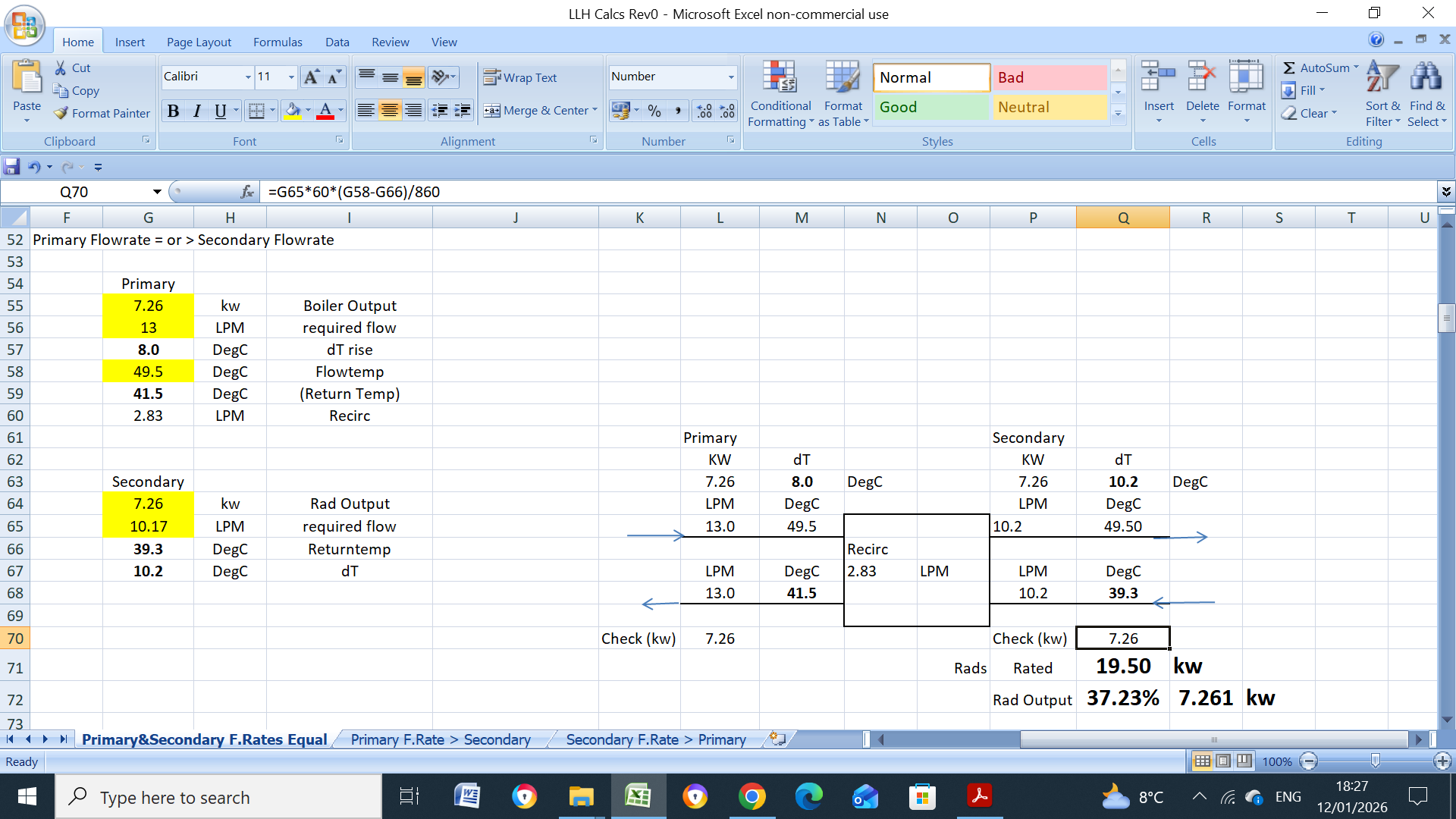
The primary pump head (from the pump curves) is 5.6M at 13LPM, by my calcs the HP might be outputting 7.26kW, if so, then a flowrate of 25.07LPM would be required to maintain (my) a dT of 8.0C which would require a pump head of 20.8M at its full output of 14kW or a pump head of 15.3M at 12kW output, no way can this be true so the 13LPM simply cannot be correct except its throttled down somewhere??.
Letting that aside, if the secondary pump is running on speed 1 and assuming the rads+system resistance is the same as the primary resistance then the secondary flowrate will be 10.17LPM at a 3.42M head giving my output of 7.26kW with primary flowrate/flowtemp/returntemp/dT of 13LPM/49.5C/41.5C/8.0C and a secondary of 10.17LPM/49.5C/39.3C/10.2C
Tim, over what period are these values? Are these “all time” and the pump has never exceeded 7kW of heat delivery, or is this over a shorter period? Thanks
Morning John. I have to admit to not following what you are doing.
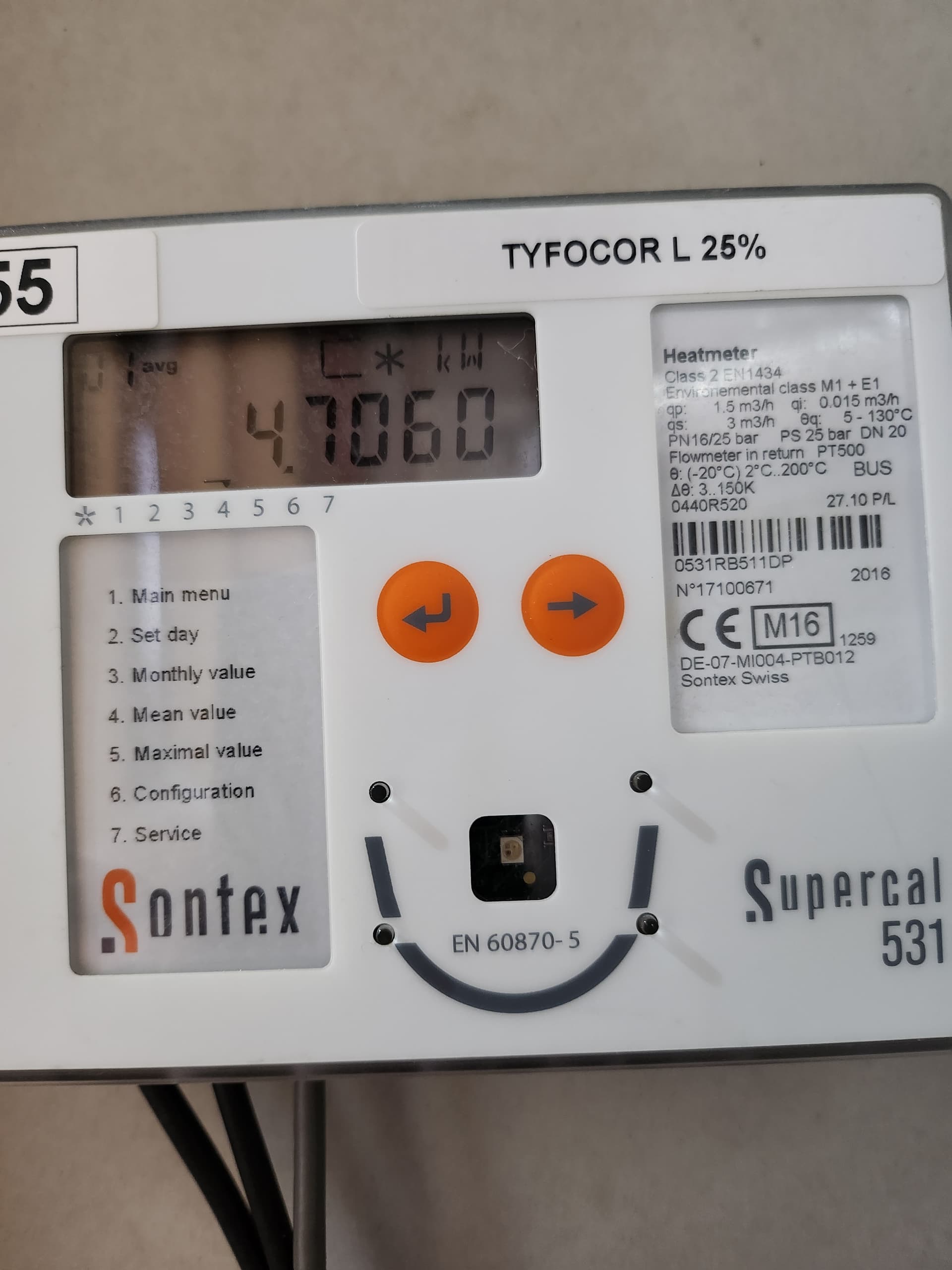
Simplistically if the DT is 4C, flow 13 l/m and antifreeze being used then the instantaneous power is
4*13/60*3940 = 3.4 kW
This intuitively sounds about right at an OAT of 9C given my heat loss calculation. Im struggling to believe that either the temperature sensors or the flow meter can be hugely inaccurate.
I imagine that the 3.4 kW is reduced by the use of the LLH before it gets to the radiators.