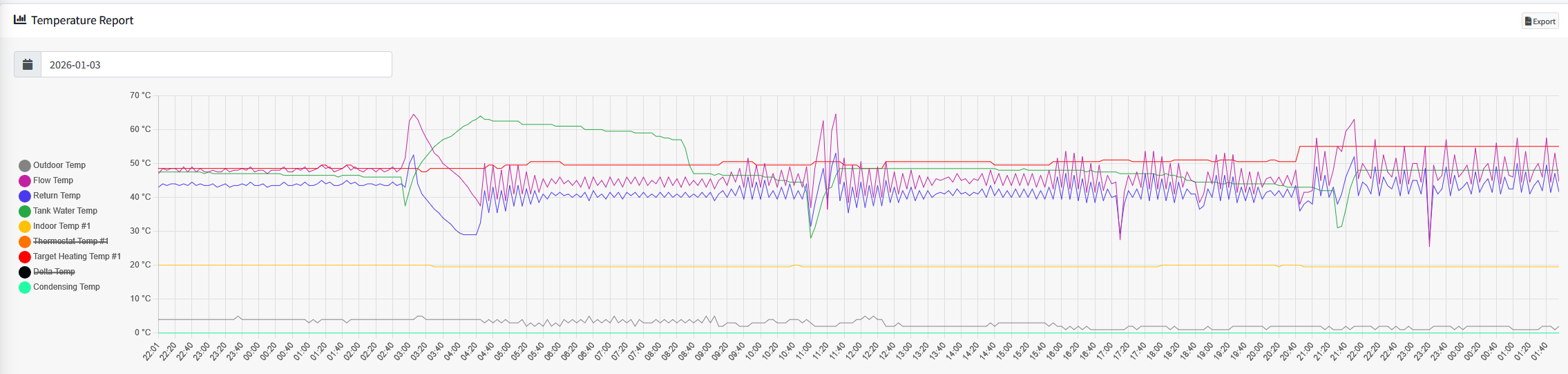
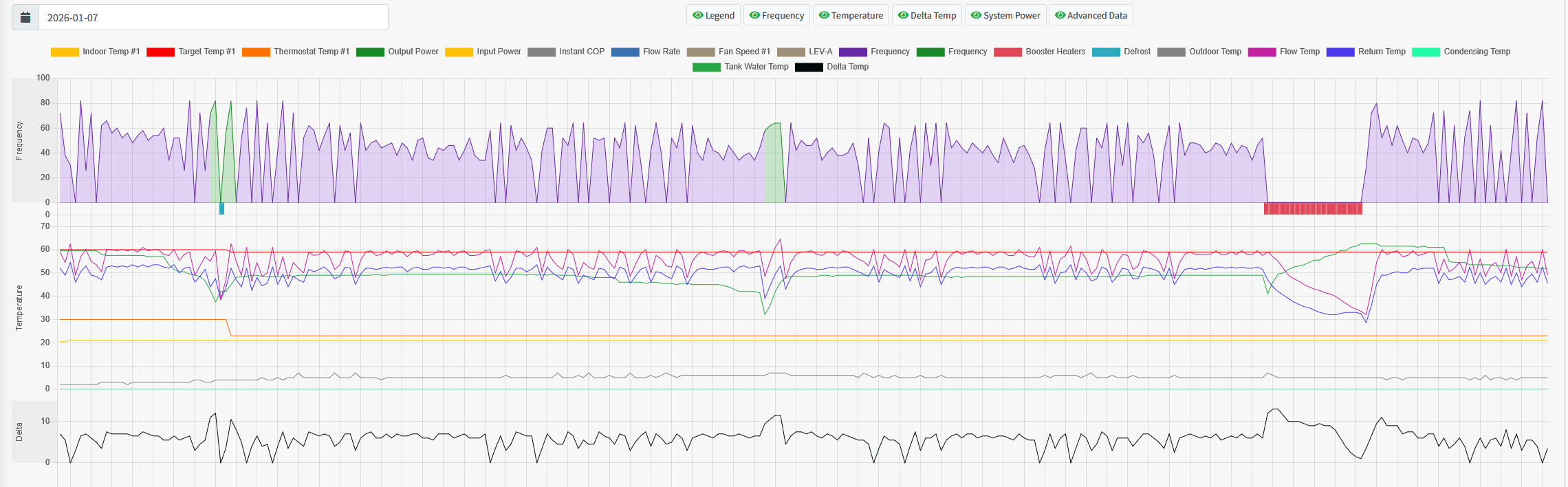
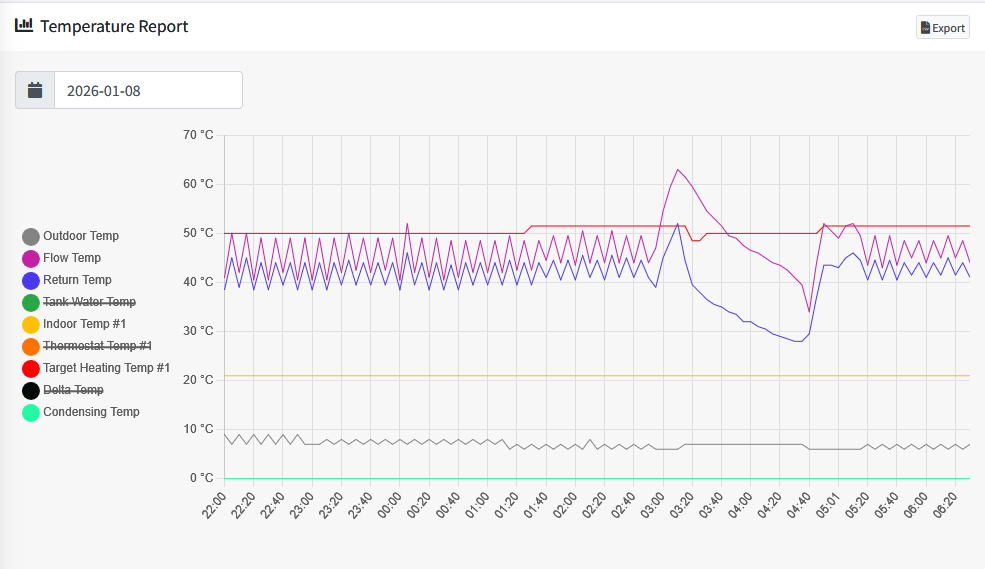
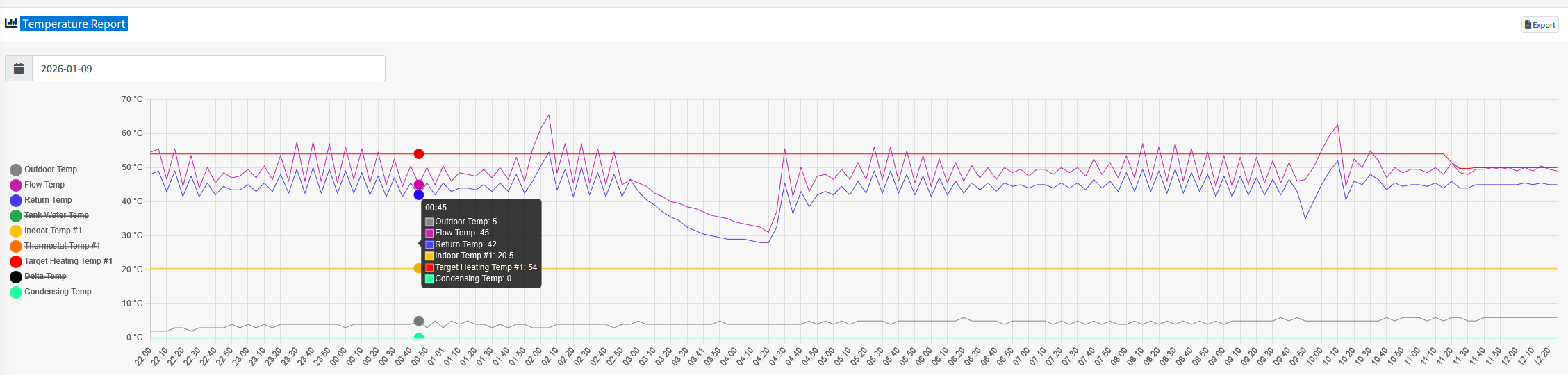
Im trying help a local nursing home get their 10 year old 12 kW Mitsu Zubadan working efficiently. So far I have identified that its oversized has undersized radiators and fixed some very poor insulation issues. I seemed to have got it running stably under WC untill this cold snap hit. After that the flow temperature started to oscilate wildly, never reaching the target temperature and producing an average flow temperature of about 5C less than target. Unsurprisingly the house got cold.
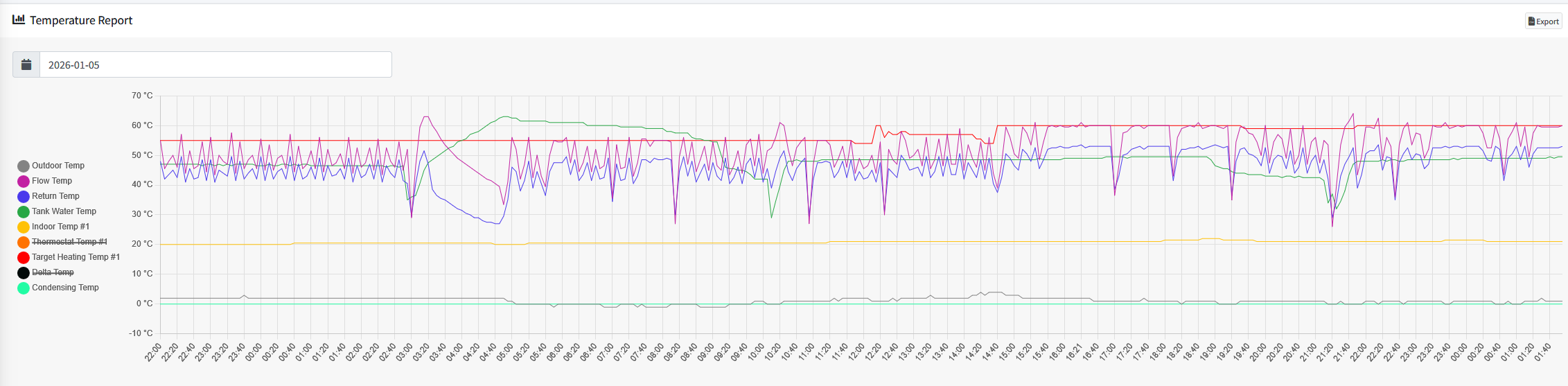
I intervened remotely at about 20:40 and changed the mode to fixed flow temperature (55C), but this didnt solve the problem. I managed to get to site on the 5th Jan, tried upping the WC to no effect and then switched back to fixed flow temperature (60C) at which point it stablized.
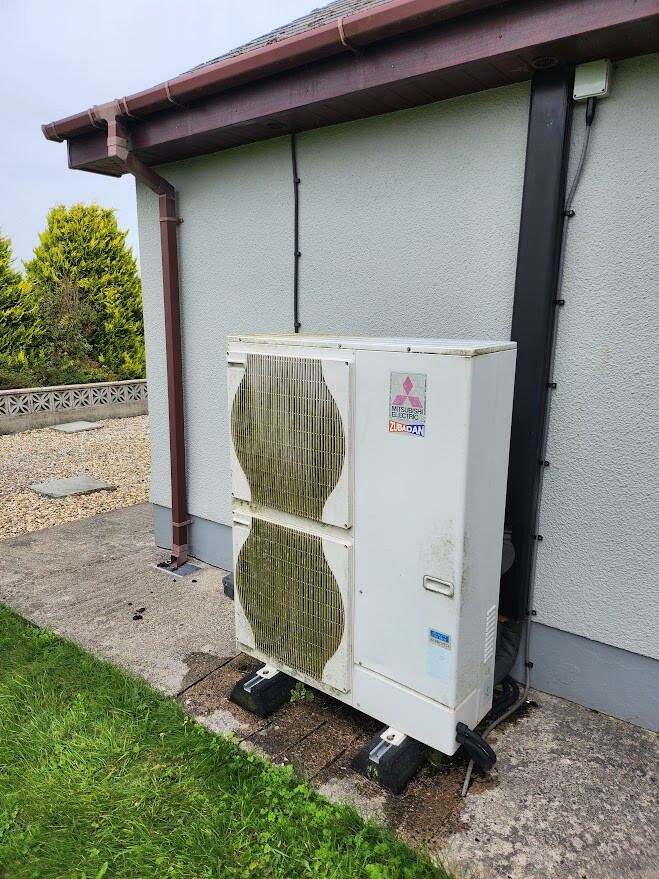
Obviously this is costing them a fortune and the house still isnt toasty. Does anyone have any idea what might be causing this oscillation? There is some damage to the cooling fins caused by a member of staff power washing it.
can you show higher resolution data over a shorter period, i.e. 1 hour?
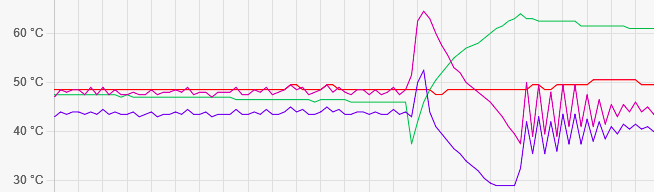
At the beginning of Jan 3rd, the behaviour looked quite stable until the DHW cycle at 3am which was mostly done with immersion for legionella, after which it seems to oscillate.
I suspect that the heat pump is cycling (a higher resolution snapshot would help) because the central heating isn’t able to dissipate the heat below 60°, so worth checking for stuck valves or a failed pump.
I do see a few defrost cycles in the second chart, but I don’t think that’s the cause.
Thanks for the response. To try and answer your questions
The TRVs are all fully open but the lock shield valves are balanced.
Yes all the radiators are approximately the same temperature
It was serviced last year and is done so every year.
Im using Melpump to access the data via a dongle connected to the Ecodan control unit
I cant isolate an hour in the same way as OEM, it seems a day is as granular as it gets.
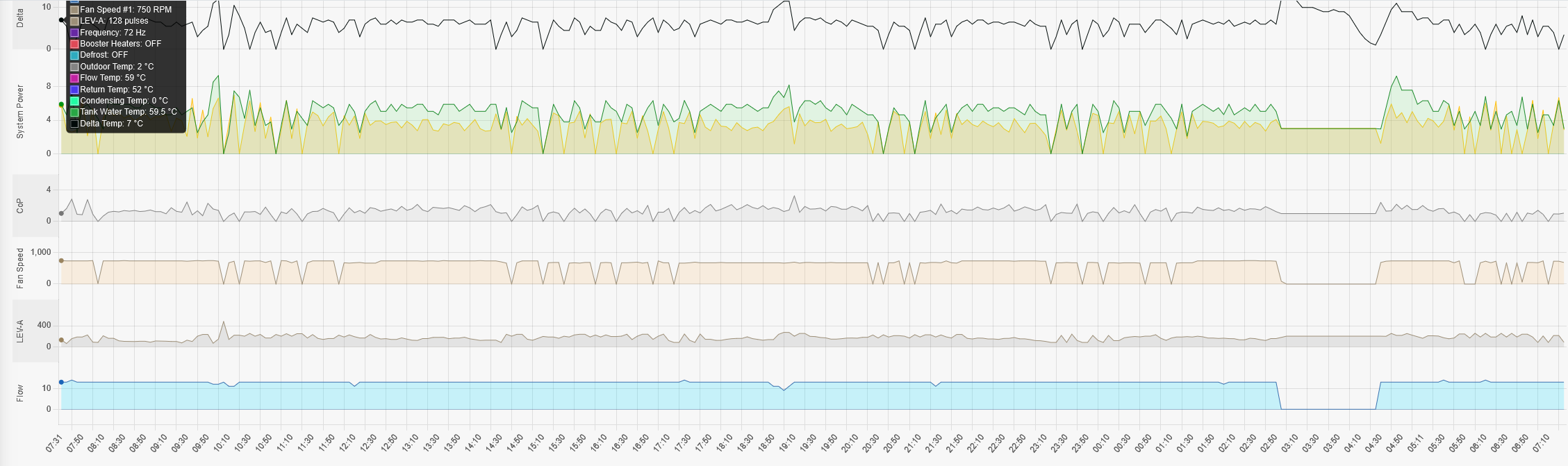
I can see that the flow rate is stable at about 13 lt/m so the pump seems ok, If the problem is due to it being unable to dissipate the heat then upgrading the radiators should stop it? This is in the pipeline but I could push it to be done sooner.
Upgrading the rads would help long term, particularly during mild weather; however I’m not entirely convinced that’s the cause for the sudden change in behaviour.
There a chance that the lock shields are too restrictive, but again unlikely to have suddenly changed in the middle of the night.
That’s unfortunate. Makes it trickier to diagnose. Was it completely fine before the 3rd, and bad afterwards?
Are you able to show power or energy data? Maybe compressor frequency?
What’s the estimated heat loss of the property? I’d expect a nursing home would be larger and warmer than a typical property.
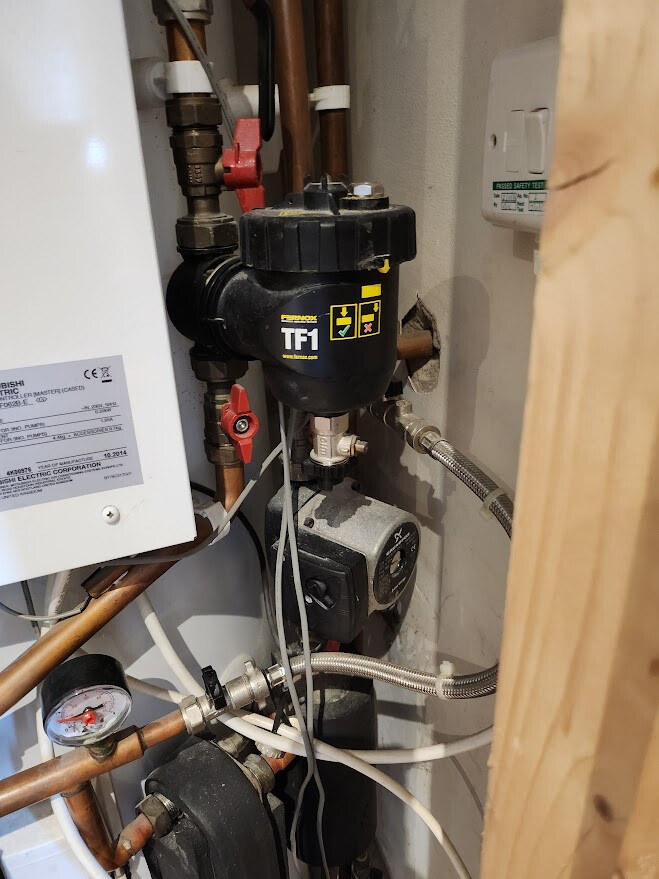
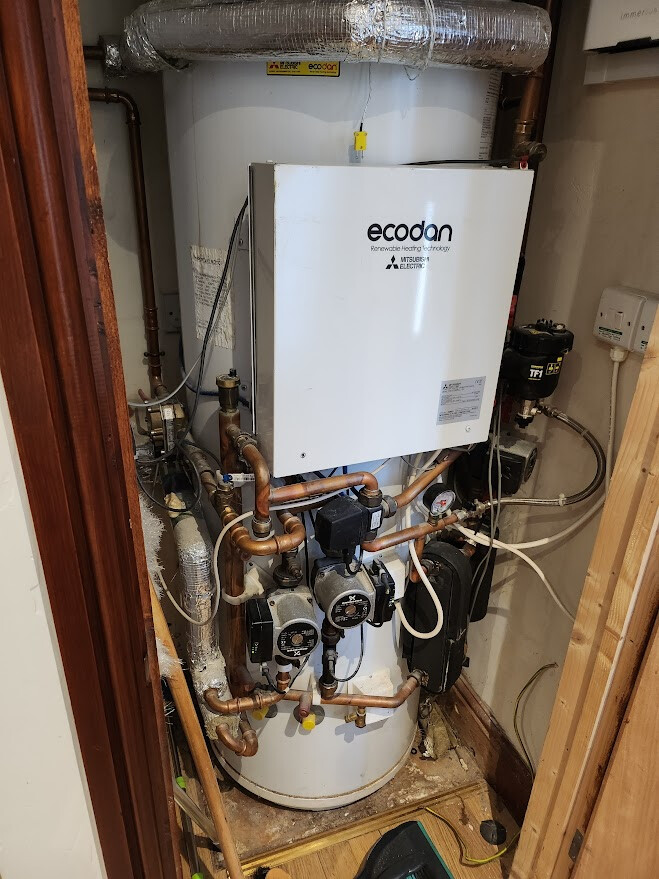
Are the radiators feed directly from the heat pump, or via a secondary pump via a low loss header or 4-port buffer tank?
It has seemed stable up until the 3rd, but in the mild weather it was continuously cycling. From data and a heat punk survey I did, I think the actual heat loss might be about 6-7 kW, but as you say they do like it warm so may be 8kW to be on the safe side.
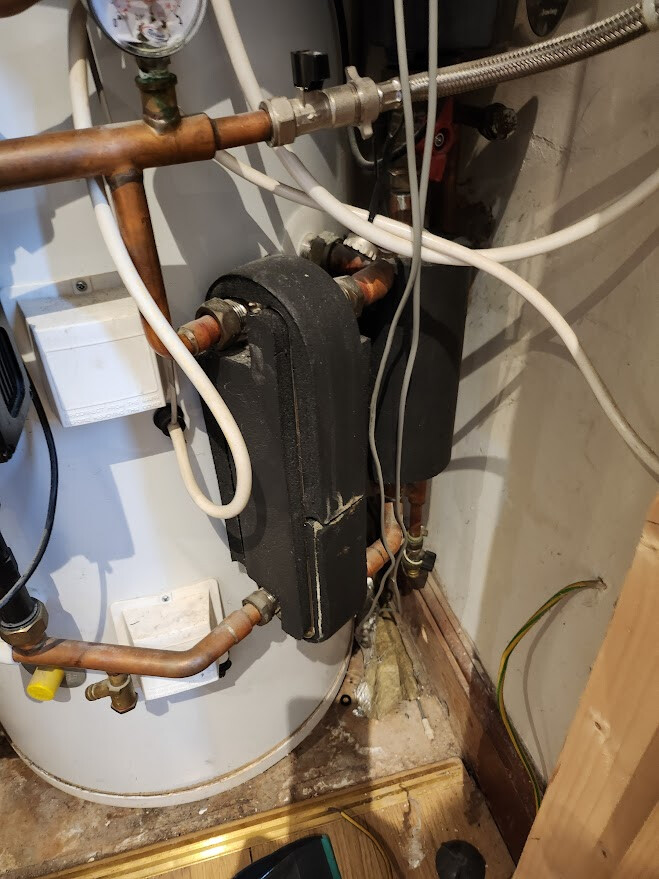
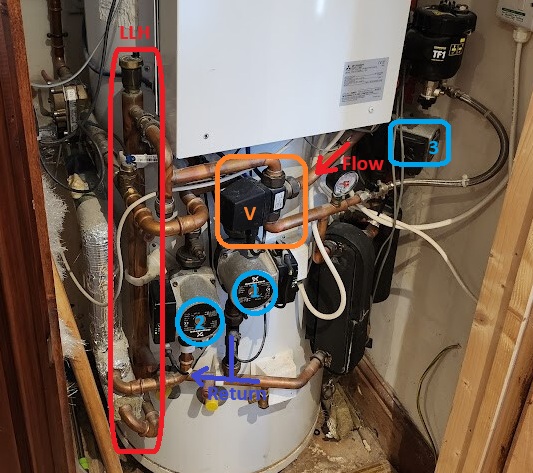
(1) pump for primary circuit pushes water from outside unit to LLH
(2) pump for secondary circuit pushes water from LLH to radiators
(3) pump for hot water circuit pushes water through plate heat exchange
[V] 3-way valve directs main flow to either heating or hot water circuit
[LLH] Low-loss header provides hydraulic separation between primary and secondary circuits
I would start by checking that valve is working correctly - perhaps by feeling the pipes on the hot water side (the big insulated block on the right is the heat exchange for hot water). Maybe it got stuck after that DHW cycle on Jan 3rd, and some of the flow is bypassing back to the heat pump?
Oh, so thats what a LLH looks like! I was looking for something like a buffer vessel
Long term is it worth looking at getting rid of it and switching to a direct circuit? I was wondering why its COP was so poor and was planning to add anti frost valves to get rid of the antifreeze.
Total output is currently 9167 W at DT50 (edit 50C flow) so in theory it should be enough, but Im looking to change some of the radiators as indicated by the heat loss survey to bigger ones and hopefully run it cooler. However the plots of heat loss as measured by the ecodan suggest it hasnt been able to supply more than 6kW and that was when I was running it at a constant flow temperature of 60C (target) yesterday.
Oh my, that’s not much at all - DT50 means 50° above room temperature, and radiators output less at cooler temperatures. At a flow temperature of 50°C would emit only 4 kW of heat, and 60°C would emit 6kW.
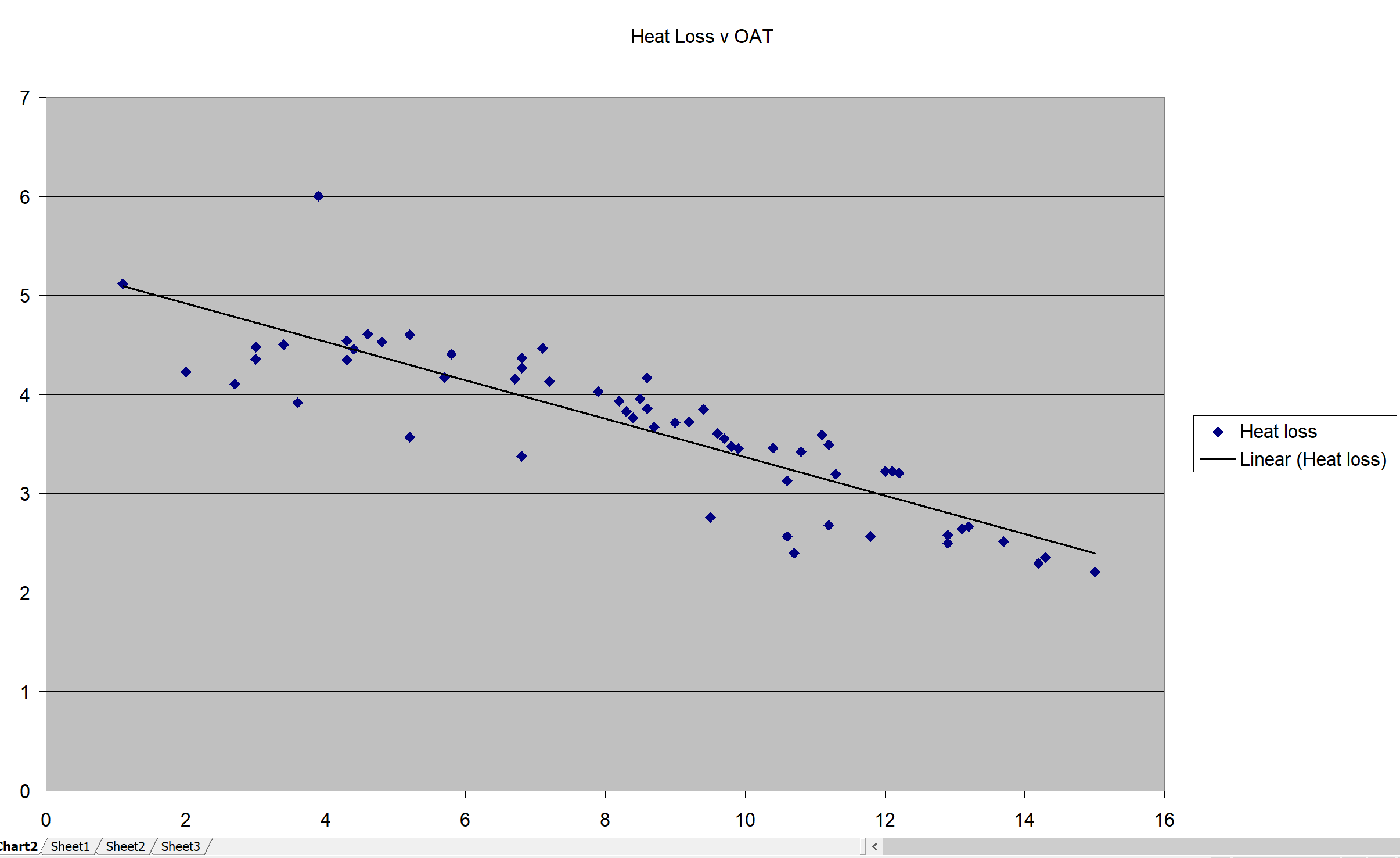
This heating system is limited by the radiators not the heat pump. If the property has managed to maintain a steady internal temperature, then 6 kW might be all the heat you need at 0°C. The heat loss coefficient works out to be about ~300 W/K.
Ah right, I did wonder if I’d misunderstood something.
Okay, so 9167 W should be enough emitter surface at 50°C, and the heat pump has no trouble getting up to temperature, so I reckon something else is amiss.
The COP measurements from Ecodan may be inaccurate, but that’s a topic to look into later.
The flow temperature did not stabilize and hit target at all, until just after the DHW run at 4:40am and then went back into oscilation at 5:20am. Wouldnt this suggest that the 3 way valve closed correctly and that something else is causing the fluctuations?
The site is actually a good distance away from where I live so its not easy to just go an feel a pipe.
Would you agree that the system isnt performing as it should, if it were functioning normally? If so it may be better for me to ask the home to get a heating engineer in. I dont want to waste their money but if there is definitely a fault in the system then they need to get it sorted quickly for the sake of the residents. Thanks
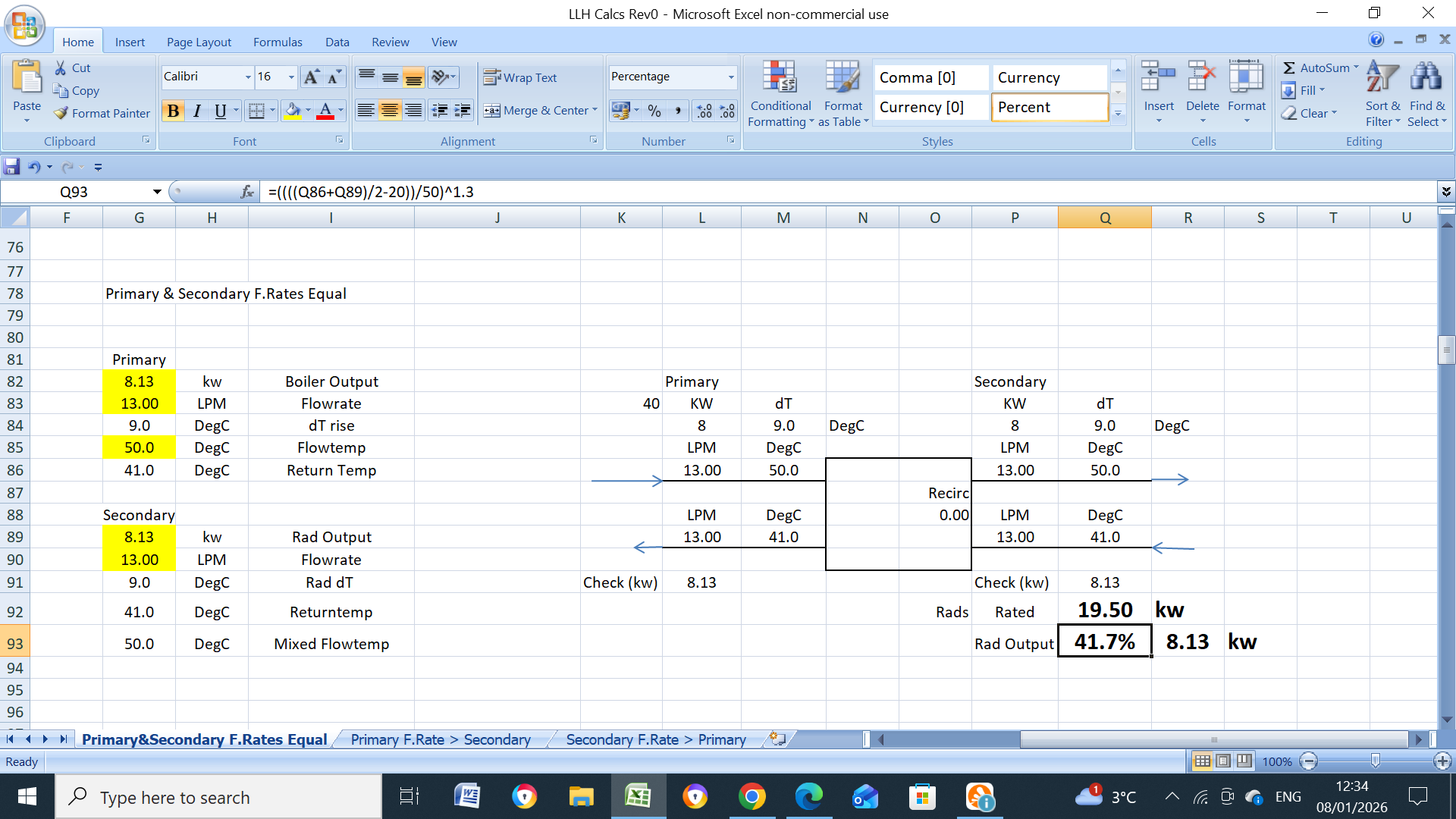
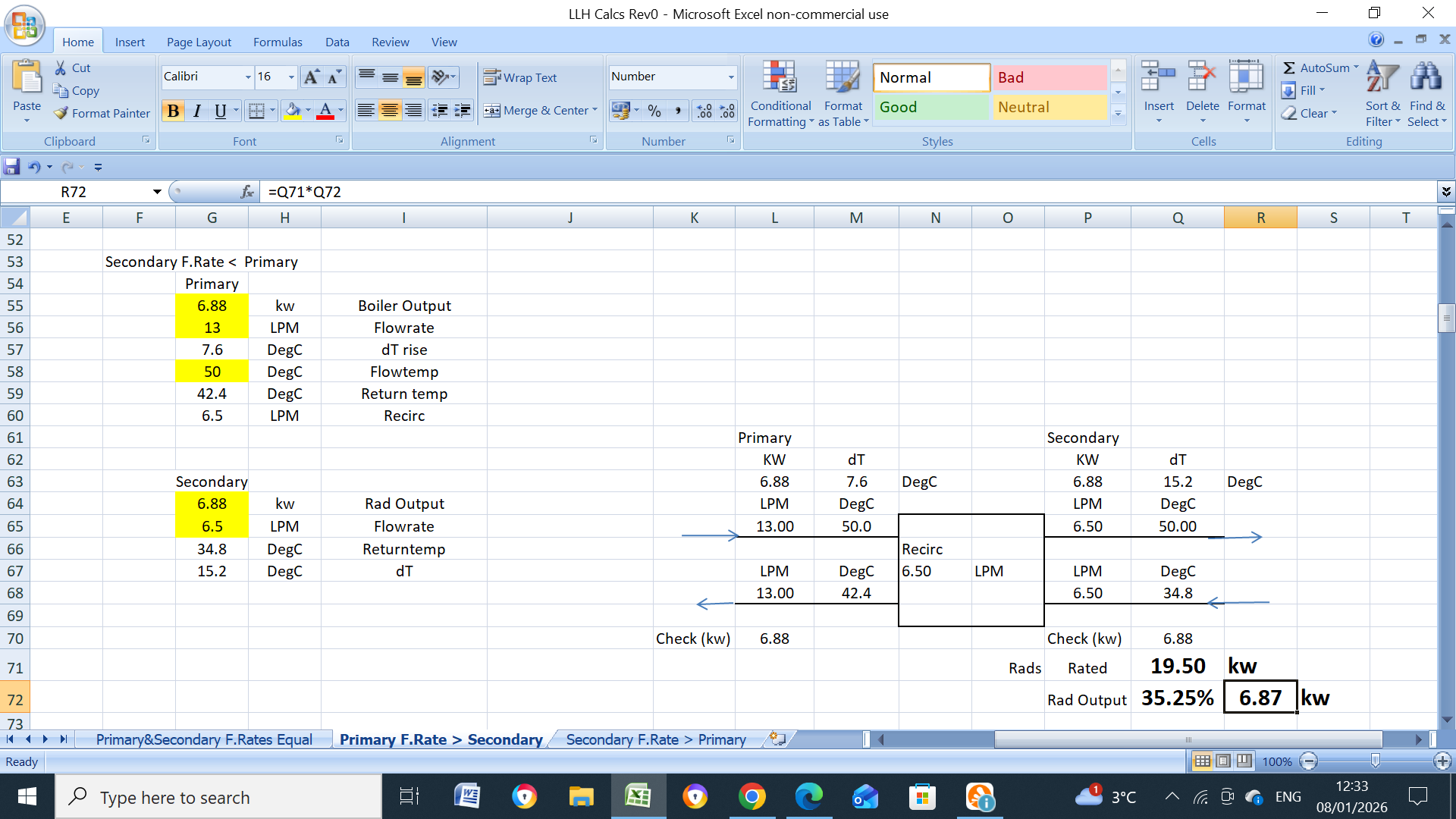
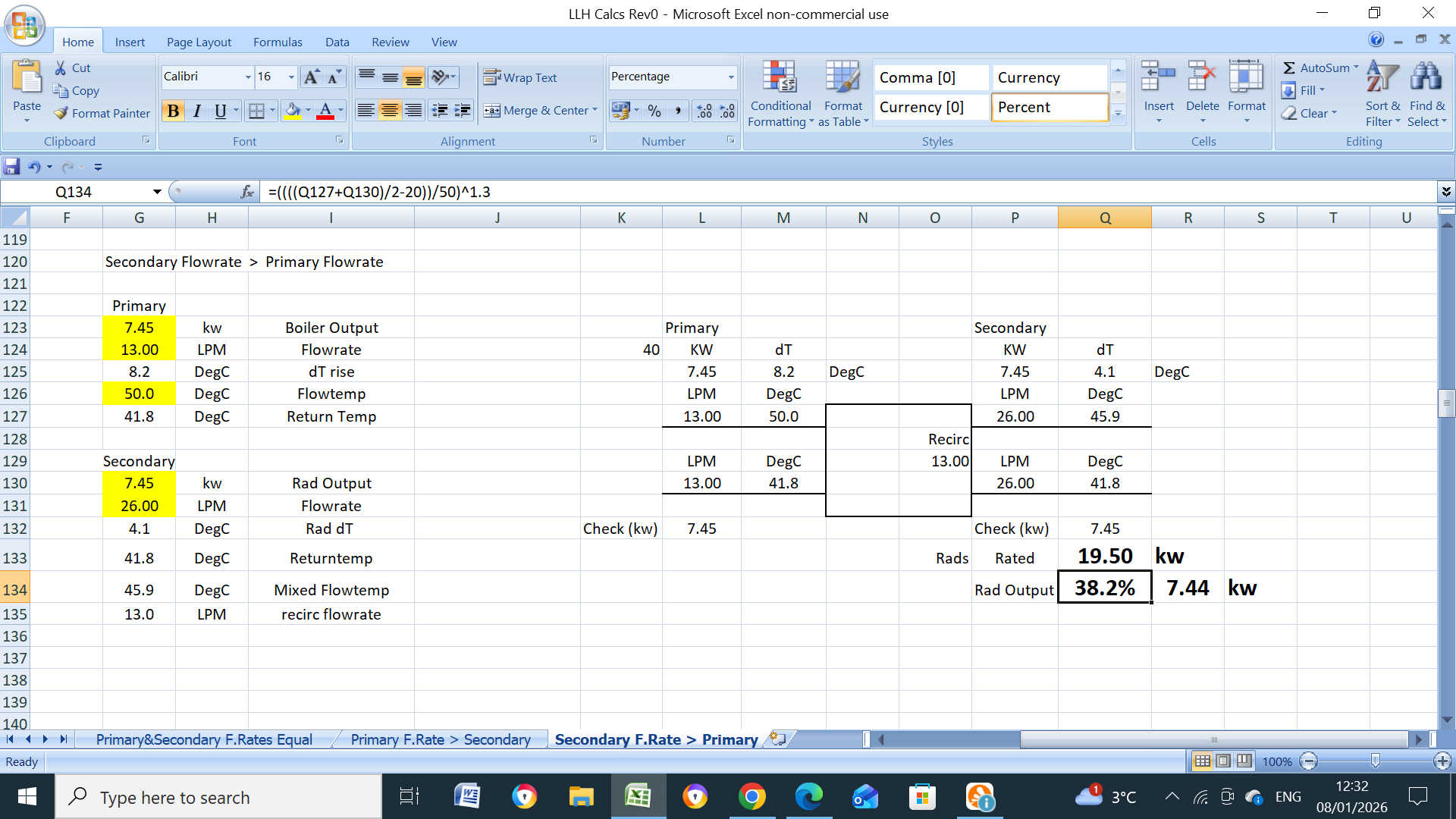
This may be of some interest of a LLH effect on rad outputs. I calculated that the rad output based on your T50 rad rating of 19.5kw and 13LPM flowrate should be 8.13kW (same as having no LLH) with the primary&secondary flowrates equal, if the secondary flowrate is only 1/2 of the primary then the output will be reduced to 6.87kW and in the highly unlikely case of the secondary flowrate being double the primary flowrate then the output is less affected at 7.45kW
My observations from this and previous plots: (caveat: I’m no heating engineer)
sample rate provided by Melpump is 5 minutes, which is too coarse to see what’s really happening. Given that it has a dedicated dongle, it’s a pity there’s not higher granularity.
we can see the heat pump is short cycling every 10 minutes, which will be bad for the lifetime of the compressor.
when stable, compressor is running at about 40 Hz, about half or a third of its maximum
dT is about 7° which is about 6 kW for that flow rate, which fits with compressor level
flow temp is rising and falling very quickly, suggesting the working volume is very small
after a legionella cycle, the system has cooled down a fair bit, and takes a little while to exceed the WC target. You can see return temperature creeping up before it starts to cycle again
Yes, this is not normal operation. It feels like a bad valve, but I could be wrong. It may be something about the refrigerant cycle inside the Zubadan that tripping causing it to oscillate, but I don’t know much about that side. So, probably best to get a qualified heating engineer to take a proper look.
Mmm in my head I thought I had seem some claim that the dongle has a better sample rate than that. I will make some enquires.
Looking back over the previous few months, what I thought was short cycling due to over sizing of the heat pump may have been hiding this behaviour all along.
I havent checked how far the radiators have been locked down, so it might be worth a visit and see if this is causing a small working volume. Failing that I think an engineers visit is called for.
Thanks again for all your help on this. I will post if we get to the bottom of it.
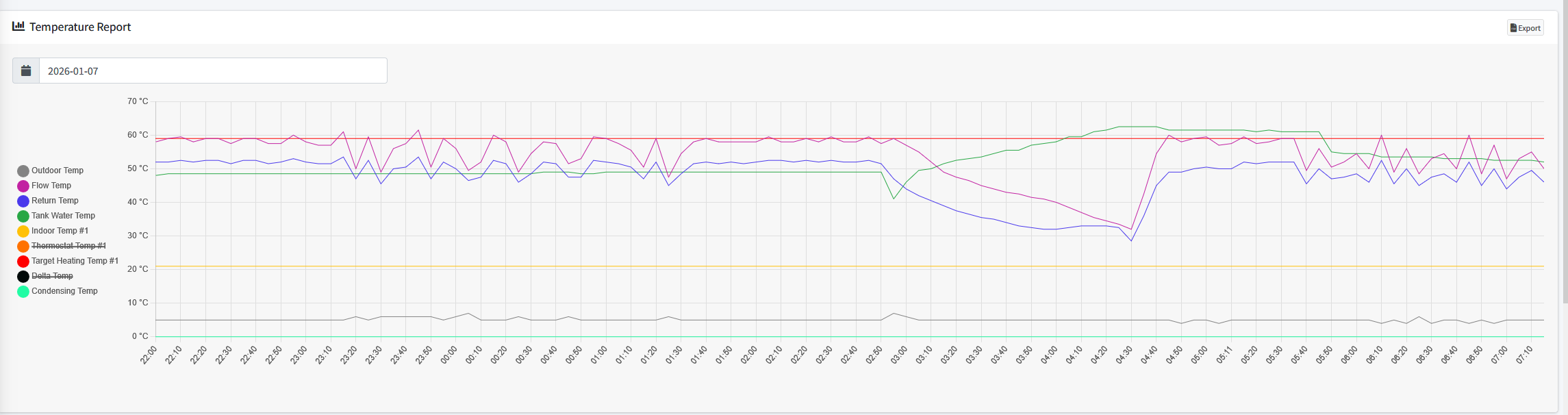
Think we have gotten to the bottom of the problem. The radiators are too small and the heat pump cant release enough energy into the house. This causes cyling in WC and Constant flow temperature modes because there is only a ±1C tolerance. However in Auto Adapt mode this can be increased to 5C and so the flow stabilises. See the plot from today as I initiated AA mode at 11:15am.
Are those readings from the HP = LLH primary side? can you give the exact flow/return temps at say 1205 hrs or nearest, any flowrate info, easy to calculate the rad(s) output then.