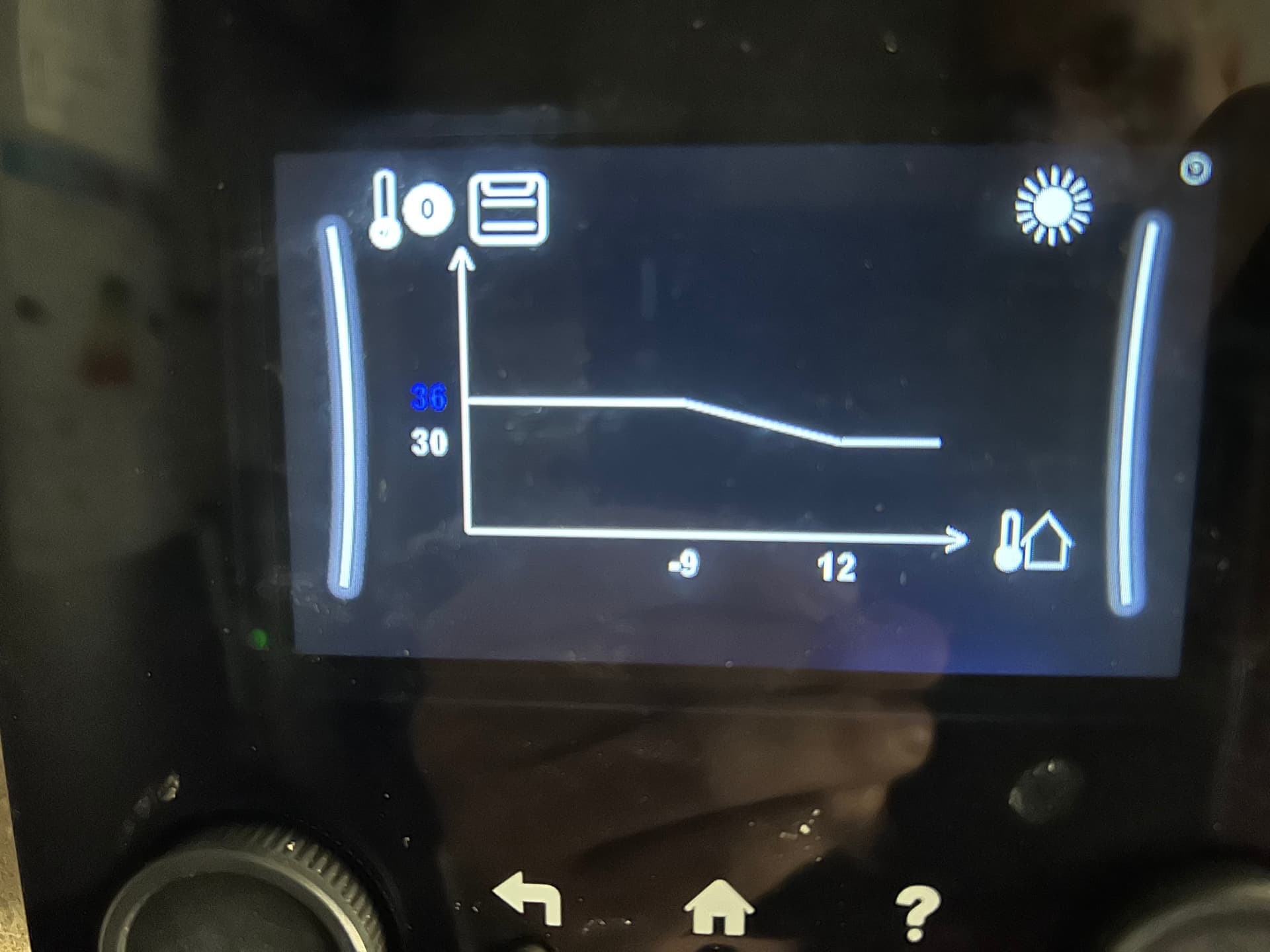
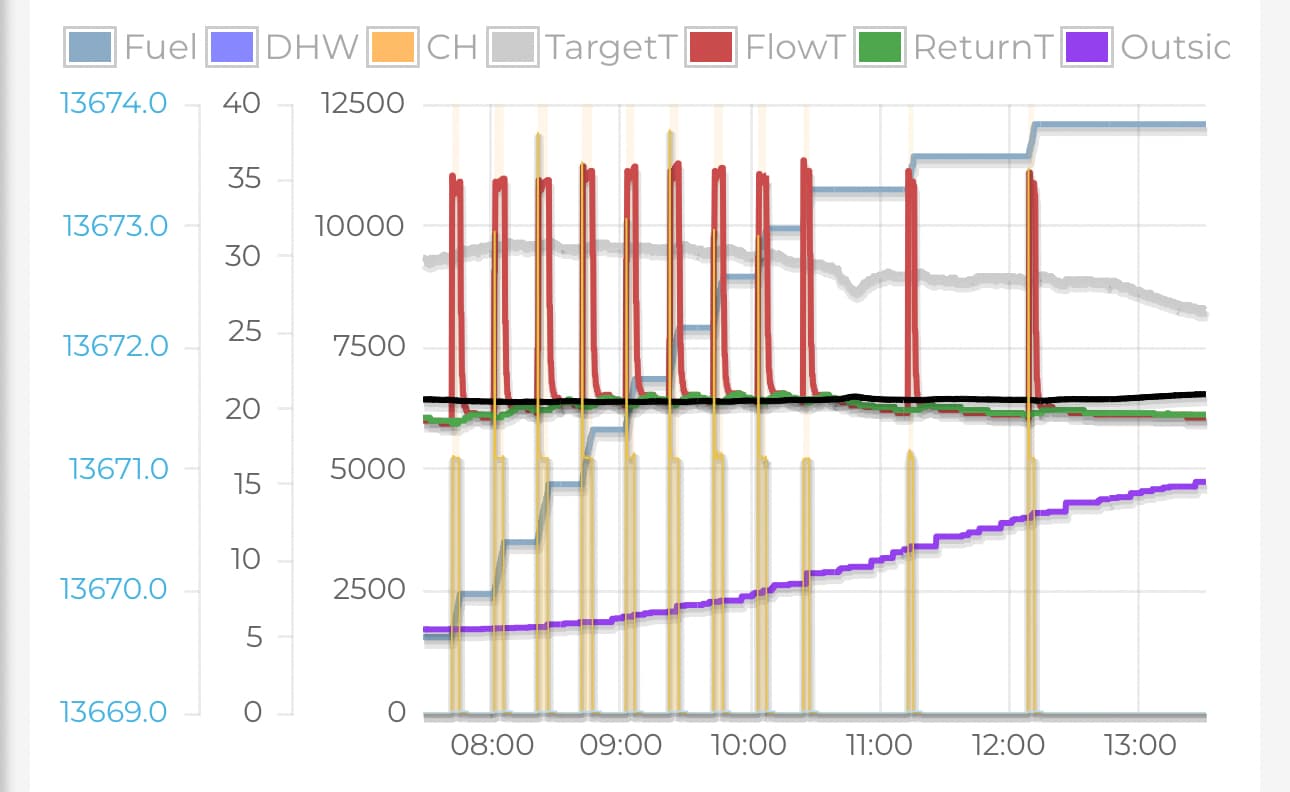
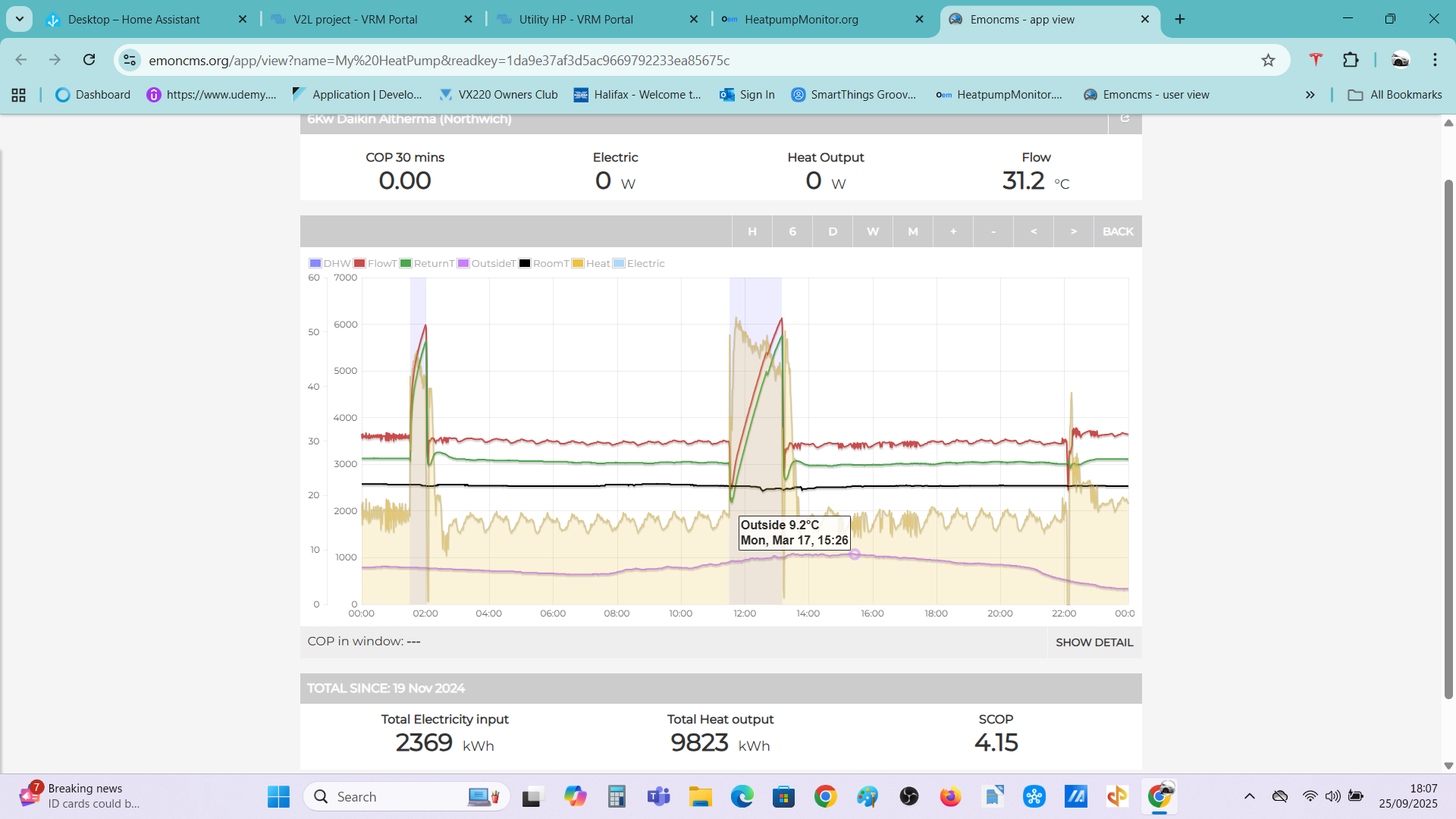
but i have noticed that there are some events ( weather events like humidity and wind chill and rain ) that can throw the curve out, causing the home to fall in temp or raise in temp. Also the amount of people in the home can effect a perfect flow temp.
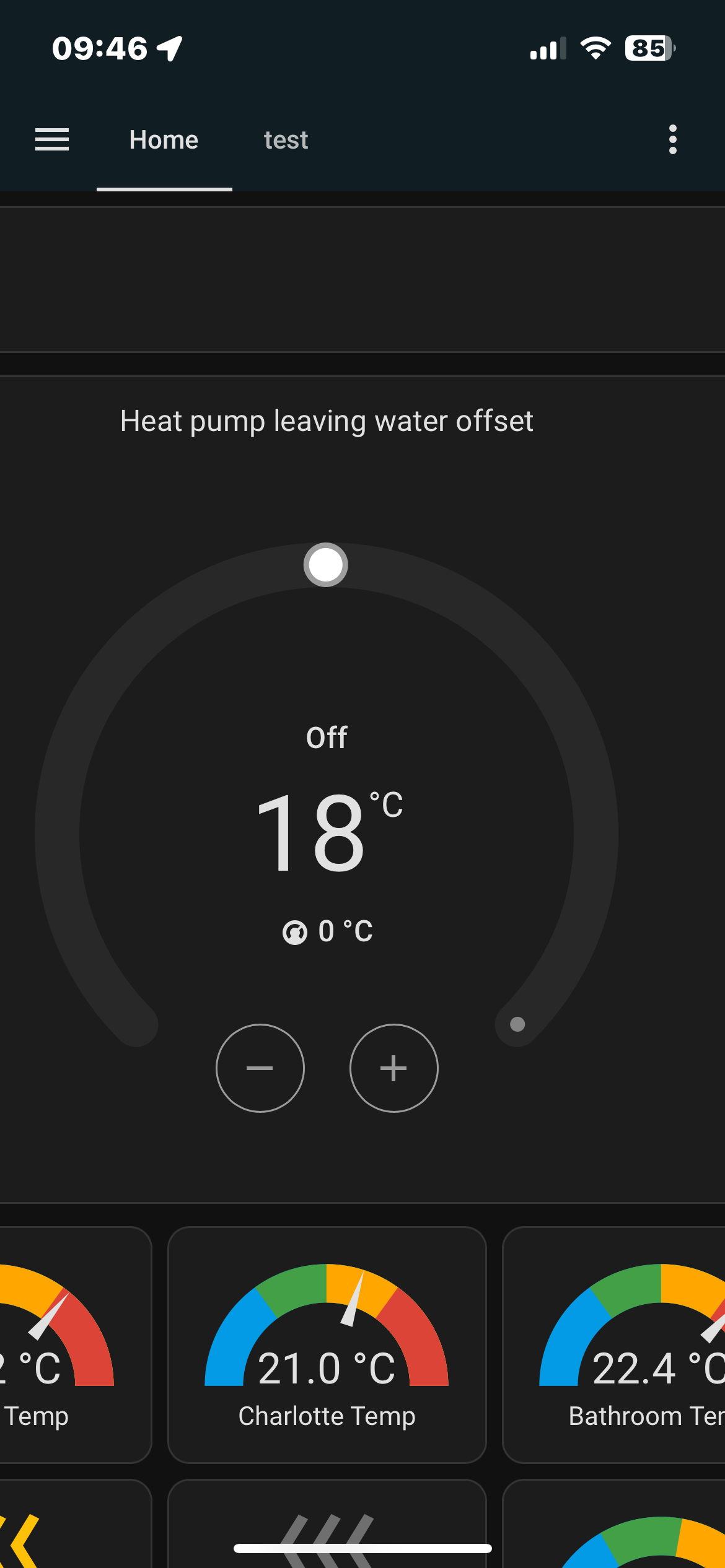
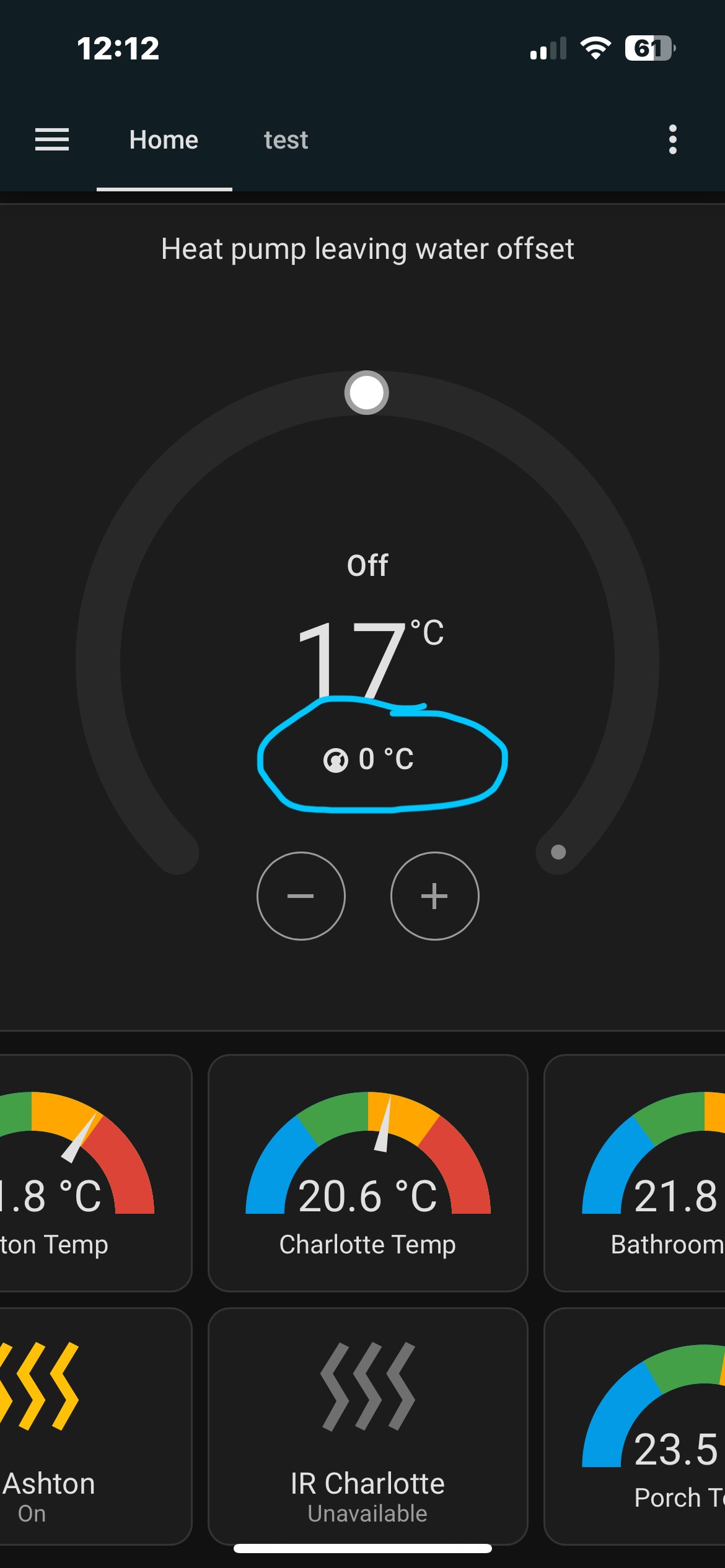
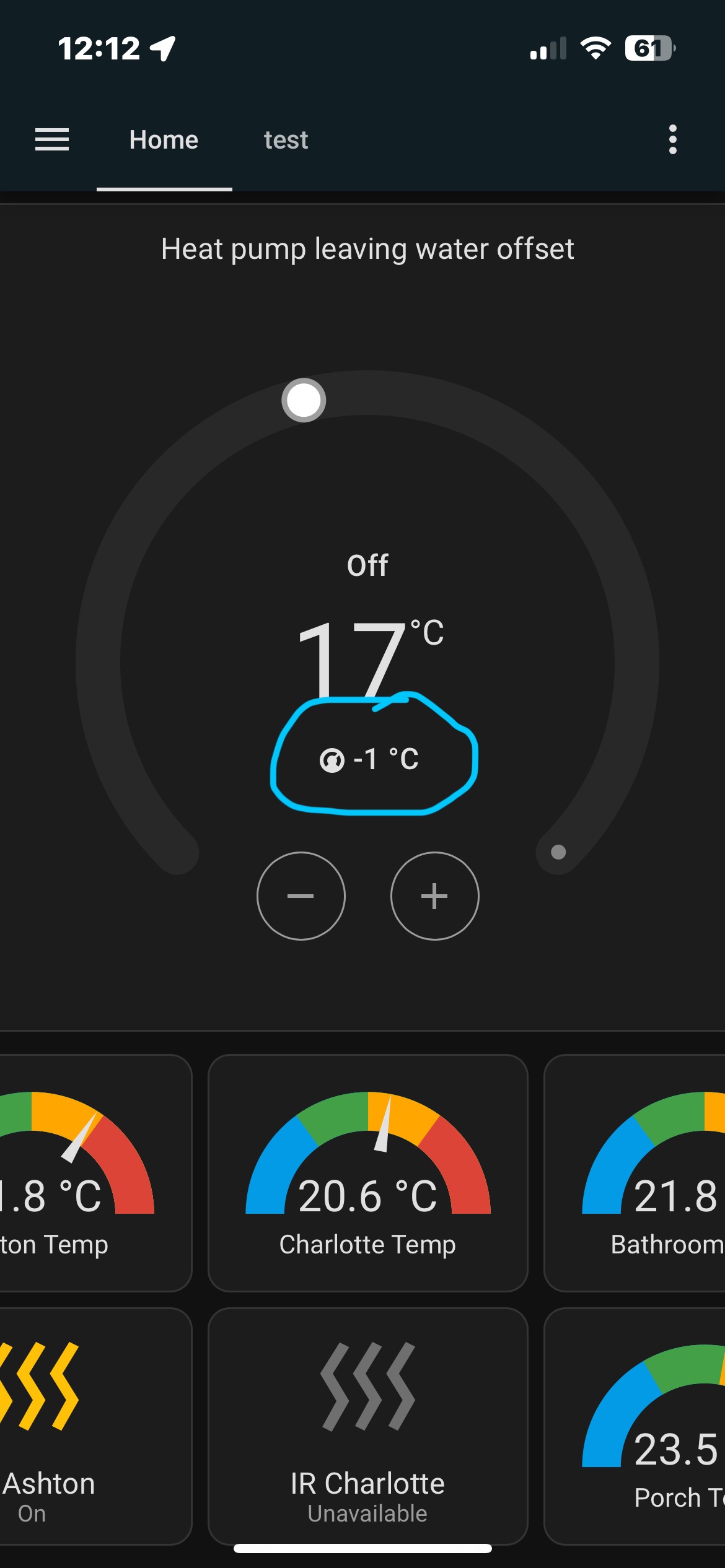
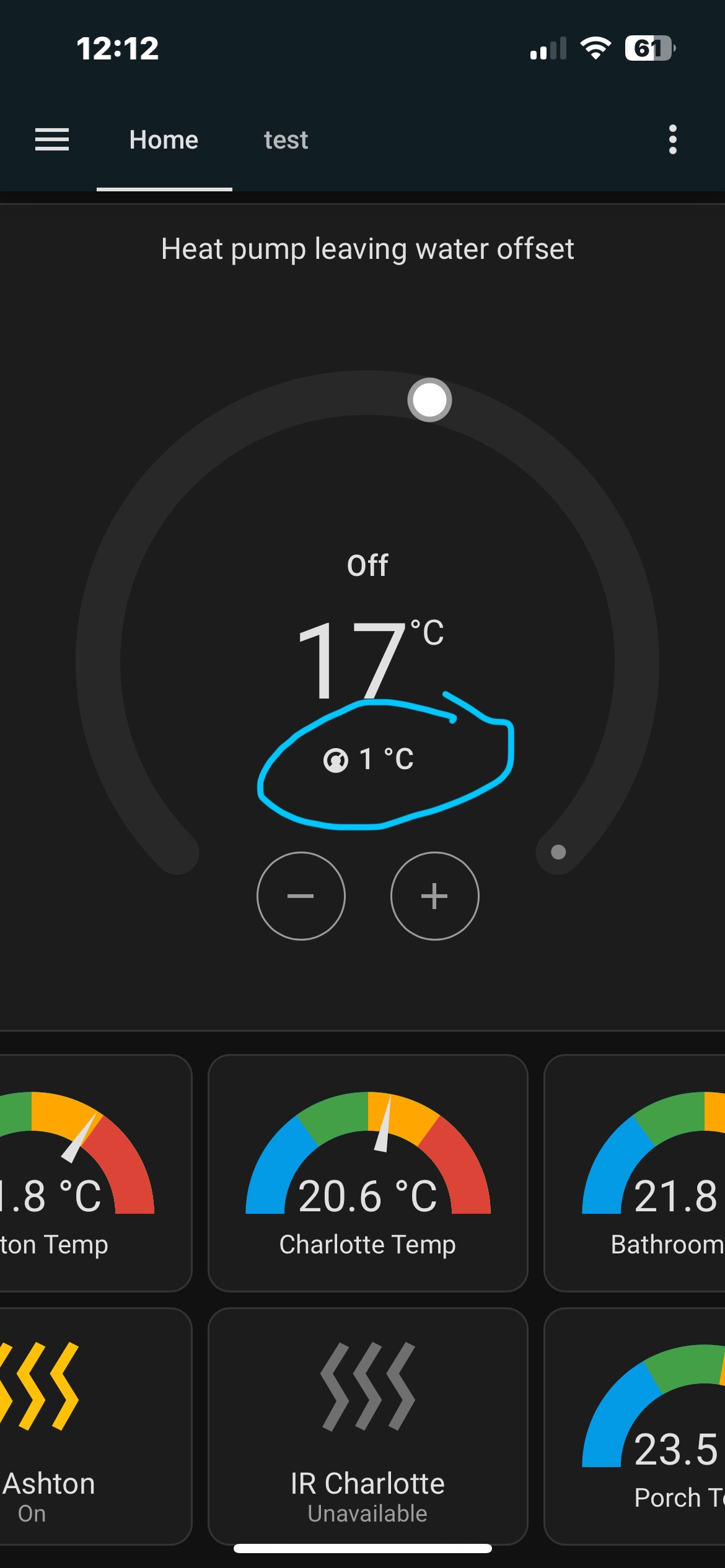
so i have used this very useful tool from Daikin integration with Home assistant to pull the flow temp of the weather curve by 1 degree + or - based on the internal temp rising or falling
this allows a off set of the flow temp if there is a event (double amount of people in the home ) or other event throwing the curve out ,
thought i would share if anyone else has found they are constantly changing the curve because the above conditions are changing what heat demand is of the home is needed to keep a constant temp in the home
if anyone else has any comments on this or doing something different please comment below
No, I meant are you using the Daikin room thermostat, or only WC? I realise you’re modifying the LWT according to your requirements via HA, but you could be using the room ‘stat too (Madoka).
But are you using the Madoka to control the HP in addition to WC, or WC only?? If you use the Madoka it modulates the LWT around the target room temp so it doesn’t over/under-shoot. If you are on WC/WT only, then the Madoka only reports the current room temp, with no effect on HP action.
The house is on pure weather compensation and is fine for 90% of the time , but if we have extra people round the house over heats , so I take the modoka temp increase which triggers a action in Home assistant to lower LWT by 1 degree of the weather comp curve , ( offset )
Until the temp goes down ( modoka ) then that triggers to put the offset back on to the normal LWT the weather curve wants
I didn’t get enough time last heating season to fully dial in my 8kW Daikin and ended the season with the Madoka setup for very small changes to the leaving water as pure weather compensation wasn’t cutting it.
Given this season I am now retired I have more time to experiment with the leaving water offset in the HA integration. Also have temp/humidity sensors in every room as well both the back and front gardens.
My main concern would be losing connectivity with the Daikin servers.
It causes to many starts and stops of the heat pump
it does work but not as efficient as Weather comp , i what im doing is using weather comp with internal temp adjustment (reasons listed above ) as not only outside weather temps have a effect on good home temps
RT mode still uses the WD Curve, but if you have modulation disabled it won’t be able to compensate and that might be why you were getting start/stops.
RT and LWT modes are basically the same, in principle, assuming your “Main zone > Setpoint mode” is set to “Weather dependent” for space heating. Both use the WD curve to govern the flow temperature. The difference is RT mode uses Madoka with modulation to adjust the offset and will shut off the heat pump 1.5c above setpoint. LWT requires an external control to adjust the offset, either manually or via the API as you do. It will not shut off the heat pump unless Home Assistant tells it to stop.
Assuming your heat pump is correctly sized, it shouldn’t matter which control method you use. Home Assistant will give you greater control over the offset changes in LWT mode, although arguably the right Modulation value in RT mode will do the same.
Last winter, I was doing the same as you but primarily because my heat pump is currently 2x oversized and Modulation can’t help in the shoulder months resulting in our house overheating. The fight with Octopus is still going on nearly a year later.
Your heat pump is not oversized. No system is ever oversized. Instead, think of it as a spare capacity that the system is not able to fully control. It simply lacks more advanced capabilities e.g. a low load control. Weather compensation is a great start but not enough. A good controller has weather + load + PID where the system respects the instructions.
typical cold day , like i mentioned earlier only have over heating issue if we have lots of people in the home or kids going mad on Xboxes or we get a sudden burst of sun causing solar gain
this offset keeps internal temps where we prefer them , just moving of the WC target by a degree or two either way
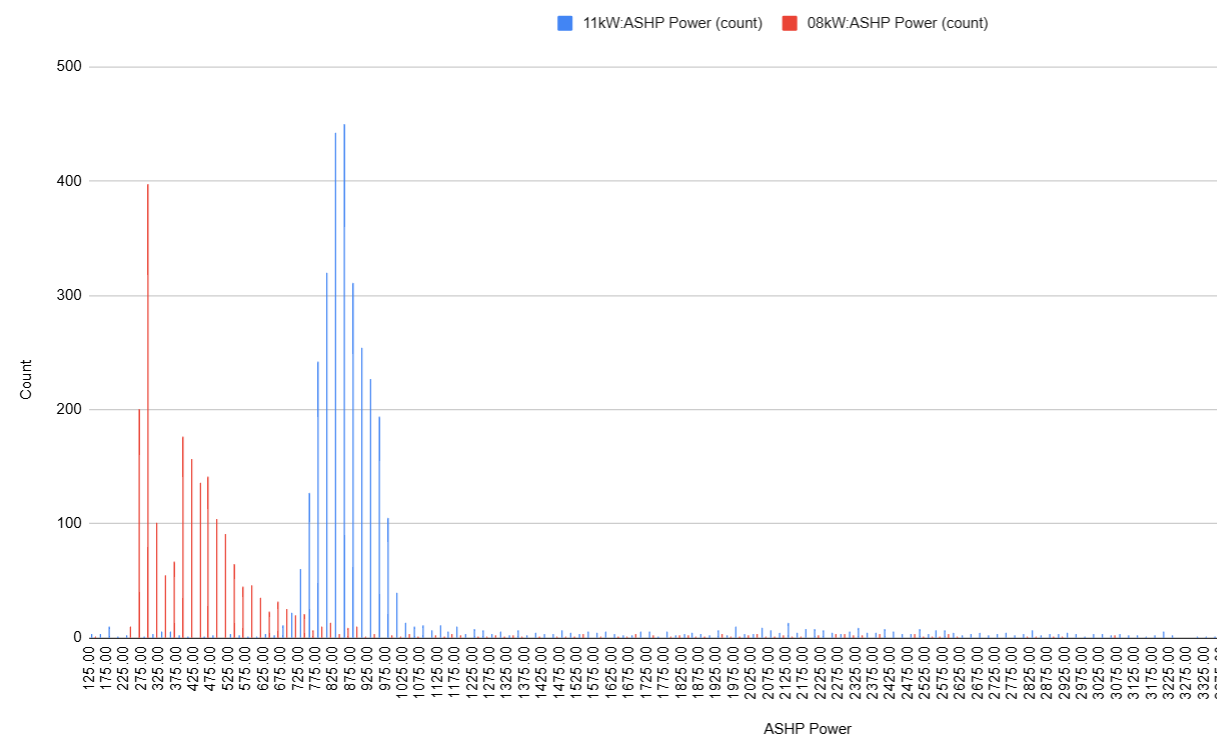
I originally had an 11kW but had it replaced with an 8kW. The 11kW was oversized and produced too much heat for the house as it could not modulate down low enough to match the house heat loss, this made it difficult to manage.
Its most clearly seen in these power consumption charts. Blue is the old 11kW and red is the 8kW that replaced it. The 11kW was pretty much only ever running at its minimum electrical input, meaning it couldn’t vary its heat output by modulating up and down.
However, I have found using the Madoka as a setpoint and modulation works best for me, pure weather comp was like a nuclear melt down it would not stop, this is our 3rd winter and I think I have no need to fettle anymore, diminishing returns, I found dialling in the DT across the emitters was really beneficial for the upstairs as we have oversized rads.
I have done a fair amount of thinking about heat pump controls (e.g. Vaillant Heat Pump Controls: Part 1: The heat curves. | Protons for Breakfast ) But last year I failed to get my system to produce the room temperature result I wanted. I wanted around 20.5 °C but the system gave me 21.5 °C and I just settled for that.
But your post reminds me that it is !!!COMPLETELY CRAZY!!! that heat pumps don’t just have a control with exploits weather compensation but which (from a user perspective) works like a thermostat.
I can’t understand how we all got to this point, but it is bonkers that people pay companies (Homely or Havenwise) to regain this basic functionality.
I do think the weather comp curve has to be a base for your home, but scenarios within the home does effect the amount of heat that goes in the home so a weather compensation curve with active (instant alterations ) would be one step further for home comfort