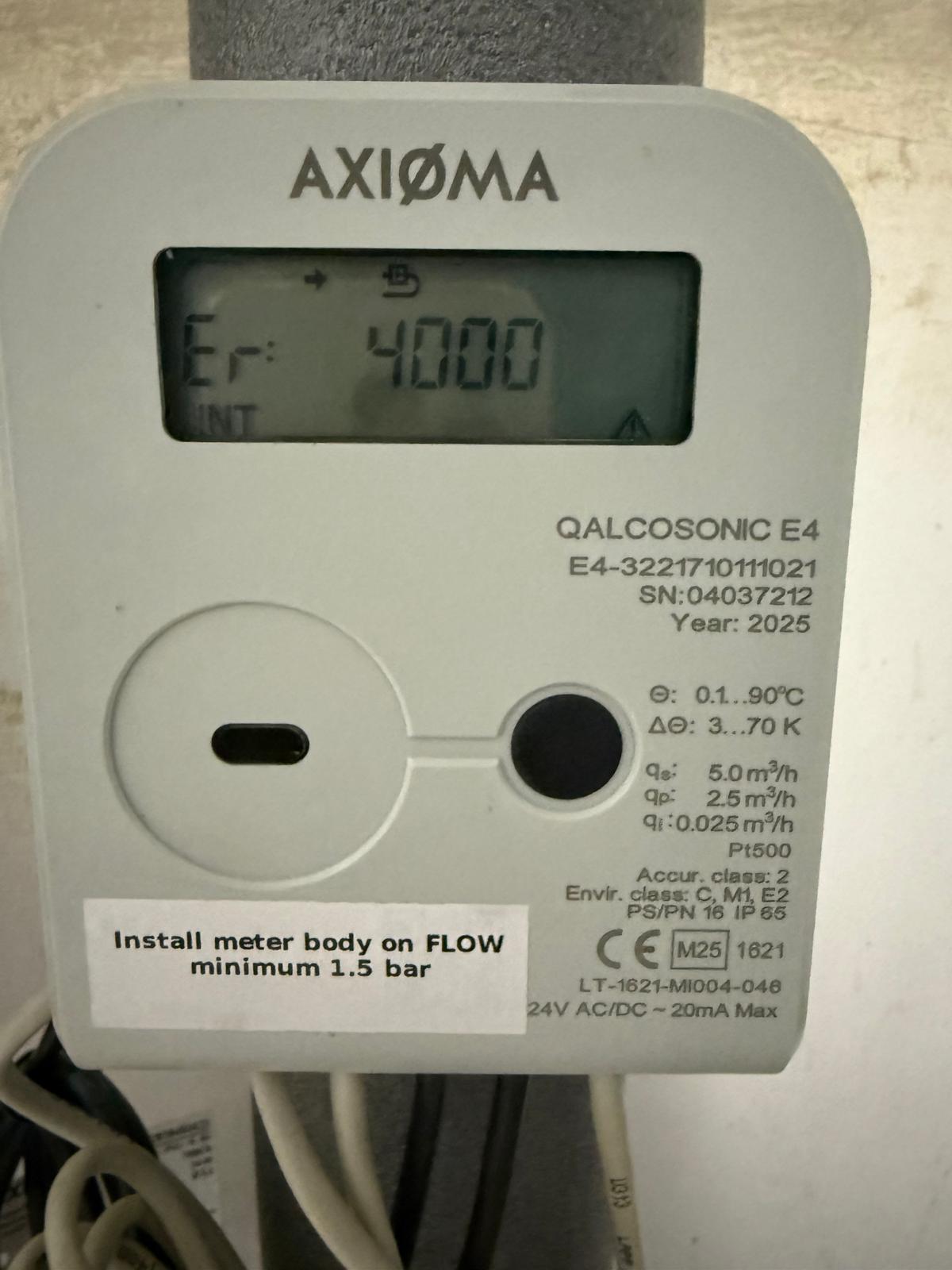
I’ve successfully installed my Level 3 Heat Pump Monitor bundle but I’m getting Err 4000 reports from the Axioma DN20 heat meter after every DHW cycle,
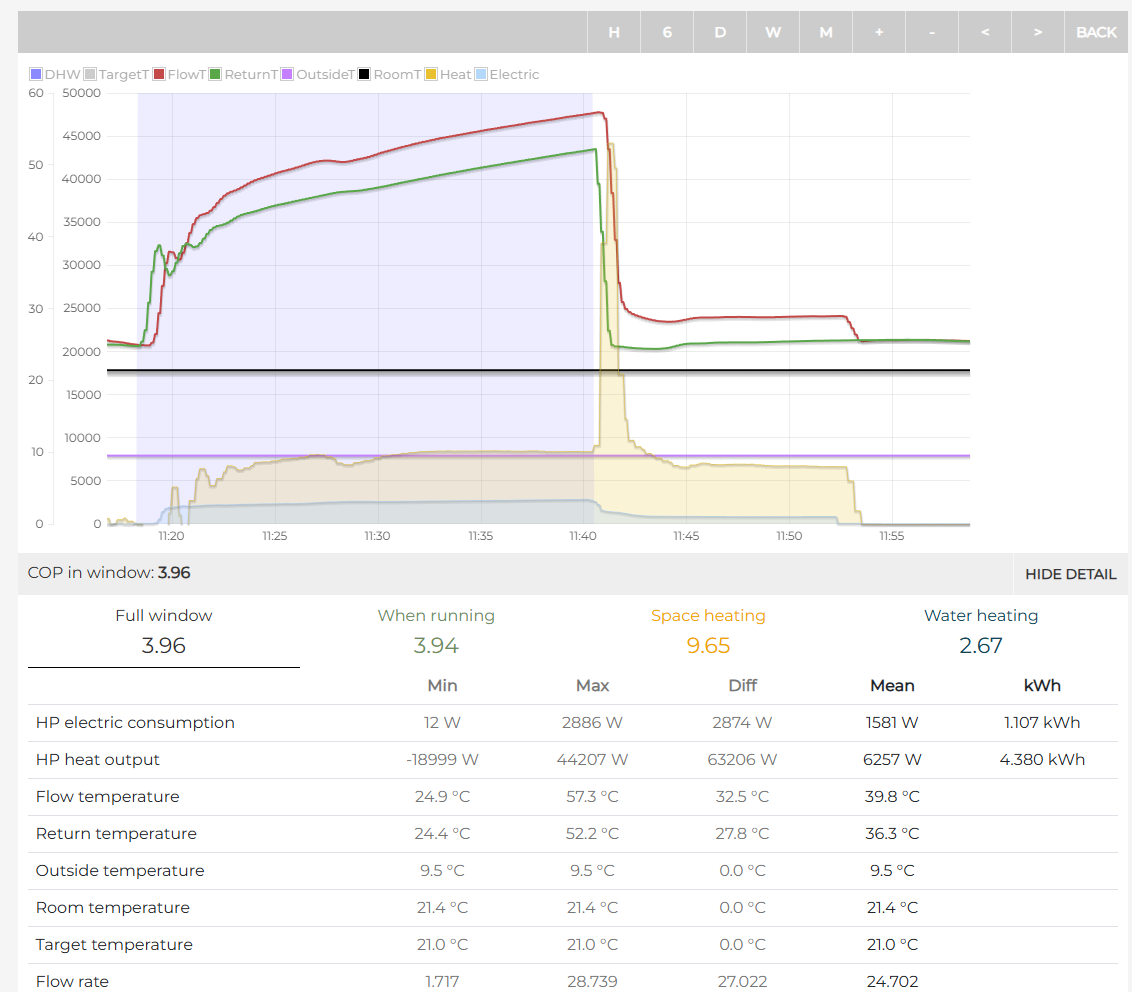
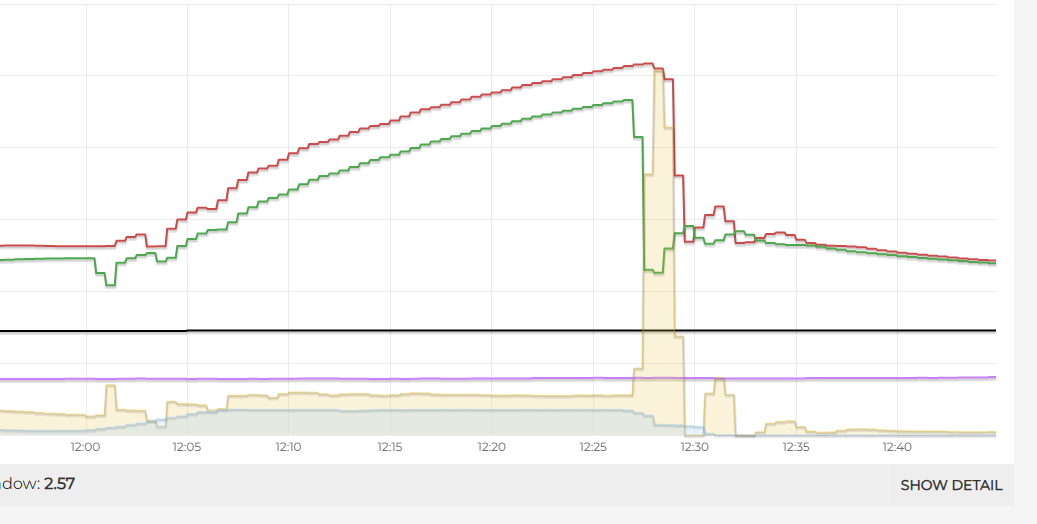
Looking at the docs and this post everything points to air in the system, but I’m not sure as I’m actually seeing the opposite behaviour to what that post and the docs describe. Instead of zero values I’m having large positive spikes at the end of each DHW cycle (63,000W). When the system is doing UFH everything is fine.
I’ve following the docs on removing air from the system and also performed a circulator pump purge. Interestingly during that cycle I did get one -ive heat value of -4172W. I have 3 UFH manifolds on each floor each with a new AAV that I’ve made sure is open during the purge test.
What do people think? Are these large +ive values still related to air in the system or something else?
Many thanks
Ian
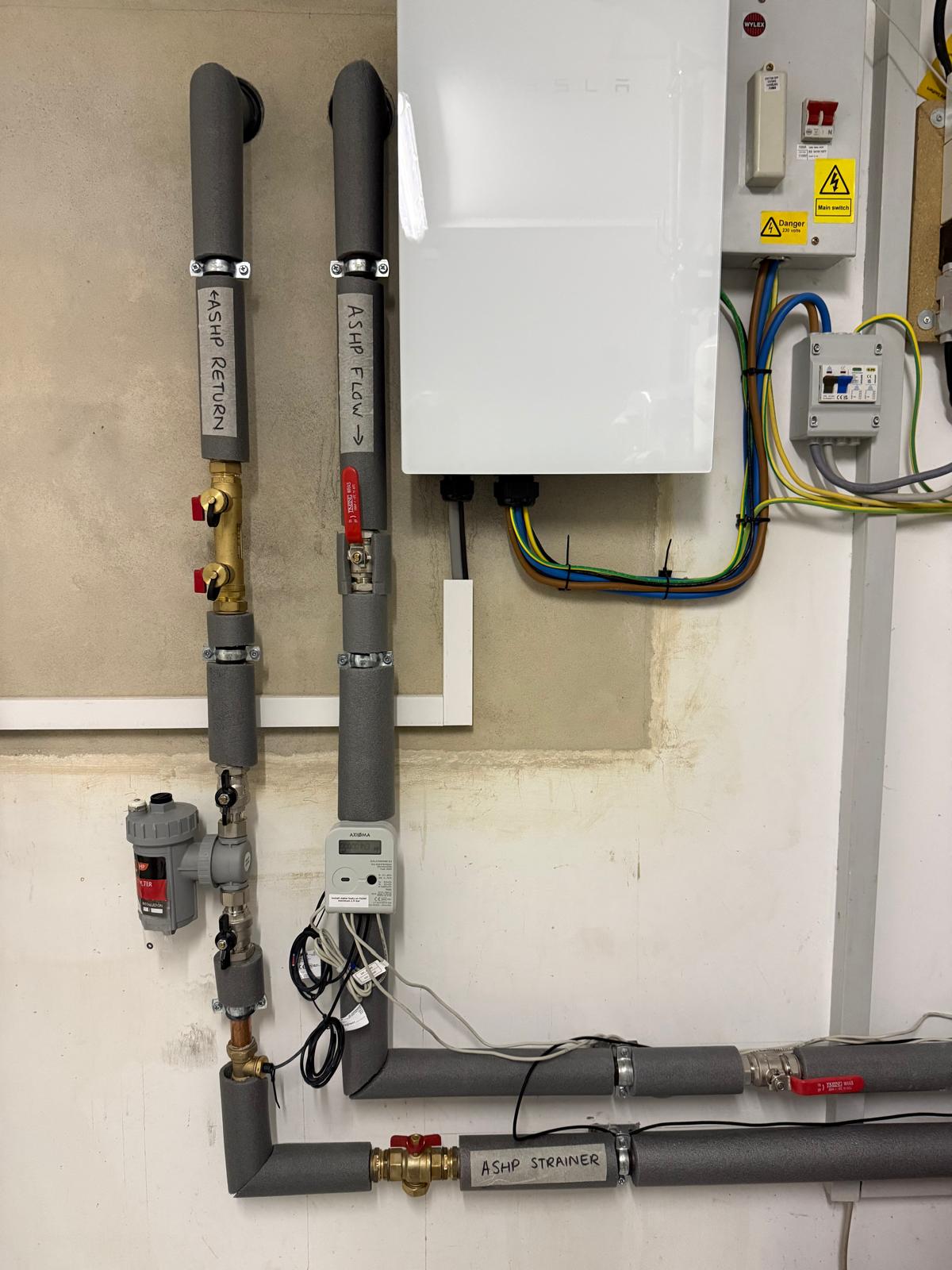
For background I’ve attached a pic of where I installed Heatmeter as well as the Heatmeter itself along with err code.
I don’t know about the errors, but I have the same general behaviour and I think it’s completely normal.
What’s happening is that to switch the system between DHW and space heating a 3-way valve is used to connect the heat pump to either DHW or heating circuit. When it switches back from DHW there is still hot water in the heat pump that has not yet passed the heat meter. However the corresponding influx (=measured as return temperature ) now comes from the heating circuit and is rather cool in comparison to the return flow of DHW. So for a short time you have a heat power bolus that arises from DHW flow temperature + heating return temperature, and this is a big (but short) power peak.
Thank you so much, you’re 100% spot on and I should have done more digging on Heat Pump Monitor org beforehand. After your post I went through 10+ different heat pumps on Heat Pump Monitor org and they all displayed the same behaviour: most have at least one -ive heat value every couple of days and most have a large spike of heat just after the DHW cycle.
So in theory these large bursts are what’s causing the sensor to go out of range and trigger the 4000 err and it’s no air in my system, which is good to know.
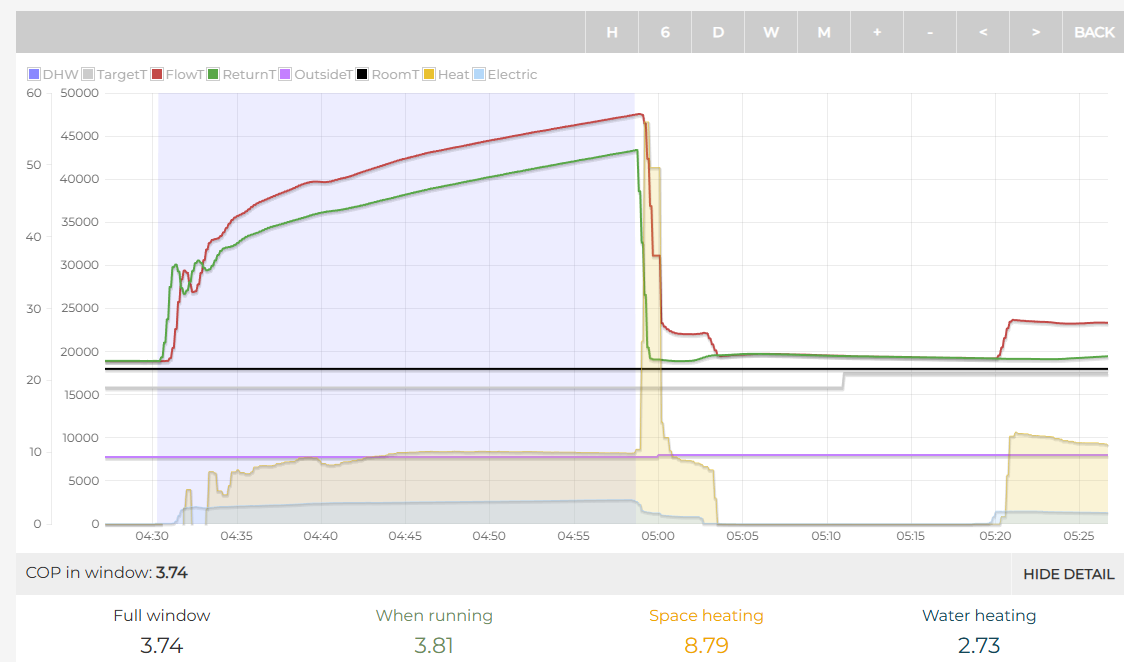
Out of interest, do you happen to know if these -ive and large +ive numbers impact the COP calcs, or are they removed at outliers? I ask because I’m getting a very high COP (it’s 9 in the screenshot) for the space heating.
Thanks once again for all your efforts on this forum, you’ve really helped me out and stretched my knowledge multiple times already
I think you get that 4000 error on the Axioma whenever the delta-T between flow and return is less than 3 degrees. This is just the heat meter warning you that the power reading may be inaccurate, due to using a small different between two values (flow and return temp) each of which is of limited accuracy.
As regards the large power spike at the end of the DHW cycle - yes, it’s because of the sudden increase of delta-T caused by the return temp falling from DHW temp to radiator temp.
You actually really are suddenly dumping a lot of heat into the radiators - this is real power going into your house and needs to be measured and accounted for. It cannot be disregarded as an outlier.
All the while you have been heating the hot water, you have also been heating the contents of the primary pipe circuit up to 60+ degrees - this energy does not end up in the hot water.
The effect of this on the COP is complicated if you try to split the COP into separate figures for DHW and CH, as the electrical energy has been consumed during the DHW cycle, but all that stored heat is dumped into the CH.
The larger the volume in your primary pipe loop, the worse the effect.
Just as I wrote my reply I thought about it and realised of course these and not outliers. Your response was much more articulate. As you say the heat has to go somewhere and it has to be considered in any COP calculation. You raise a really interesting point about how complicated it is to calc separate COP numbers for Space Heating and DHW Heating, DHW definitely comes worse off, it does all the work and Space Heating takes all the glory (or heat!).
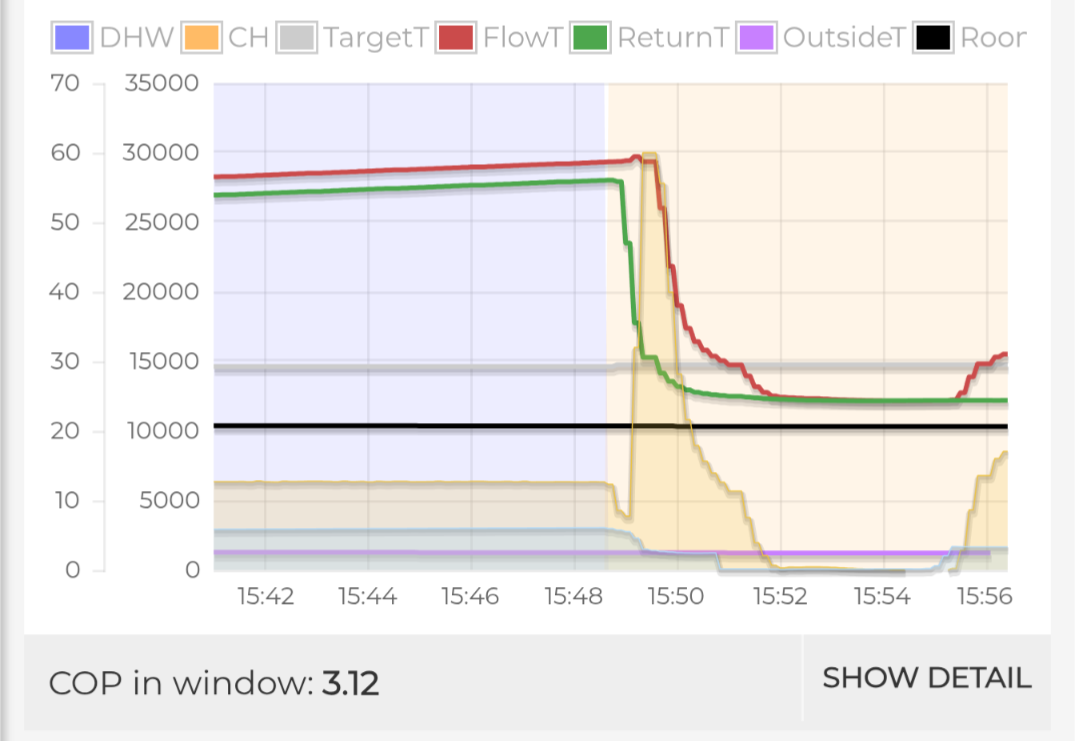
As I’m running UFH where the flow temp is usually 28C when its 10 outside and the return around 24C then in theory I have even bigger variances (compared to radiators) for my DHW to come down from. This explains why the space heating cuts off for 15-20 mins after every DHW cycle. Of course it’s because it’s ‘piggy backing’ off the heat from the DHW as you can see below.
Thanks for the response, some more knowledge banked
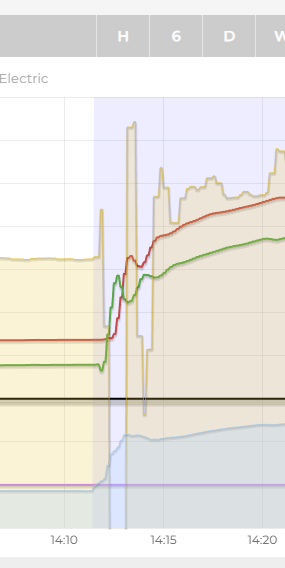
As well as this spike directly after the end of the DHW cycle, there’s also a common scenario at the start of a DHW cycle, where the Return T is often higher that the Flow T and -ive Heat values are created by the Heat Meter. My assumption is this is due to the hot water in the DHW heating coil being released. When the diverter valve switches to DHW it releases the hot water stored in the coil into the return. The water in the coil is naturally hotter than the water coming from the flow, thus the temporary -ive Delta T and -ive heat values. Makes sense now