Update:
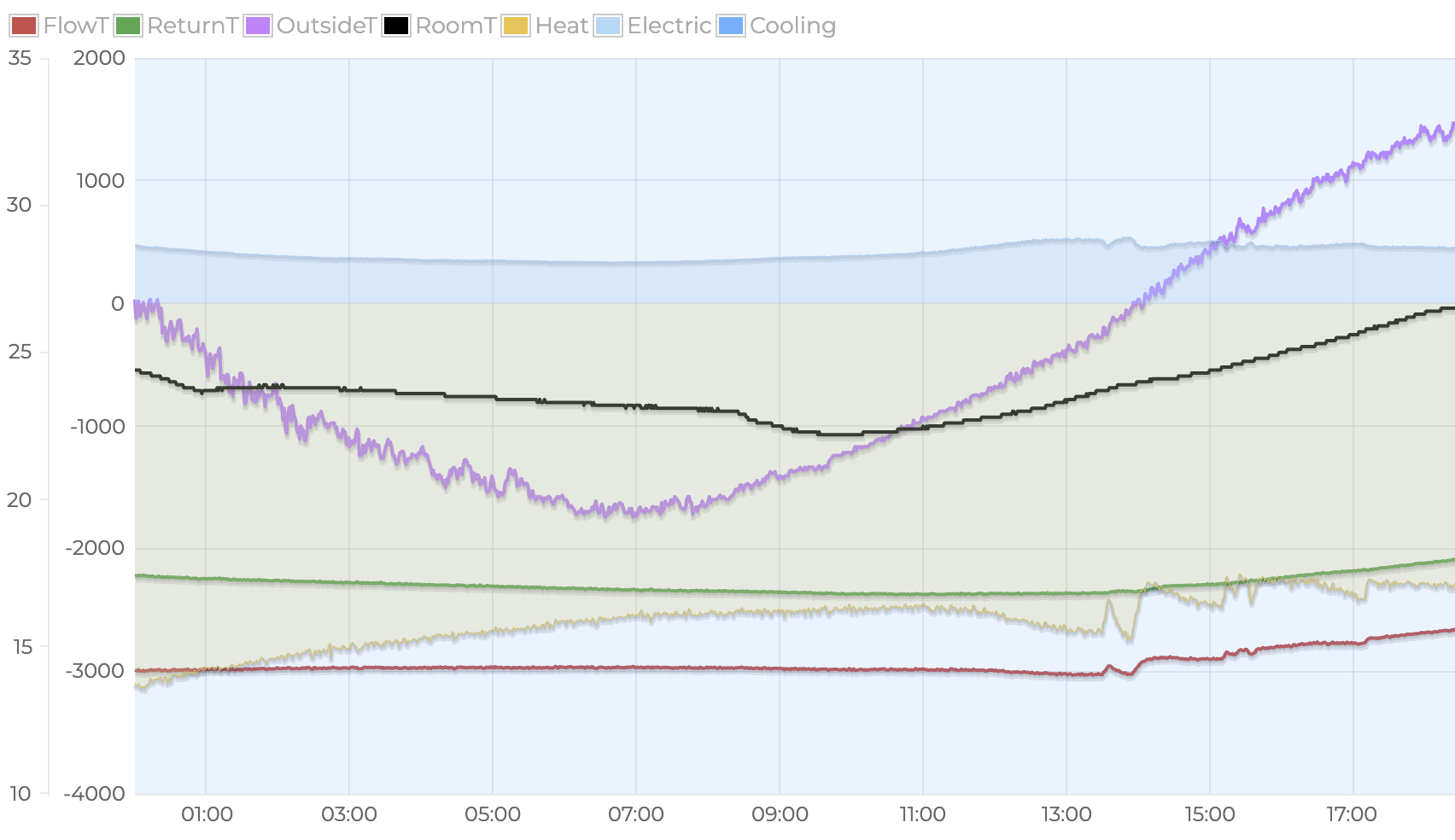
The answer was just that it simply needed time. The heat pump has kicked itself into cooling mode overnight and remains in it
Update:
The answer was just that it simply needed time. The heat pump has kicked itself into cooling mode overnight and remains in it
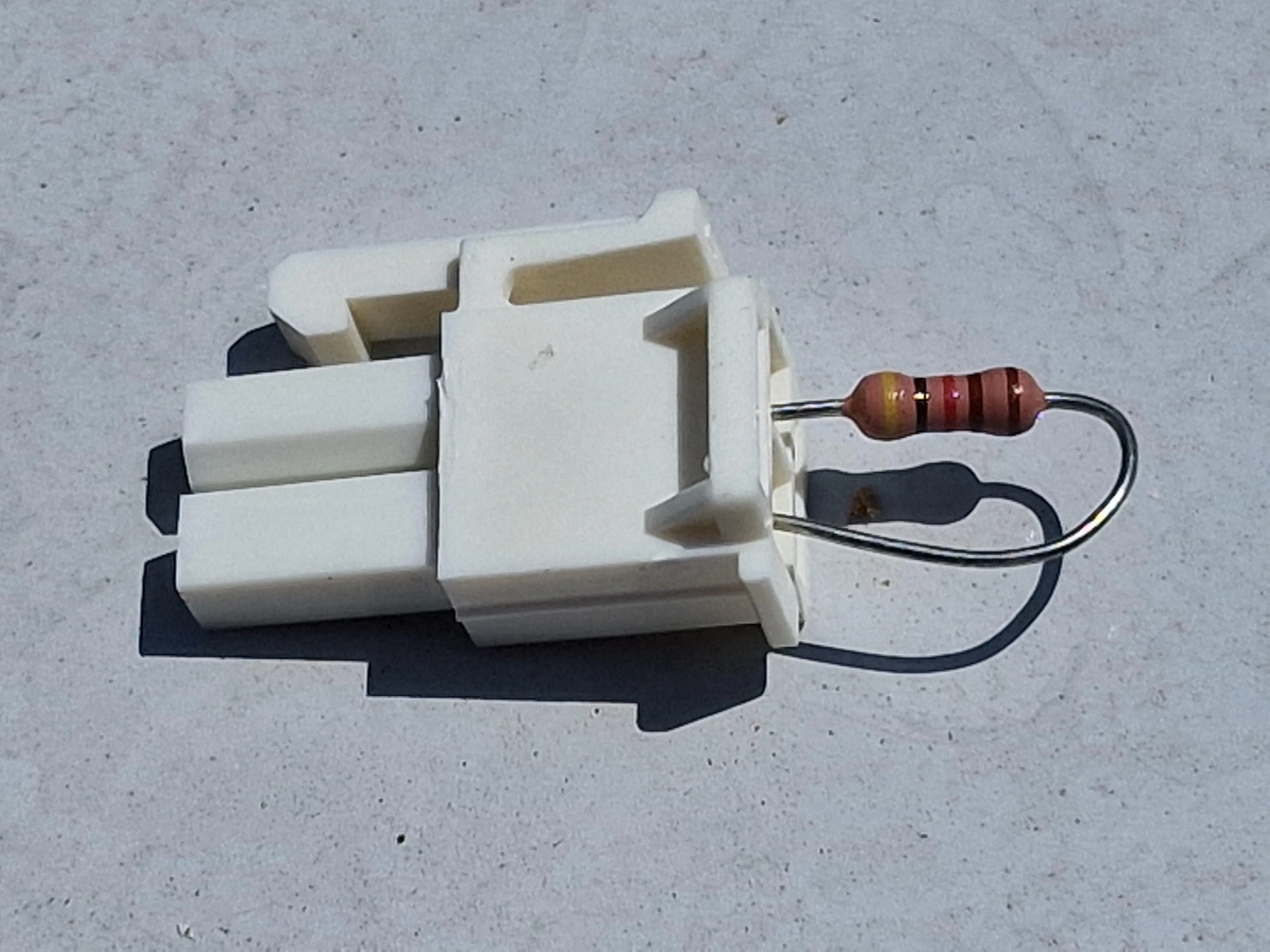
For anyone still hunting the part: Vaillant supplies this resistor under two part numbers — 0020266328 in older installation manuals and 0020269259 in current production documentation — they are physically the same component (a Verified Dual-MPN). Suppliers often only have one number in their system, so if a search comes back with nothing try the other. Once the resistor is seated in the coding-plug position the heat pump enters what Vaillant calls Authorised Cooling Mode, which simply means the cooling function becomes visible in the installer menu — it does not switch cooling on by itself. A Vaillant-approved installer must still enter the installer menu and explicitly enable the cooling function, then set flow temperature limits, before anything actually happens. Fitting the resistor and enabling the function are two separate steps that need to be confirmed independently.
I have also just installed a 4k7 ohm resistor and it works fine, so definitely avoid spending £400 if you can.
Probably not. I would expect the connector contacts to be crimped onto the resistor leads, then inserted into the housing, latching in place. The biggest difficulty for individuals wanting one will be minimum order quantities.
Yes youre right, I was thinking of DIYing but I didnt think my crimps would do it, and as you say its annoying to buy the terminals and the mount, plus some form of cover (so it looks legit during a service) when they are only £12 (inc postage). That said perhaps I should make 30 and sell them for £6 on ebay!! 
Why not just get one of these, or is that what you are saying?
I think it has a different sticker on, but stickers can fall off (just saying)
Yes of course thats the easy option (I bought from a similar supplier), but £12-13 for a component that costs less than 1p seems mad!! I guess its better than the people selling one for £200.
Either way I was thinking it was worth bulk buying some plugs, crimps, resistors and there is a good margin to make!!
Someone’s beaten you to it: https://www.vheatc.site
£75 for a £6 part is a very tangy markup!
Hello. I’ve got my Arotherm Plus working in cooling mode thanks to this thread. I’m using it with underfloor heating and with radiators. Dew point today is 23 degrees so very limited cooling possible with the radiators without them dripping with condensation.
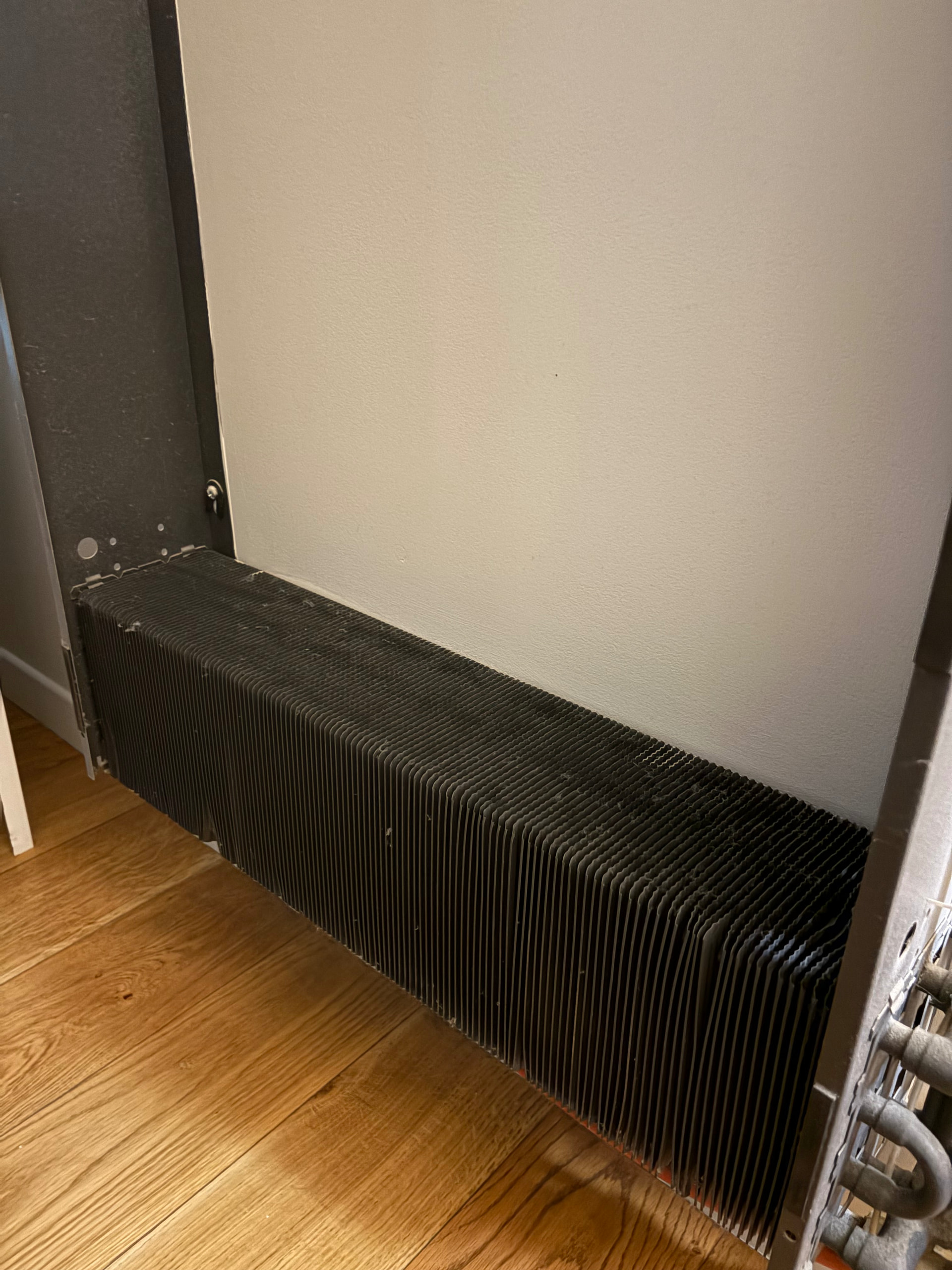
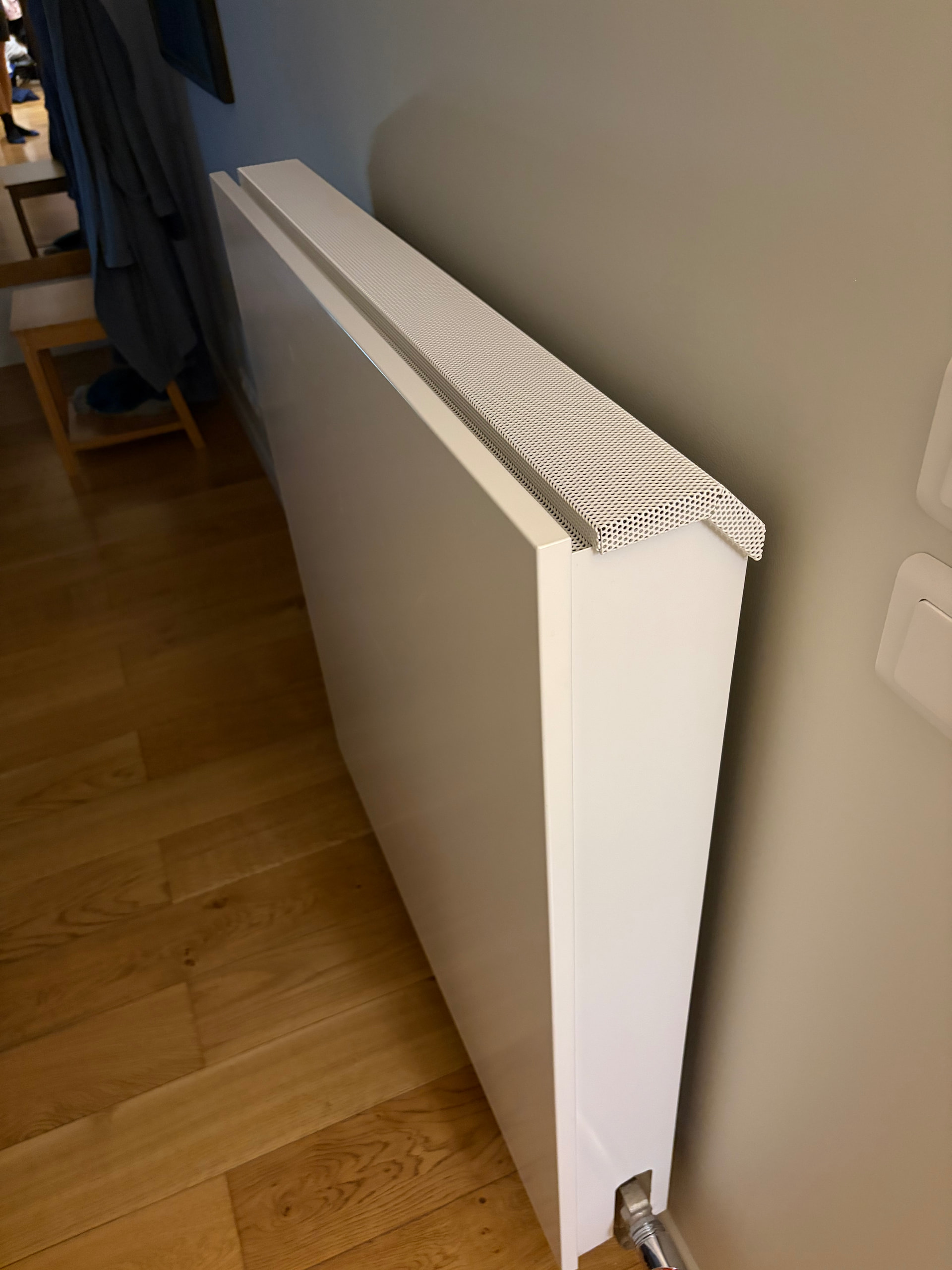
My radiators are of a design that I’ve never seen before (see pictures). They are more like a fancoil without the fan (see pictures). My question is whether adding radiator fans would be any use in increasing circulation/cooling. And if so, which orientation (e.g. above/below/to the side)?
This is intended only for heatwaves to take a few degrees out of the rooms.
I’m also looking at a fancoil/heat exchanger to pre-cool the supply air going to the MHVR. This would allow the existing system to distribute cool air to all the upstairs rooms and will have a drain to solve the condensation. Has anyone done something similar?
Very interesting; do you know the manufacturer/model of these radiators?
It does indeed look like a fancoil unit without the fan(s), and would indeed appear to benefit from a self-installed fan array. The Dutch on the ‘Tweakers.net’ forum are very keen on exactly this setup.
MVHR cooling: from experience, this is entirely useless due to MVHR flow rates being so low that any cooling is overwhelmed by solar gain.
I think the rad in your photo is a ‘Jaga Linea’.
I have an aroTherm Plus and UFH, and I’m looking to enable cooling.
In the modelling I’ve done, the dew point is the issue for handling e.g. 35C for a week heatwaves: if you suck in 35C air with RH 50% and cool it (without air exchange) to 22C, then the amount of moisture in the air stays the same, so RH goes up, and might get to 100%, when condensation occurs.
Is it possible (has anyone tried) to use a local dehumidifier to remove moisture, which would then allow the UFH cooling to continue going lower (flow temp) without condensation problems?
I know the dehumidifier would create a bit of thermal energy, itself, but at balance point, this would be minimal (if it had an ‘auto’ mode).
Grateful for any thoughts or advice.
FYI, I’ve had my Arotherm+ cooling for two weeks now, so its been running through some fairly humid conditions. I have the minimum temp set to 15, with a dew point offset of 2k. I initially had it set a little lower, but I was starting to see dew forming on the UFH manifold so that’s why I raised it a bit.
However the net result is that it has made a noticable difference to house comfort, just wish I’d done it earlier!
As with @tommyt, I’ve also been running our 7kW Arotherm+ in cooling mode for several weeks, and throughout the 35C+ heatwave in London with high humidity.
The Sensocomfort’s built in dew point monitoring is functional, but obviously dependent on where the unit is physically located and which body of air it’s sampling. I also have the dew point offset at 2K, but with no minimum flow temp set. This has come in handy during the second, most recent, heatwave with much lower humidity levels, where the flow temps got down to 11C without any condensation, keeping our son’s south facing bedroom at 20C during outdoor temps of ~33C (with external shading).
I’d say from experience that unless you’re looking for Dubai-style deep cooling, with every room at 18C, then just set the dew point offset to 2K and don’t worry about condensation.
Thanks (both) for your answers.
My sensoComfort (currently not networked at all!) is in the airing cupboard, off the kitchen, so wouldn’t be able to sense much of any use in its current state.
Can the sensing be remoted, or would I have to get the unit moved into the kitchen?
So, you both think the dehumidifier isn’t needed?
I confess I had started thinking of a Home Assistant setup with independent temp/RH sensors in each room, to make sure that the sensoComfort wasn’t sampling a point that was better (condensation-wise) than a distant room’s, and so cooling too aggressively.
Maybe I’m over-thinking it.
Unless you’d like the challenge of using HA to monitor the dew point and control the ASHP in real time, then just move the Sensocomfort to somewhere more suitable and forget about it.