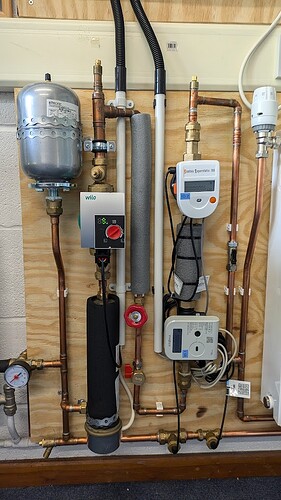
For about ten years I have been happily diverting my excess solar energy into my hot water tank based on the original EmonTX with my own Arduino based monitoring and controlling system and software, controlling a Eurotherm425A power unit - it’s been great.
But now my immersion heater coil has died. The plumber was unable to remove it from the cylinder and so my only option would be to replace the entire cylinder at a cost of about £900. Based on one week using gas to heat my hot water, I reckon it’ll cost me about £150 extra per year.
I’m looking for ideas to use the mains output from the Eurotherm controller, maybe into batteries? If any alternative comes close to £900 I might just as well replace the cylinder.
Or, I thank the system for providing me with cheap hot water for the last 10 years, have a sniffle, and think about other stuff.
As the government has just increased the BUS grant to £9000, and assuming that you currently have a gas boiler, maybe it’s time to consider a heat pump (for your DHW as well as your space heating)? Some heat pumps will get your DHW up to about 55degC - maybe a little more - without an immersion heater, and that may be warm enough for all the usual household demands. £9000 will pretty much cover the installation cost if you find the right installer, and you may even get a few hundred quid for your old boiler, so the whole project might cost less than a new hot tank…
But I’m guessing there’s a good chance the cylinder will need replacing soon anyway. As Sarah suggested, it’s never been a better time to get a heat pump installed. This will give you a new cylinder with 0% VAT and £7.5k-£9k grant towards the heat pump. You can use the heat geek website to get an estimated quote: https://www.heatgeek.com/
Thanks everybody for your ideas, very much appreciated. to give my predicament a bit more context; I live near Norwich where the water is classed as very hard 389 mg/L CaCO3. My house was built in the early 70s and the central heating was probably installed in the late 80s. Not much remains of the original installation now, just the piping and this cylinder. I had to renew my gas boiler about a year ago.
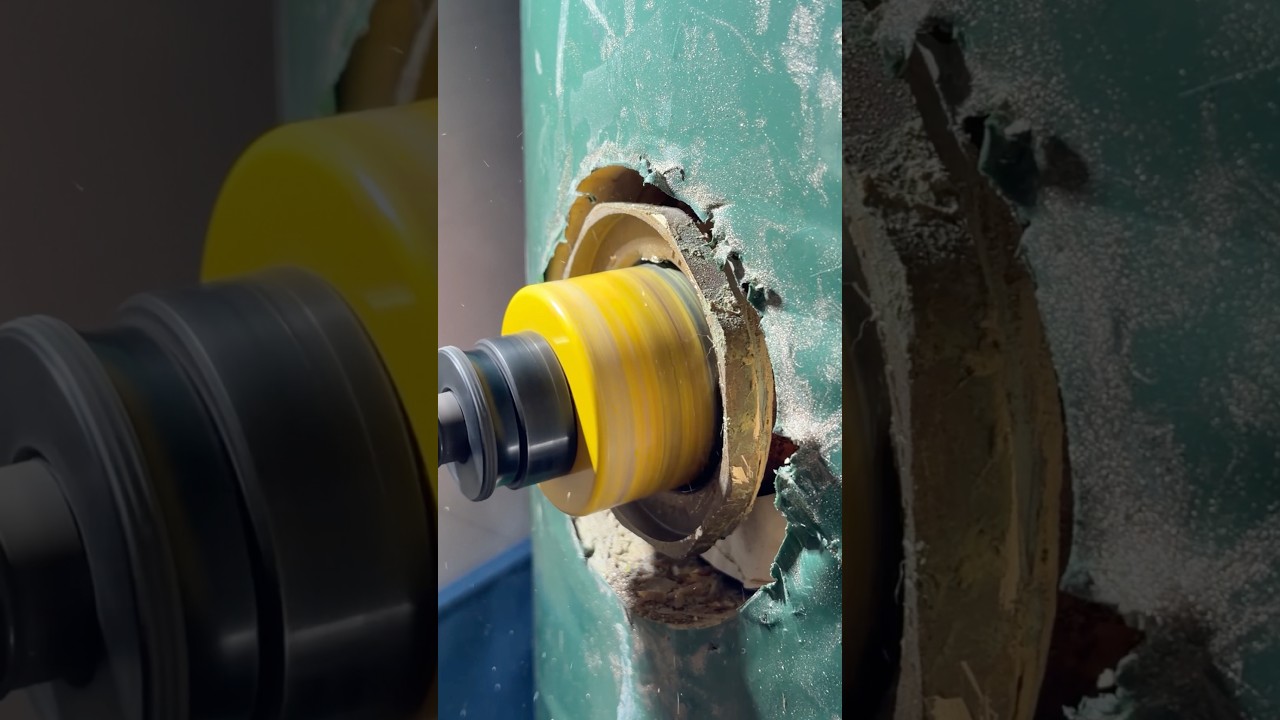
Great video: I also watched it on Facebook, where many plumbers said stuff like, “in all my years as a plumber I’ve never …” But, I reckon my heater is stuck solid with over 30 years of very hard water.
Thanks for this idea, I thought it could be a goer. But after much Googling and AI-ing I found that the manufacturers warn against using this in hard water areas, let alone very hard - 389 mg/L CaCO3.
Also I’m beginning to think you may be right about needing to replace the cylinder in any case. I’ve had over 10 years of cheap hot water - maybe saving £1000, or more. Perhaps this is payback time for me.
Yes, I’ve had that softener experience in a previous house in Hertfordshire. But, this element failure and this discussion has had me thinking that the cylinder is probably pretty clogged up, and maybe replacing it is a good idea for indirect as well as electric heating. The water here in mid Norfolk is really very hard.
Ah that’s unfortunate. But if you do renew your tank, you may wish to specify a somewhat larger “HP-ready” tank heating coil in it - at least 2m2 and preferably 3m2 - if it only increases the purchase price by a few pounds (same installation cost of course). This would end up saving you money if you installed a heat pump in the foreseeable future.
Have you proven that it is the heating element that is gone and not just the thermostat in the case? The latter is a cheap replacement. A multimeter would tell you the impedance of just the heating element. If not open circuit (ie dead): then do the acid test : wire it so the thermostat is no longer in circuit, just mains to the element: and see if the tank heats or not.
Thanks for the reply, I appreciate the advice, but I tested the element, it showed about a 25ohm resistance, about right, but, there was only a 5Kohm between live and ground, so that explained the elcb tripping. The plumber did try changing the thermostat, but that didn’t change the tripping.
To generalise, scale build-up rates are not affected much between different metals. You really need to remove the minerals before they hit the hot surface. I assume that you have read little summary guides like How to Prevent Limescale caused by Hard Water?