Ecodan Cooling mode with radiators

Hi

Has anyone experimented with turning on the cooling setting on an ecodan? I’ve got an 11kw system, with radiators and am wondering if you could run it with water temps of around 18C???

Don’t know if anyone has already posted something but I couldn’t find anything on the search…

Thanks

Godfrey

I have been trying this out for the first time myself today.

The first step is to turn off and isolate the heat pump, take off the front panel and find the right DIP switch on the main board: SW2-4. Then restore panel and turn it back on. This enables an option for cooling on the controller and on MelCloud.

As for operating, it’s advised to keep the flow temperature 2° above the dew point, which can be calculated from temperature and humidity, measured inside your home. Otherwise moisture will condensate on the pipes and radiators, which could cause problems.

Today, my dew point was around 19° so I could not lower the flow temperature much at all. The effective volume is quite small because the cold water doesn’t fill the radiators, and the heat pump cycles very frequently. I might try again overnight when the dew point is lower, but I’m not sure it’s worth the bother.

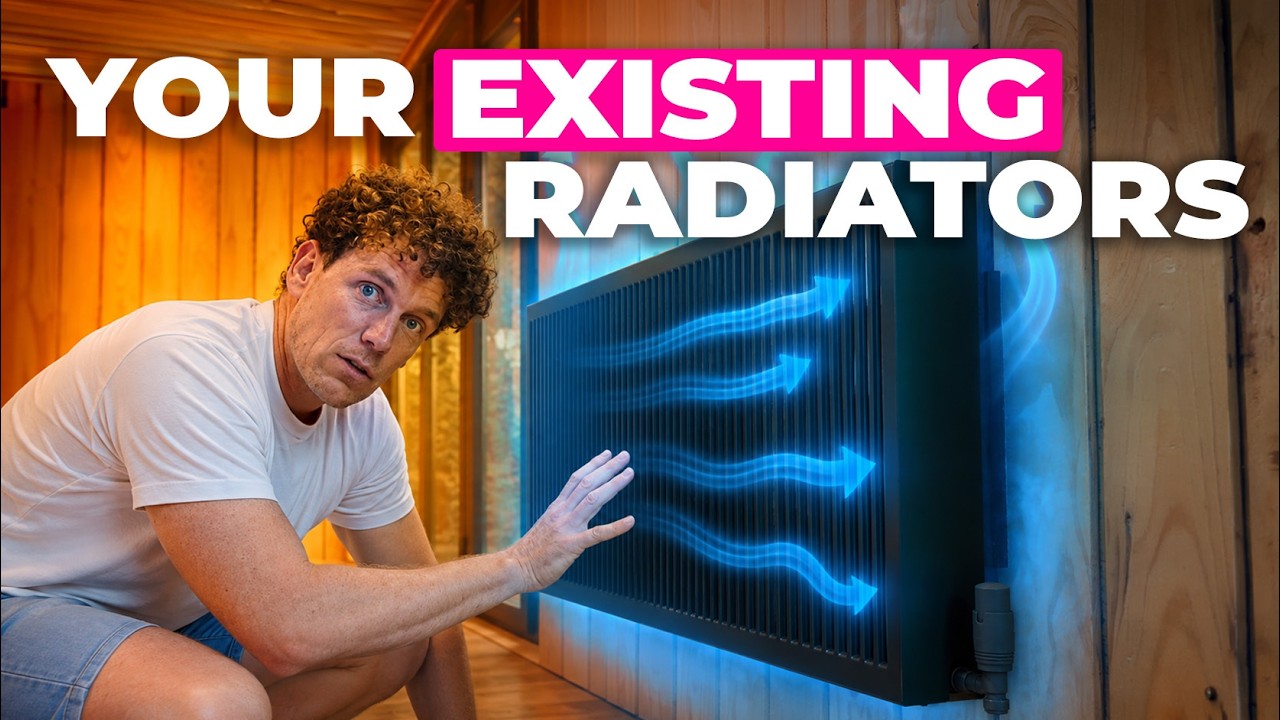
Putting fans on the radiators can help move the cold around, though I didn’t find they made much of a difference; “fan coils” would be better still.

See HeatGeek’s video for how this can be made to work

(some other videos on the subject linked from video description)

Thanks Tim!

that’s a lot to take in.

Are you leaving your system as is? I.e. not vapour lagging pipes? I assume you have radiators?

I’m thinking that we only really need to cool a few times a year so might not need to as long as I get the flow temperature correct?

Would love to hear how you get on tonight, especially as it’s much cooler than earlier.

Godfrey

Yeah, leaving system as is; all radiators, no lagging. Would need significant replumbing to make it work effectively, which probably isn’t worthwhile for the handful (?!) of heatwaves we get in a year.

General consensus is that cooling only really works with underfloor heating.

If you want cooling that works, best bet is to install an air-to-air heat pump that can directly cool a room.

I’m in a new build where a heat pump was installed but no underfloor heating was! I’m gutted.

My house stays pretty cool during the day all things considered, but I do wonder if this would help on days where I’m not home and so all windows etc are shut…

Either way I’d be interested to hear if you try tonight.

I ran cooling over a few sessions, collected some data, and crunched the numbers.

tl;dr it does kinda work, but the effect is subtle and requires constant monitoring and adjusting.

The Ecodan 11 kW is a big unit can deliver a lot of cooling power, I would guess about as well as it can provide heat in the winter. The limiting factor is the radiator system: my combined emitter surface has a rated output of 18kW at Δ50. These radiators can, in therory, provide 1.1 kW of “cool” when 6° cooler than the room, assuming they can be fully saturated and have active convection. This grows to 2 kW at 9° delta.

However, the cold water runs runs along the bottom of each radiator rather than filling it with convection, so the effective cooling capacity is considerably reduced. (The low-loss header probably isn’t helping either, with inverted temperatures).

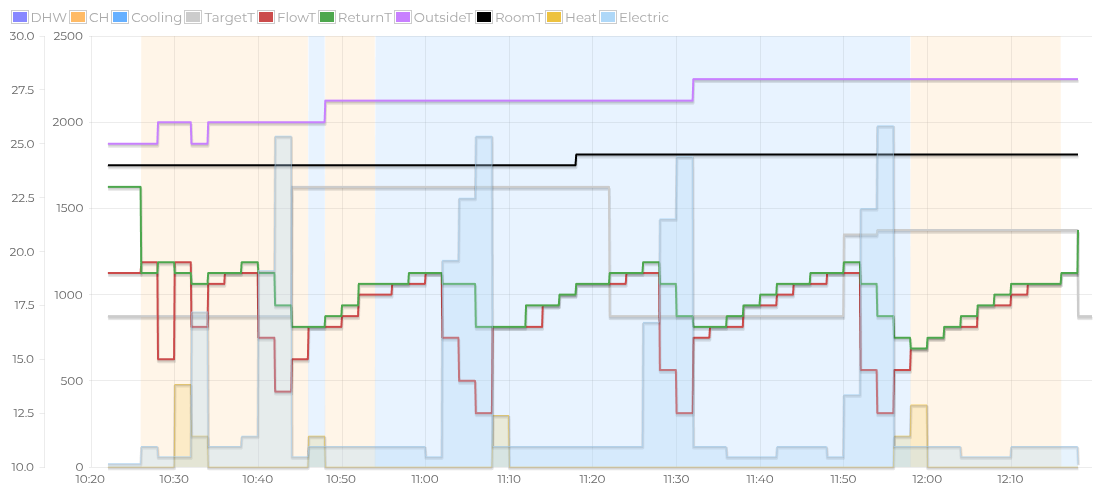
[Friday, August 14th] I ran the heat pump for nearly 2 hours. The heatpump drew nearly 2 kW of electricity for 5 minutes, plunging the flow temperature to 12-13° (well below dew point), then staying off for 20 minutes to let the temperature come back up before starting again. 4 cycles in total. (Similar results with other sessions)

This averaged about 370 W of electrical consumption, 120 W for the pumps, so 150 W for the compressor. Assuming a modest COP of 4.0, this equates to about 600W of cooling power into the radiators - about half of the theoretical capacity. Mean return temperature of 18° against a room temperature of 24°. Would need about 1600 W of cooling just to maintain that temperature (ignoring solar gain).

The main problem is that heat pump is too big for the property (even in winter), so it’s difficult for it to get into a nice running state, especially when minimum output is 4 kW, and even radiators can only transfer that power when flow is 15° below the room temperature.

Combined with the requirement to [manually] keep flow temperature above dew point, means the heat pump will always be cycling to provide a small amount of cooling. (Doesn’t help that the Ecodan races to its target as quickly as it can, rather than taking it slow.)

The radiators were cold to the touch and would have been absorbing some heat, but I could not detect a noticeable difference. I can maybe see a reduced gradient in the rising room temperature if I squint. Hardly a scientific experiment though.

Caveat: your property will have different figures for emitter capacity, heat loss, etc so I cannot predict how well cooling will work for you. I would guess that 11 kW is equally oversized for your new build, so cycling is very likely. Your actual mileage may vary.

Note: I had 2 hardware fault events while cooling, which I’ve never during 5 years of heating, so there some something the Ecodan didn’t like doing. I limited my tests to periods when I could keep an eye on it.
Very interesting to see some actual (estimated) numbers.

Did you run cooling with fan-assisted convection on the radiators? If so, which proportion of all your radiators were fan-assisted, and which type and quantity of fans did you use?

I did deploy a mishmash of fans of various types, ranging between commercial brands, DIY projects, and domestic desk fans.

Of the ten radiators, five had some kind of forced convection over a portion of their length.

I have cooling working with radiators in my house.

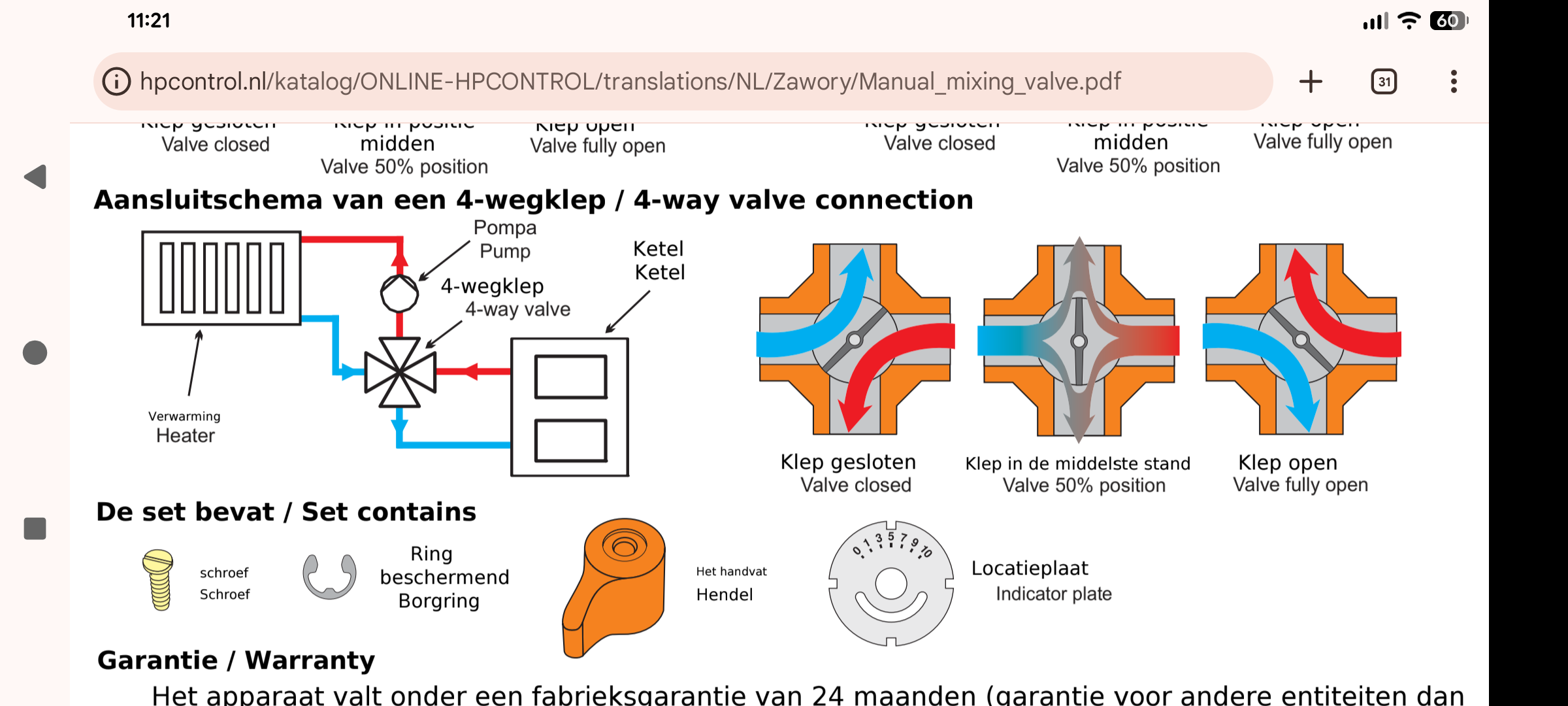
A main contribution to the success is to reverse the flow through the radiators when cooling.

If you don’t water just drops to the bottom once it has entered the top of the radiator leaving 90% of the radiator not working.

This does require installation of some valves and pipework modification.
Simplest option is to go for a 4 way valve between circulation pump and radiators.

Hi Tim

I also have an Ecodan and have been wondering about cooling. Is there any way to tell the unit to run at a fixed flow temperature when in cooling mode? It doesn’t sound like it from what you’ve written, but wouldn’t that help? I expect you’ve seen the teaser Octopus put out on X about its prototype room cooler, which is basically a portable air conditioner plumbed into the radiator circuit. They claimed great results from a steady flow of 10C water.

Yes, the target flow temperature is fixed, but you have to figure out the dew point yourself.

Here’s a similar product: https://www.amitime.com/products/dc-inverter-water-source-space-cooler/

Here’s another anecdotal account running with cooling on a different make of heat pump:

I’ve been playing with this a bit with my ecodan. I concluded that I won’t get any meaningful cooling with radiators and the risk of moisture in hidden pipe runs is a real concern.

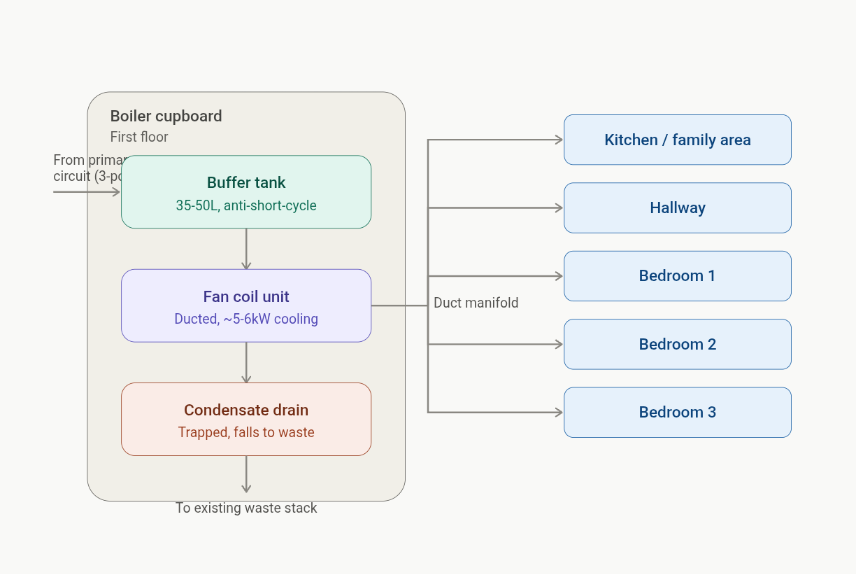
I did some planning with Claude and came up with an idea which should achieve meaningful cooling for the whole house.

I plan to create a secondary circuit which is switched on manually during the summer months. I’ll tee into the primary pipework after the hot water cylinder. This circuit will be properly insulated with vapour protection. It’ll feed a buffer tank in my redundant boiler cupboard (which is centrally located upstairs) this is to prevent short cycling. An off the shelf ducted fan coil unit will then draw the cold water transferring it to cool air which will then be distributed through a manifold and ventilation ducting into the upstairs bedrooms and a couple of key downstairs rooms.

This is the plan. I’m not sure when I’ll get a chance to implement it. I guess there’s no rush now until April / May. Lots of time to fine tune the details.

Summary

This text will be hidden