I’m having a heat pump installed along with solar PV. I intend to get a battery sytem, but i’m not sure whether that will be now or some time further down the line.
So first question - Do I need a heat pump monitor?
It’s not entirely clear if I need this and i’m struggling to figure out why I would need this. What benefit will I gain from installing such a system? Is there a return on investment? If so, how long would this take?
Can this be tied in to monitoring solar and battery? What’s required?
Again, the website doesn’t do a very good job of explaining any of this.
The Level3 heat pump monitor is designed, built and sold in the shop here. It is an expensive piece of kit. The shop here is not a glossy sales-driven enterprise so you won’t find any literature hyping up the products. The developers assemble monitoring hardware and software that is very precise and reliable.
It is useful to to owners who are interested to observe closely the performance of their hp and make comparisons with other systems.
My take on the overall aim of the project is that this level of monitoring provides a data set for the advancement of system installations that squeeze the best performance of domestic heat pumps.
Close observation of the app helps to identify where hp settings can be optimised and running cost savings can be made.
I wouldn’t want to run a hp without this monitoring but I accept that not every hp user can justify the expense or is willing, interested, and engaged enough to spend their time with it.
1 - no. It’s just a tool for the curious to monitor the performance of their system.
2 - it’s possible but not simple. You need a source of data from the solar system and battery and a means of getting that data into the emoncms software. As there’s an enormous variety of solar and battery systems there’s not going to be a straightforward way of doing it.
These things are very much DIY and you’ll have to put the effort into learning about them if you want to use them, although this forum gives an enormous amount of help to people.
Yes and No. There are a number of instances where the HP Monitor has shown there is air in a system so the performance was degraded.
Agree
On ROI, work out what a 5/10/15% increase in efficiency would do for your running costs and that will tell you if it is ‘worth’ it. As shown elsewhere on the forum, manufacturers’ data is wholly unreliable - to a large extent, they have an incentive to overestimate the performance of their HP and most systems will not have a means of verifying it.
I can’t work that out until I physically get the heat pump installed. And if I’m going to the effort to install that, then i’d rather get as much work done at the same time to minimise disturbence.
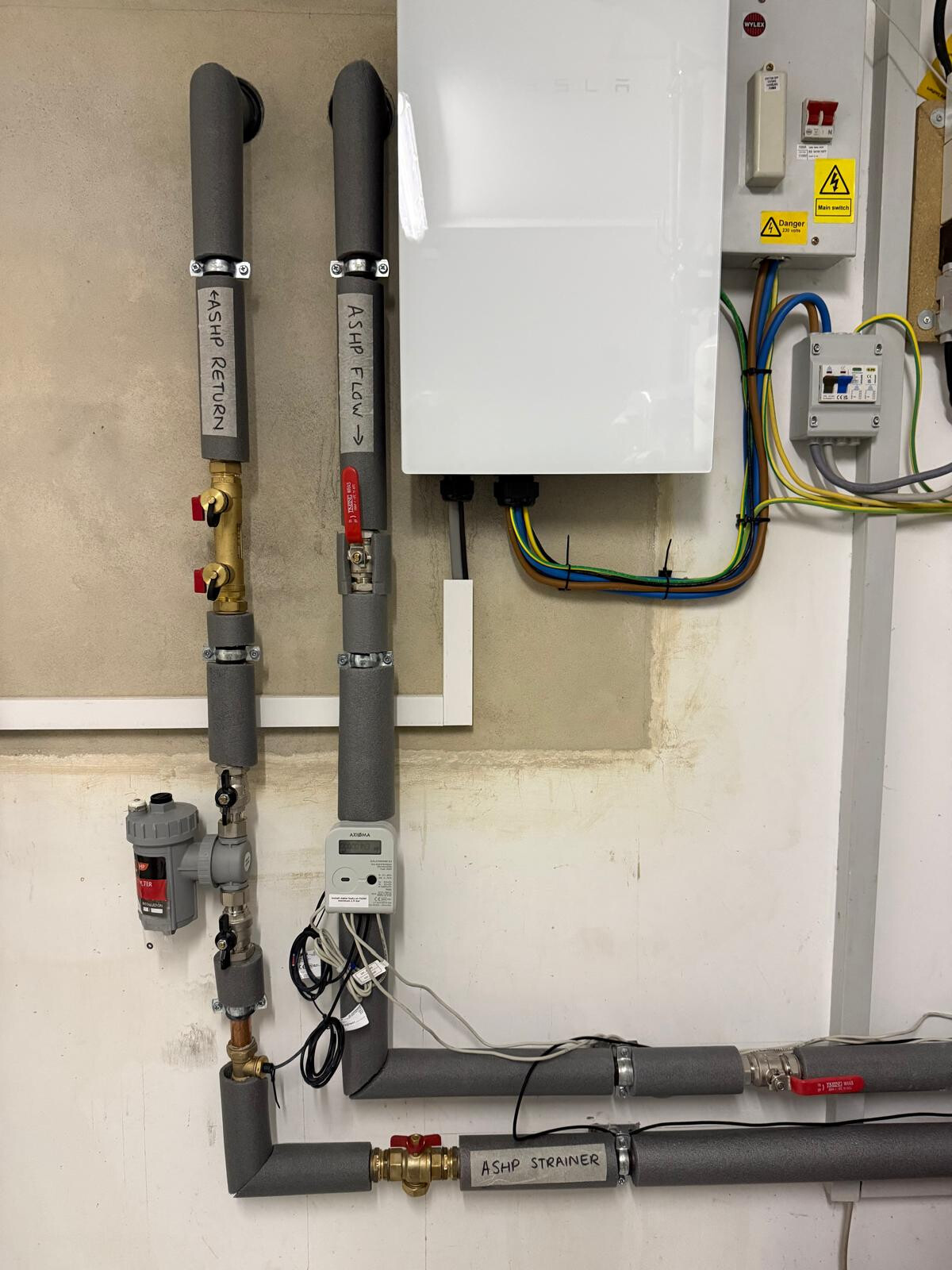
You could ask the installers to design it such it can easily accommodate the Heat Meter with a suitable run of pipe and a couple of valves preinstalled. Then all you have to do is shut off the valves to install the Heat Meter.
I had my 10k Vaillant Aerotherm+ system installed 3 months ago and then retro-actively fitted the Level 3 Heatpump monitoring bundle myself. I like you, didn’t know if I needed the Level 3 Heatpump monitoring system at the time of install so I didn’t add it to the initial install. That said I did think I’d install it later. In hindsight I wish I’d asked my installer to do a few minor things that would have made a future install a lot easier. Looking back it would not have added more than £50-£100 to the install but it would have saved me some hassle later.
I would recommend the following,
At the start of the flow, get two isolation valves fitted with 0.5m of pipe between them. This is where the heatmeter (the flow temp sensor is inside the meter) will likely go, just make sure it’s inline with the instructions of where to put the Heatmeter
At the end of the return, get two isolation valves above and below where the temperature sensor will go with a min 0.3m of pipe between the valves. This is where the Return Temp Sensor will go. Another option … as the Strainer and the Magnetic filter are often at the end of the return, get the installer to leave a min 0.3m of pipe between them, you can then use the isolator valves on these devices to install the return temp sensor between them.
When the installer is putting an Electric Meter onto you heatpump elec supply in your consumer unit, get them to put the same one you’d get from the Heatpump Monitoring Bundle aka a Modbus SDM120 electricity meter. It will be slightly more expensive as its MID certified.
I have a Vaillant so I only have an outside unit, other ASHPs also have inside units so your flow pipes may be different setup to what you see in my pics
My installer only fitted the top cut off valve on the flow, so when I fitted the heat meter below it I had a long run of pipe without a cut off valve. It wasn’t the end of the world, I just had a lot of water to mange when I cut the pipe. To future proof things, I added another cut off valve just to the right. I was lucky on the return as I was able to add the return temp sensor between the strainer cut off and magnetic filter cut off.
I’d say those extras might cost you up to £100 more but then you’ve really future proofed your install should you want to put the Heatpump Monitoring Bundle in later on
To answer you’re other question of whether it’s worth it.
So far it’s been invaluable for getting advice from this community and diagnosing potential issues. In my case a badly calibrated return temp sensor in my ASHP was under reporting my COP by over 25% in my Vendor app. I was drawing the conclusion that my install had an issue or maybe I should get the UFH flushed. When I installed my level 3 bundle I got the the accuracy/confidence I needed to be assured that my ASHP was actually working as designed (actually even better than designed). Going forward, I can see I can get a lot more value through a) sharing diagnostics with this forum and b) tuning my system and the heat curve for better performance. I’m pretty certain it will pay for itself. I guess in my case it’s already paid for itself as seeing my accurate COP meant I didn’t get my UFH flushed.
In an ideal world monitoring would be built-in and/or wouldn’t be required. But until heat pumps are all installed perfectly, that’s just a dream. I’ve greatly reduced the running costs of our Octopus installed Daikin, and wouldn’t have been able to optimise the system without data from OEM kit. There are ways to save money on the monitoring hardware, for example many use serial data from their heat pump instead of an expensive heat meter.