Up until a few months ago, I was only aware of one way of plumbing in radiators – bottom bottom opposite ends (BBOE). A Heat Geeks online course suggested you could get about 10% more heat by flowing in at the top, and returning out of the bottom at the opposite end (TBOE).
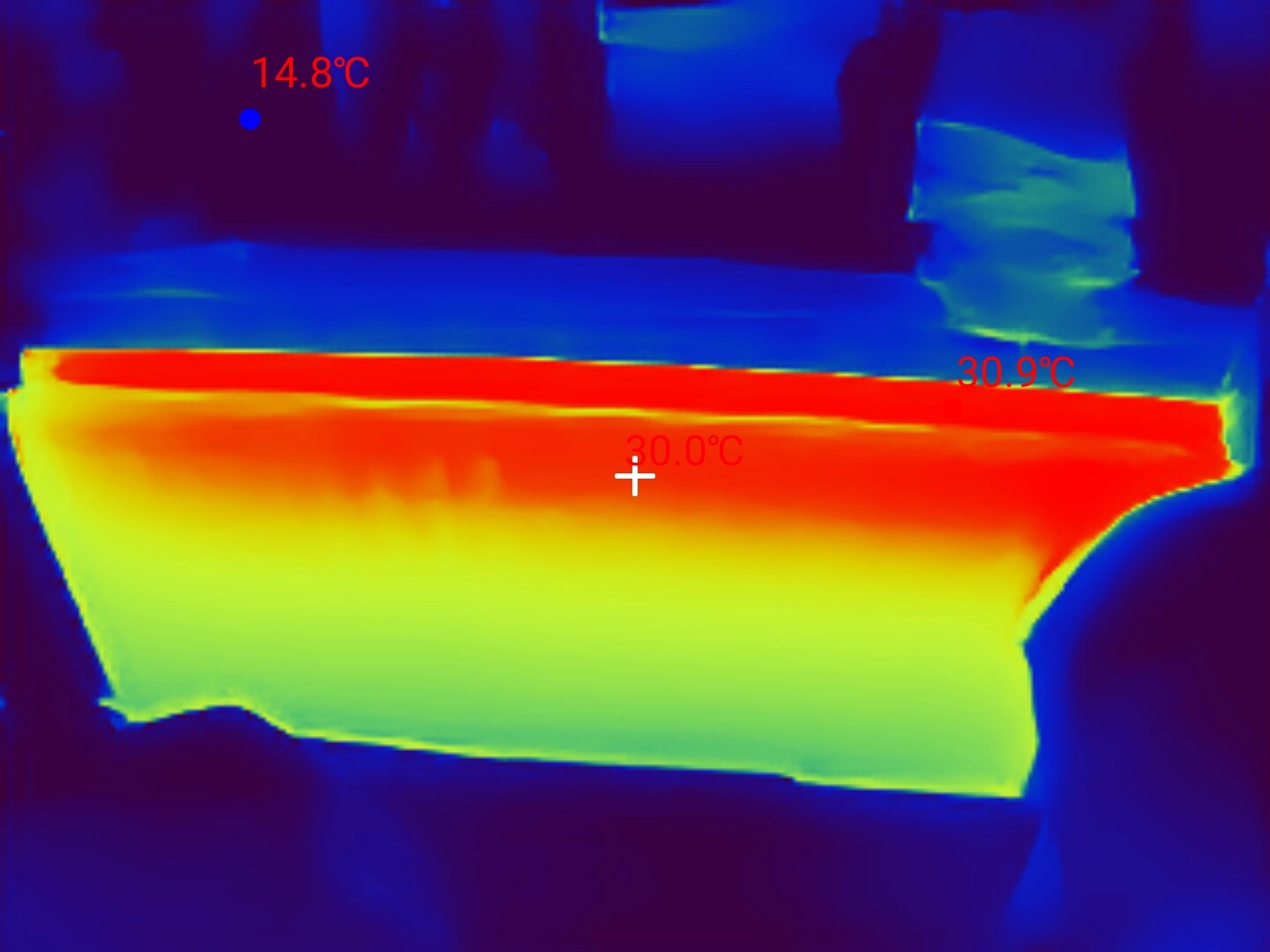
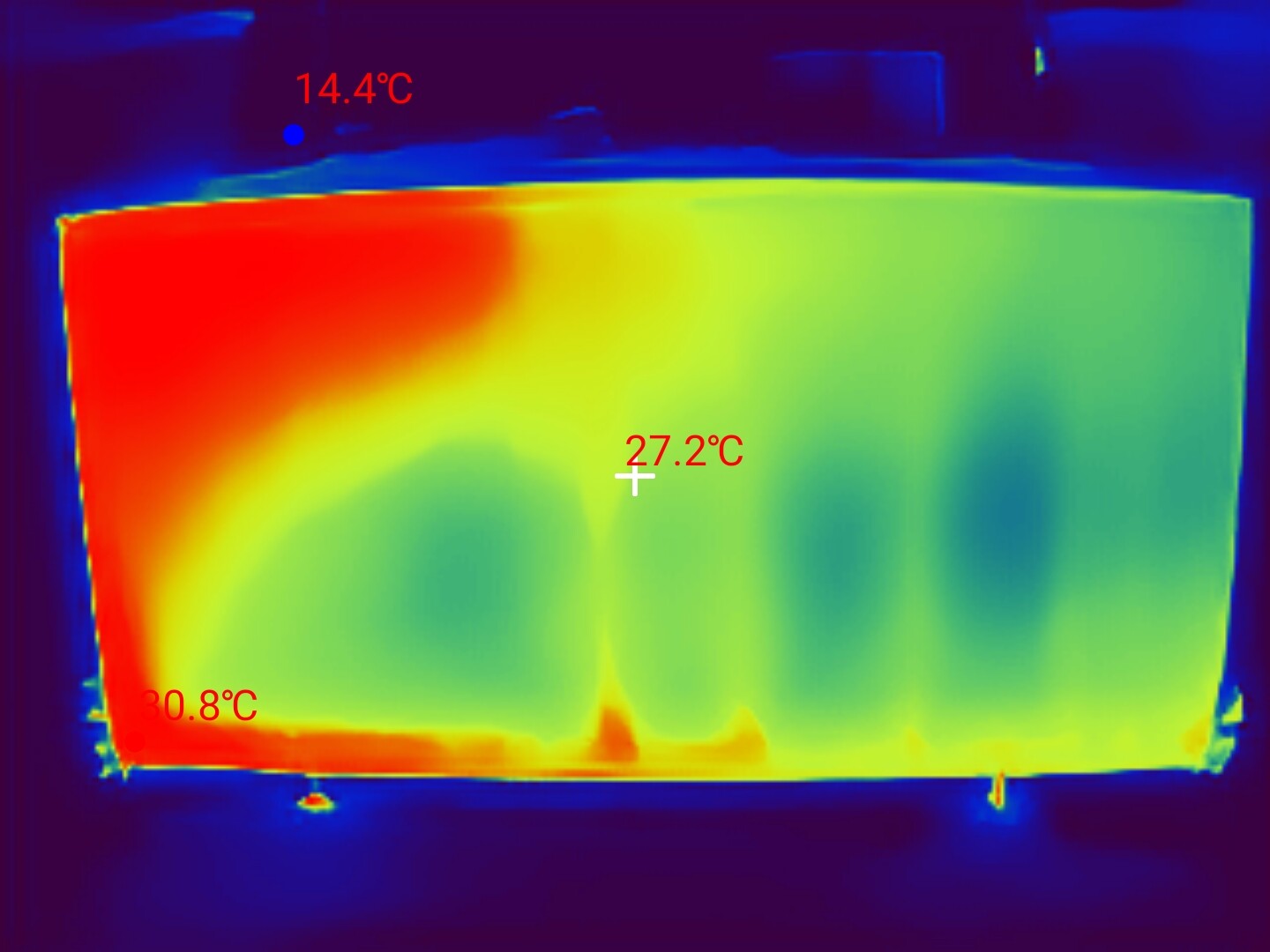
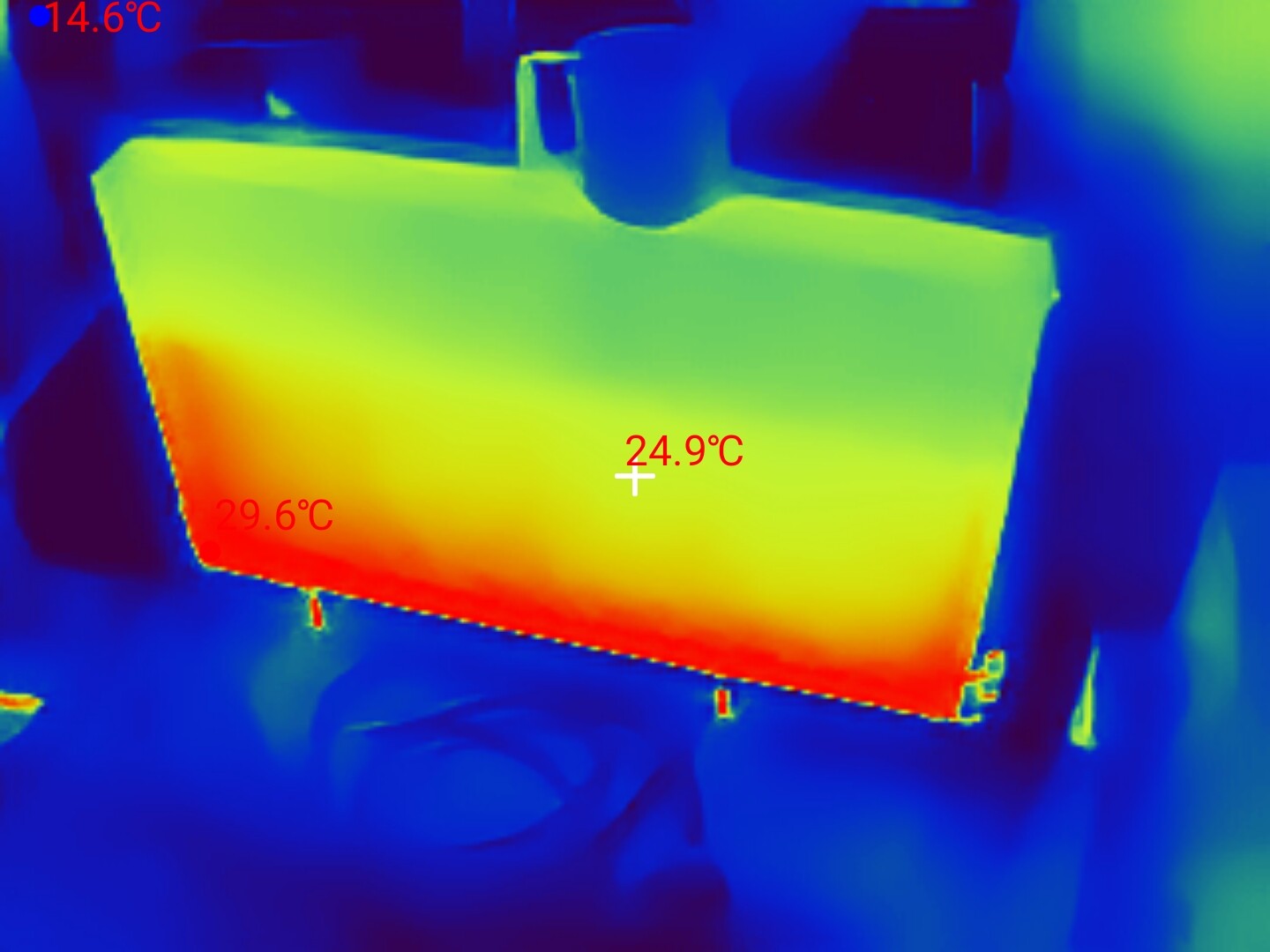
Most of my radiators are still BBOE (a mix of ages & styles), but I did replace some recently, and plumbed them in TBOE. My latest toy is a thermal camera, which has proved eye opening. I was a bit shocked at how bad some of the BBOE rads looked. I suspect some of them would improve by much more than 10% if plumbed in TBOE.
The OK BBOE has fewer, but larger vertical channels (30mm side-to-side, 17mm front-to-back). The other BBOEs have more, smaller vertical channels (19mm s-t-s, 12mm f-t-b). They would probably work better BBOE with a deltaT of 20 degC from a gas boiler. But with a heat pump deltaT of 3 degC, it looks marginal whether there’s enough buoyancy to levitate the warm flow out of the bottom channel.
I’m going to replumb all our rads TBOE once the current heating season is over.
(d) appears to be contrary to the laws of physics and the steep gradient about 2/3 of the way up looks like what would happen if the rad was in need of bleeding.
Have you checked?
Also: your dT looks quite large for a low temp system. dT=5 would improve the mean temp maybe by more than re-plumbing.
Yes – the radiator in d) did need bleeding, but c) was OK.
I have been trying to get the HP to do the bulk of our heating overnight when IOG is very cheap, and then only run at minimum power during the day if absolutely necessary. I took the original thermal pictures during one of those daytime, minimum power runs, when deltaT was low (about 2 degC). Predictably, I cannot get the HP to start really gently today, and the thermal pictures all look like b). I’ll keep trying!
Interesting results…we have mainly tall radiators in aluminium and I’m curious to see how they are doing, going to add some flowmeter valves at the week end as a start.
Is is a dedicated camera or an attachment…didnt get one previously…too much choice!
The PDF download is better formatted than the html render - the key info is in figure 2, and table 1.
They tested heat outputs under (lots!) of different plumbing arrangements for a double panel (K2) 600 x 1200.
In their results, they designate TBOE as arrangement C3, and BBOE as C6. Flow rate is 1.4 litres per minute with 45°C flow temperature and 20°C room temperature.
TBOE gets 167 W of heat output, but BBOE only 74 W (!).
Thanks for sharing that paper. I’m not surprised that TBOE had a higher heat output than BBOE. But I am surprised that it was 2.3 times higher! I wonder if it’s because the temperature difference between radiator inlet & outlet was pretty low (1.8 degC for TBOE & 0.8 degC for BBOE). That seems on the low side, even for a heat pump. My system normally runs with a temperature drop of 2.5 to 3.0 degC through the rads.
In the paper, one of the references seems to show TBOE, BBOE & TBSE have similar heat outputs at most conditions (with TBOE slightly worse than the other arrangements at low inlet temperatures)! But the temperature drops through the rads seem to be mostly in the 5 to 20 degC range. https://www.epj-conferences.org/articles/epjconf/abs/2015/11/epjconf_efm2014_02010/epjconf_efm2014_02010.html . I couldn’t find the raw data anywhere, just graphical summaries.
The more papers I have read on this subject, the more confused I get.