Hello all, long term listener first time caller here.
I’ve done quite a lot of reading on here, Renewable Heating Hub and (a less reliable) Samsung Heat Pump owners facebook group; and whilst I understand how water law works I think there are some nuances that I can’t quite get my head around, so am hoping you can help.
For context my situation is:
Three storey (top is loft conversion), three bedroom two bathroom, mid-terrace Victorian house with a very new refurb (new roof insulation and kitchen extension) in north London.
8kw Samsung EHS mono HT Quiet and Mixergy tank
UFH throughout downstairs and radiators in the middle and top floor
The Samsung controller only states one zone for heating, but we have three third party thermostats: one for all the radiators, one for the kitchen UFH and one for the living room UFH. These are currently set to a higher temperature than needed during the day and set back by one degree at night to try to ensure I don’t boil in bed. So it’s only really at night they are turning the pump off.
System designed with a total kW heat loss of 7.15 and a flow temp of 50 degrees (according to the installer Heat Loss Cal sheet)
Current settings are
201: 15 to -2
202 and 203: 32 to 42. I think 202 and 203 were originally 35-50 but I’ve revised down.
2041: WL-1-Floor
2091: Use (Signal On?OFF) or WL Interlink OFF(Water Pump3)
2092: Not Use
2093: Room Temp. ON/OFF or WL Interlink ON/OFF(Water Pump2)
Whilst our installers did a very neat and tidy job, there was no explanation of the figures used in the design and no handover on how to optimise the thing. As far as I can tell it was just set up with standard settings. The house is always warm, but I feel it could be optimised and I think it’s cycling (see question below).
The system was set up with design room temps that are slightly different to what we would have and I think the heat loss assumptions were probably on the cautious side i.e the house doesn’t lose as much heat as they thought it did.
The two main things (although they may throw up more questions) are:
People talk about cycling - are they referring to the compressor turning on and off or the water pump? Or both? Are we trying to avoid both of them turning on and off too much or should I be focussing on one or the other?
The installers suggested bigger/more radiators than we have. We didn’t change them at the time and have had no problem heating the rooms, but they didn’t tell us if there is an efficiency impact of not changing them.
I’ve seen people talk about minimum heat output and emitters not being able to “shed the heat they are being fed, resulting in the return temperature rising to a level that causes the heat pump to shut off”. I don’t know if/how I can see return temperature, but could this be the reason for our cycling? And if so, is the answer that we just have to keep the WL temperatures higher than ideal OR upsize our radiatiors/add another one OR is there another solution?
I can’t quite get my head around the fact that this seems to be an issue at lower WL temperatures…surely if the temperature is lower then there’s less heat for the emitters to need to get rid of anyway? But I’m clearly wrong on that, so if someone is able to explain I’d really appreciate it.
Then, if we do turn 202/203 up to rectify this, will we then end up with rooms that are too hot and then are switched off by the thermostat anyway, causing the same problem?
Sorry that’s a really long post but I thought it would be helpful to share as much info as possible. Any suggestions much appreciated. Thank you.
I’ll start by answering your questions directly first, then offer some further insights.
Cycling generally refers to the compressor turning on and off. 2091, 2092 & 2093 dictate how the water pump behaves when the compressor is off. So generally, you should be focussing on the compressor turning off.
Here is a piece I’ve written that for a document I am working on to help people understand heat pump basics. Sorry it’s quite long.
WC - Efficiency
When discussing heat pumps, you will often hear people talk about “dT”, “delta T” or “temperature difference”. There are different dTs to consider when trying to improve the efficiency of your heat pump. We’ll cover other dTs, but the most important one is the difference between the outside air temperature and the temperature of the water circulating around your heat pump and radiators or underfloor heating. The bigger the temperature difference is, the harder your heat pump has to work to extract the latent heat from the air, and transfer it to the water and this directly affects the efficiency of your heat pump, so you want to keep it as low as possible. While we cannot change the weather, we can try to keep our water temperature as low as possible. Lowering the water temperature affects the heat output of your emitters, so this is usually offset by installing larger radiators (to increase the heat output from the same water temperature) and by running the heat pump for longer. You may have heard the term “low and slow”, this is what this saying is referring to. LOW flow temperatures, and SLOW (longer duration) heating.
Running a heat pump like a boiler, where it comes on only for a few hours, a couple of times a day, at really high temperatures, will drastically decrease your efficiency, and increase your running costs. Heat pump owners will also tell you about the increased ‘comfort’ levels with running low and slow, as they don’t have large temperature swings, or cold spots in their homes any more, thanks to having the heating on for longer.
To make sure we have flow temperatures as low as possible, and to be able to leave our heating on for as long as possible, everyone should be using weather compensation. This is where your heat pump controls adjust the flow temperature based on the outside temperature. So your heat pump may be trying to heat the water up to 45 degrees when it is -3 degrees outside (which gives a dT of 47), but only to 30 when it is 15 degrees outside (which gives a dT of 15)
NOTE: any decent heat pump installer will carry out a heat loss survey on your home during the quoting stage. This is to primarily work out what size or capacity of heat pump you need, but they will also measure your radiators to work out what flow temperatures you require. They will likely also make recommendations to changes to your radiators, making them bigger) to reduce your flow temperatures and increase efficiency.
Getting the flow temperatures right will make sure that the heat output from your emitters matches the heat loss of your home whether it’s a milder autumn afternoon, or a bitter, freezing January morning. This causes the dT we mentioned, to naturally increase in winter months which does lead to poorer efficiency (sometimes as low as 2.5 to 3.0), but this should be offset by the warmer spring and autumn months which will naturally have much lower dT and much higher efficiency (as high as 6-7).
But not too low.
While we want to run with low flow temperatures, we cannot go too low. The heat output of a radiator or underfloor heating is determined by another, different dT. For a radiator to put out more heat, the water in the radiator has to be at a higher temperature for any given room temperature. This is the next dT. (But unfortunately not the last that we’ll probably mention). The difference between the indoor temperature and the water temperature. If the weather compensation settings are too low, this dT may be too small, so then the radiator cannot put out enough heat to meet the heat loss of the home or room at that time, and the home or room may end up being cooler than you’d like it to be. As mentioned earlier you can get away with lower flow temperatures by fitting larger radiators, and is worthwhile doing, up to a point. There are diminishing returns with fitting larger and larger radiators, as the output from a radiator drops off non-linearly with lower dTs, and radiators prices tend to increase non-linearly with bigger radiators. How low you can reasonably go, will depend on your home but aiming for maximum flow temperatures of below 45/50 degrees will usually deliver good efficiency.
Heat output from the heat pump isn’t just about temperature, it’s about energy.
If your heat pump raises 25 degree return temperature up to 30 degrees, it is putting in the same amount of energy as raising 35 degree return temperature up to 40 degrees.
The minimum modulation of the heat pump is all about energy, it’s minimum energy input can only go so low. But radiators can get rid of that energy easier at higher temperatures, which is why going too low can cause problematic cycling. You’re right that if you raise 202/203, your indoor temperature will increase
You’ll notice that I said problematic cycling, and this is because it is almost impossible to avoid cycling, and it is inevitable, when the weather is milder, but too many cycles is problematic and can increase wear on the compressor. People say a max of 3 or 4 cycles per hour is reasonable.
One issue you face is that the 8kW HTQ is actually a 14kW HTQ but derated in software. This means your minimum modulation is actually that of a 14kW heat pump, not a true 8kW heat pump with a smaller compressor. This just means that you can expect cycling and even colder temperatures and it will want to cycle for frequently at milder temperatures.
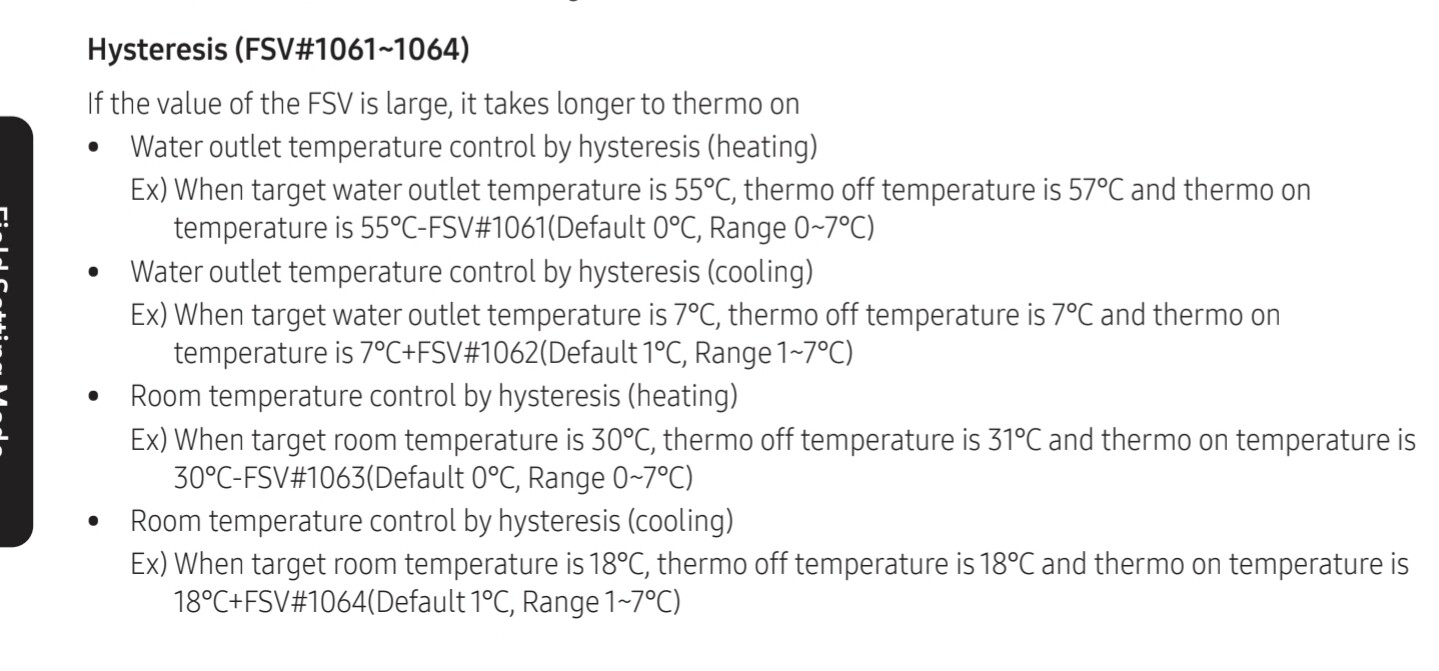
Check on your controller if you have #106* Field setting values. These control the hysteresis of the heat pump and should stop it switch back on immediately after switching off which will reduce cycling. You’ll be looking for #1061 in particular. Older models don’t have these settings, but you can get them with “just” a new PCB. What you set this to will depend on your set up, but I have mine set to 3.5, which keeps the heat pump off for around 1 hour after cycling off. You’ll find a description of how this works here:
I would recommend setting #4013 to 15 or 16. This setting determines when it turns the heat demand off. So it will turn the heat pump off when the outdoor temperature is above this. I tend to find I still need some heating at 15 or 16, depending on other factors (like solar gain) but if you’re happy with it at 13, there’s nothing wrong with leaving it at that.
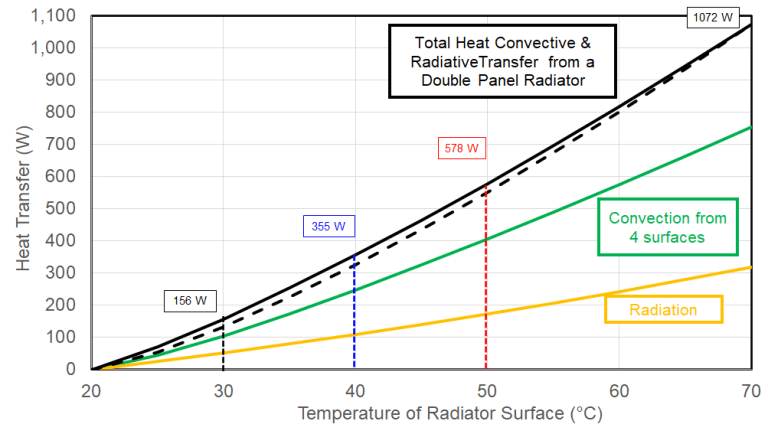
To add to Jake’s excellent reply, here’s a chart that illustrates how the output of a radiator (per square meter) varies with flow temperature A hotter radiator will output heat faster than a cooler one.
Thank you both @jakeymd1 and @Timbones. The information is really helpful. I’m glad I know it’s the compressor I should be focussing on now. And the graph showing the heat output at different temperatures of radiator makes sense. My A-Level Physics from far too long ago is all flooding back to me!
I started to read the thread about having a heat pump that is too big….reassuring that it isn’t just me but also frustrating. I think I got about half way through it so will pick up again later with a cup of tea.
I think the thing I will need to weigh up is the cost of new rads vs the cost of just paying a bit more for electricity. The rads were newly fitted just after we moved in at the end of 2022, so I don’t really want to change them (we weren’t planning on getting a heat pump quite so soon), so I might just try to work with what we have.
This might be a stupid question but from the view of the impact on the compressor is there a benefit to cycling using the room stats over the low flow temp? Or vice versa? I guess from our point of view the benefit/downside would be the temperature in the room.
I’ll check if we have those field setting options too.
This can be found on your Wired Remote Controller under Service Menu/Self-Test Mode/Self-Test Mode Display, though only to integer precision. (So not much good for CoP calculations, but good enough to get a feel for the deltaT contributed by the heat pump and - if you have no buffer tank - consumed by your radiators.)
Rule of thumb (based on the figures in the EHS Data Book): If you could reduce your circulating water temp by 2degC by upsizing a couple of rads in critical rooms (living room, bathroom), you’d save about 0.1kW at your compressor (at nameplate output). So if you ran continuously at 50% output (or 12h/day at 100% output) that would save about 1.2 kWh/day - that’s only about 30p/day (or even less if you have a low TOU tariff). At 200 day/year that would save you £60, or £600 over 10 years. That may be enough to install a couple of rads - possibly even three - but I’d say it was fairly marginal, especially if your existing rads are newish (and even more so if you have glycol in your circuit which would require expert help with recovery and reinjection).
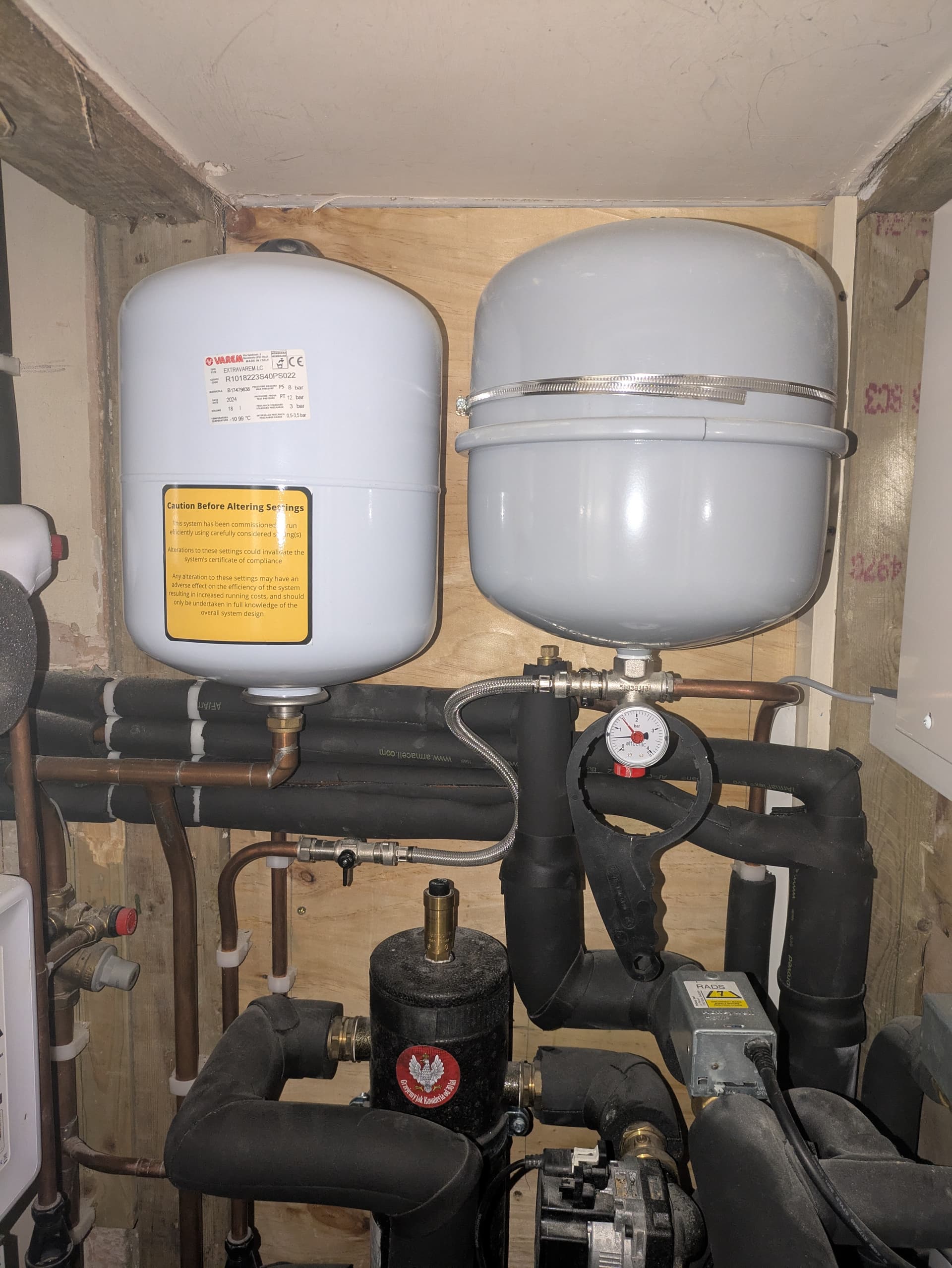
If you don’t mind, would you mind explaining what they do? Just for my own curiosity and desire to have a basic understanding of the systems in my house.
When water heats up, it expands in volume. This volume needs somewhere to go. Those metal cylinders have rubber balloons inside (that are counter pressured by air outside them - the air pressure can be changed). As the water heats up it expands into the vessel, so that it doesn’t expand into your system. One will be for heating and the other hot water.
Generally those vessels come at a pressure written on the side on a label, sometimes that pressure needs to be checked and changed and this can by done by a presta valve checker and bike pump.
If you knock them on the side from bottom up. It should sound a bit solid, then hollow. If it ever sounds fully solid all the way up the rubber is broken and it likely needs replacing (full vessel).
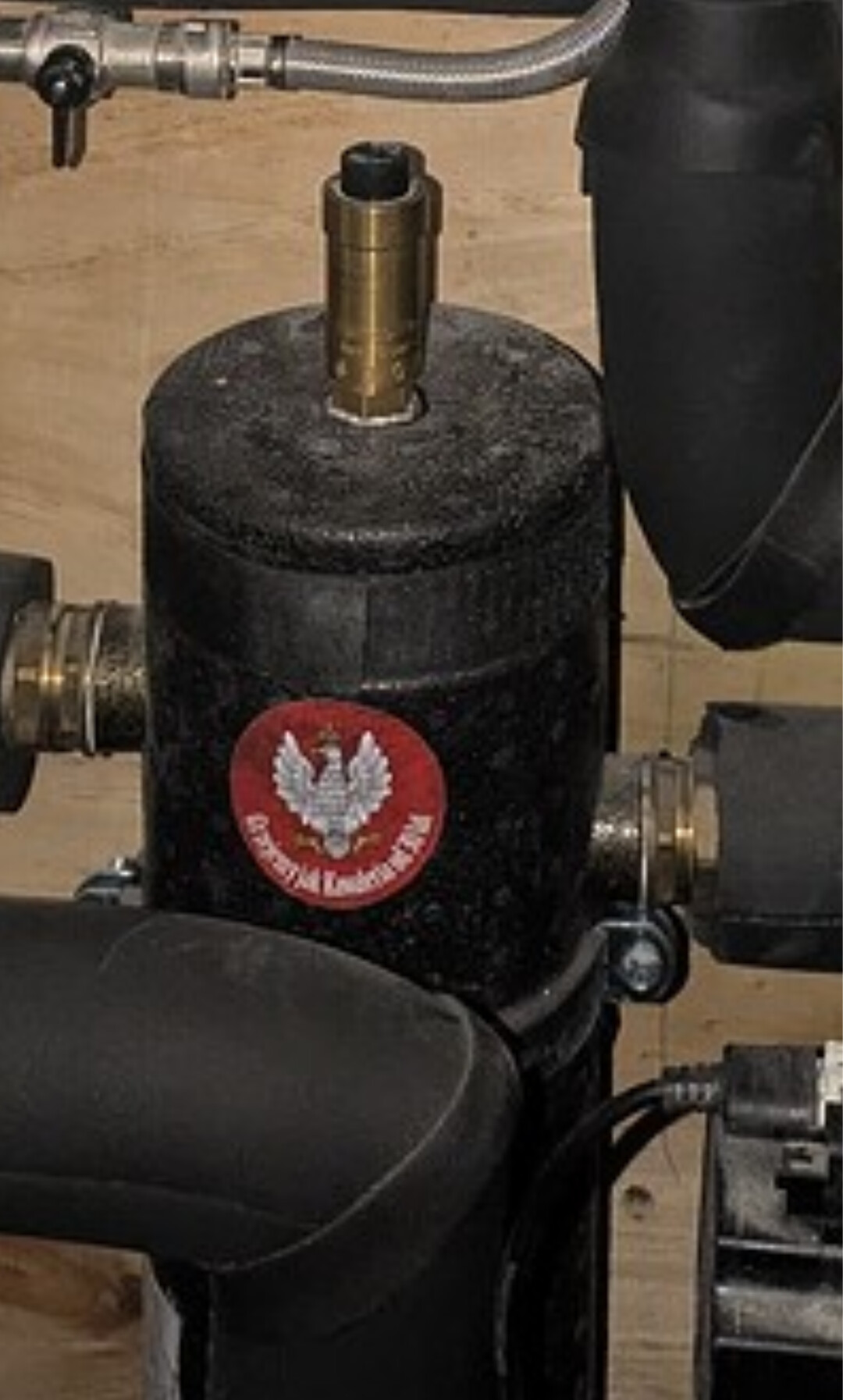
And just Google buffer tanks and LLH, there are many decisions on them. Best practice is likely without (likely always better efficiency) but sometimes they are genuinely needed, but then when they are needed there are again best practices.
I don’t know if your installers explained this; but mine didn’t tell me.
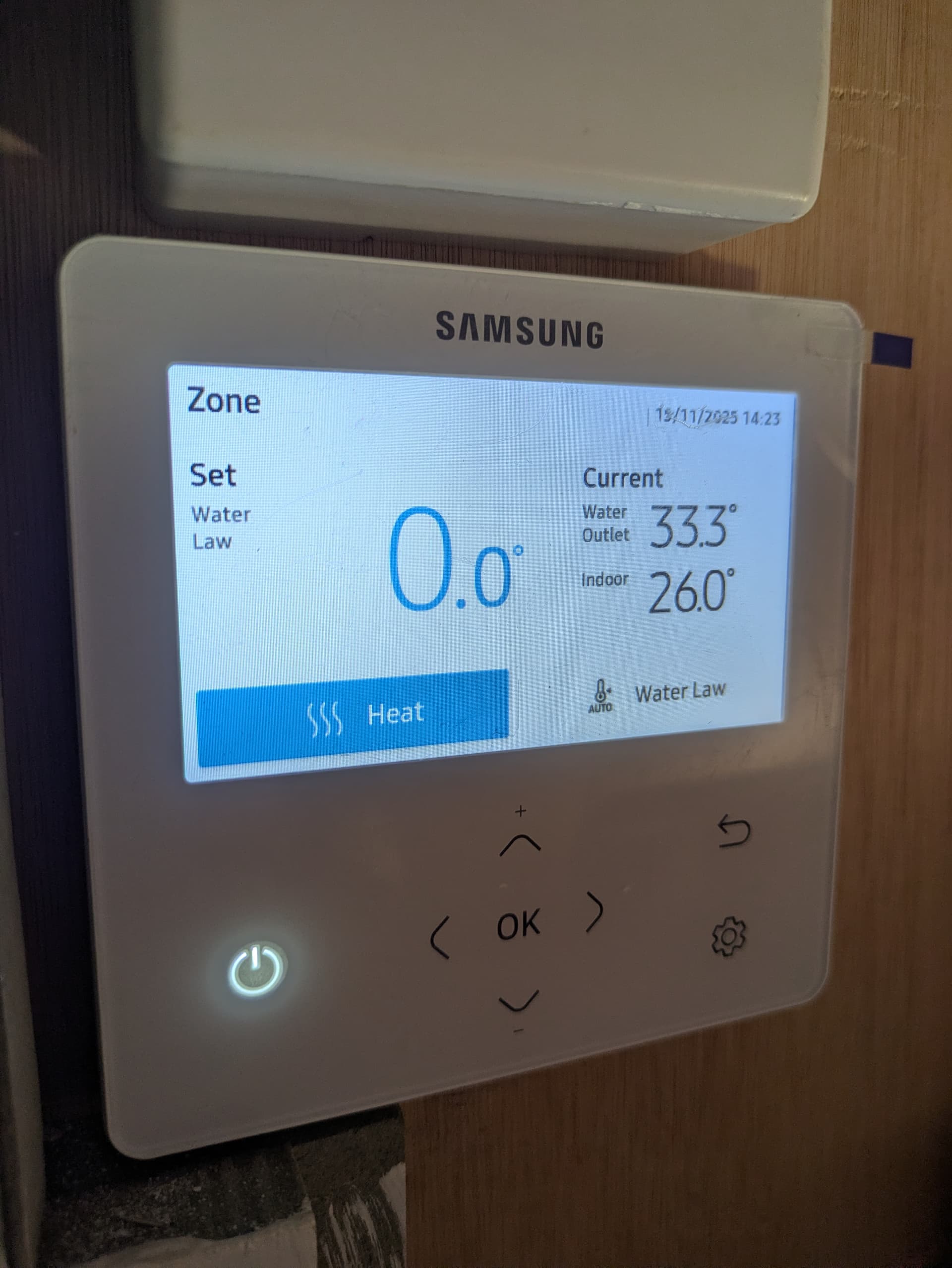
Where you have zero on your photo of your display, you can change this value with the +/- buttons to a value between -5 and 5. The value in this will be added to the target value set by water law.
I have used this to:
see how low I can go without having to change FSVs all the time. I was amazed to find that in my 1890s-built home I could go to 27/35 at 15/-2. I have since realised that my HP outputs 30c as a minimum when it’s up to speed.
when elderly family come, I set to +5 so the house is really warm for them.
The above are in conjunction with having an external thermostat set to 25c which is never reached and for the last few months, FSV2093 set to “Room temp ON/OFF or WL Interlink ON/OFF (Water pump3” to prevent cycling.
@jakeymd1 I’ve just managed to check and fortunately I do have FSV 1061, so that’s good. It was set to zero so I’ve set it to 3.5 and will monitor today. It’s quite a mild day today so a useful one to check the cycling.
Great! Update us on how you get on.
FYI, this it how mine behaves. When the compressor is off due to cycling, the circulating pump runs every 10 minutes for 3 minutes. If I lowered 1061, it would cycle more regularly and my cycles would be shorter. If I raised 1061, it would cycle less regularly and my cycle times would be longer
I thought it would be good to give an update on where I’ve got to.
I changed 4013 to 15 degrees (@jakeymd1 you were right that 13 was a bit too low) and set 1061 to 3.5.
I don’t have any monitoring system so this has been the very crude method of me standing there with a stopwatch for an hour to see what happens, but this is what I have to work with and what I’ve got.
Outside temp (reading from Samsung controller not weather forecast) between 5 and 6 degrees over this hour period:
3 mins water pump only on
25 mins water pump and compressor on
3 mins water pump only on
5 mins both off
25 mins both on
During these times, when only the water pump was on the system was using about 0.5kW, when both were on it would start at 1.3-1.5kW then drop down to a steady 1kW. I also looked at the water outlet temperature change and that seemed to correlate with a 3.5 degree hysteresis between both going off and both going back on again.
I also checked again today with an outside temperature of 8-9 degrees and got:
7 mins both off
3 mins water pump only on
4.5 mins both off
26 mins both on
3 mins water pump only on
7 mins both off
20 mins both on
So, going by previous messages this doesn’t seem to be “problematic” cycling, unless I’ve misunderstood?
What I could really do with is a 14-15 degree day and a 0-1 degree day to test it then, but I’ll just have to wait until that happens.
The house has been a bit hot with these flow temps, so I’m going to reduce the flow temp by one degree at both ends and see how I get on with those. It might be that on a really cold day I need the top one to go up again.
I applaud your patience of standing for so long to get the data.
It certainly doesn’t seem problematic, but I do think you could get the off periods to go for longer. Most of the drop in temp happens within the first minute, and then it is a slow drop off. So even increasing 1061 to 4.0 could extend the off period by a decent amount. The amount of time that the compressor is off is what is going to meaningfully reduce energy consumption when cycling. However, lowering the flow temps could also increase the off time a little, and it sounds like you need to do this anyway.
Importantly, you need to make sure that min flow temp - 1061 is still a degree or two higher than your target room temp. Otherwise, the only way to can reach the lower hysteresis is by the house temperature dropping significantly enough to allow the water temp to also drop in line with it.
It looks like we’re in for some warmer weather again next week.
Haha good podcasts kept me entertained while standing there!
Good point on the min flow - 1061, I’ll keep that in mind, thank you. Even if I increase 1061 to 4 and min flow temp to 31 there’s still a fair amount of wiggle room. 27 room temp would be roasting.
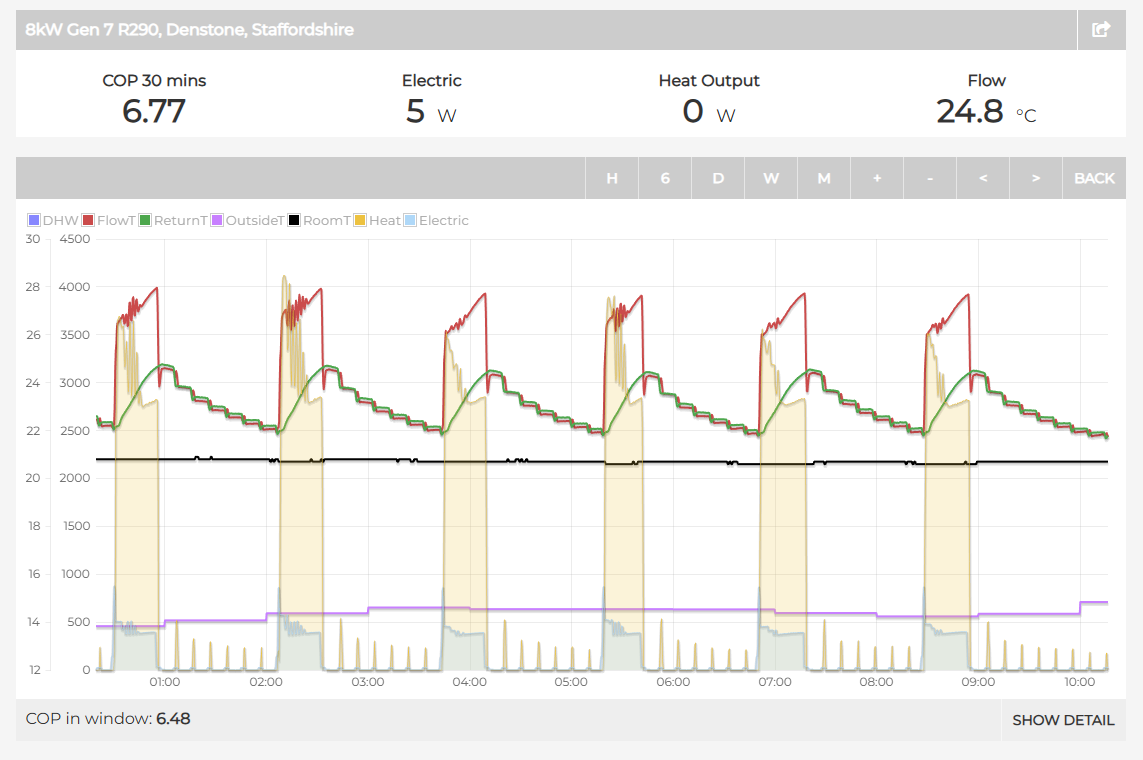
Interesting observations. I have had the same heat pump as you for over a year now and find that this 27 mins compressor on and 3 mins off seems to be normal for this design of heat pump at low temperature running. It only happens when the flow return temperature from the radiators rises too high and it is unable to reduce the output any further.
I increased the radiator capacity and carefully balance everything but I still get compressor cycling below 35C.
It does not do it at the high flow temperatures when it is cold, so maybe wait until it is well below freezing to make any assessment on compressor cycling. Note that defrost cycles will occur below 5C and is all perfectly normal.
This brief soft start compressor cycling is not the same as room thermostat cycling that occurs because the heat pump has been set too high so the system keeps cooling down and then has to heat up again, something we are supposed to avoid if possible.Soft start compressor cycling twice an hour does no harm and does not seem to reduce COP significantly for me. As long as the heating performance is OK I would not be concerned, just continue to make small downward adjustments to flow temperature until the house temperature is as you want it.
 A hotter radiator will output heat faster than a cooler one.