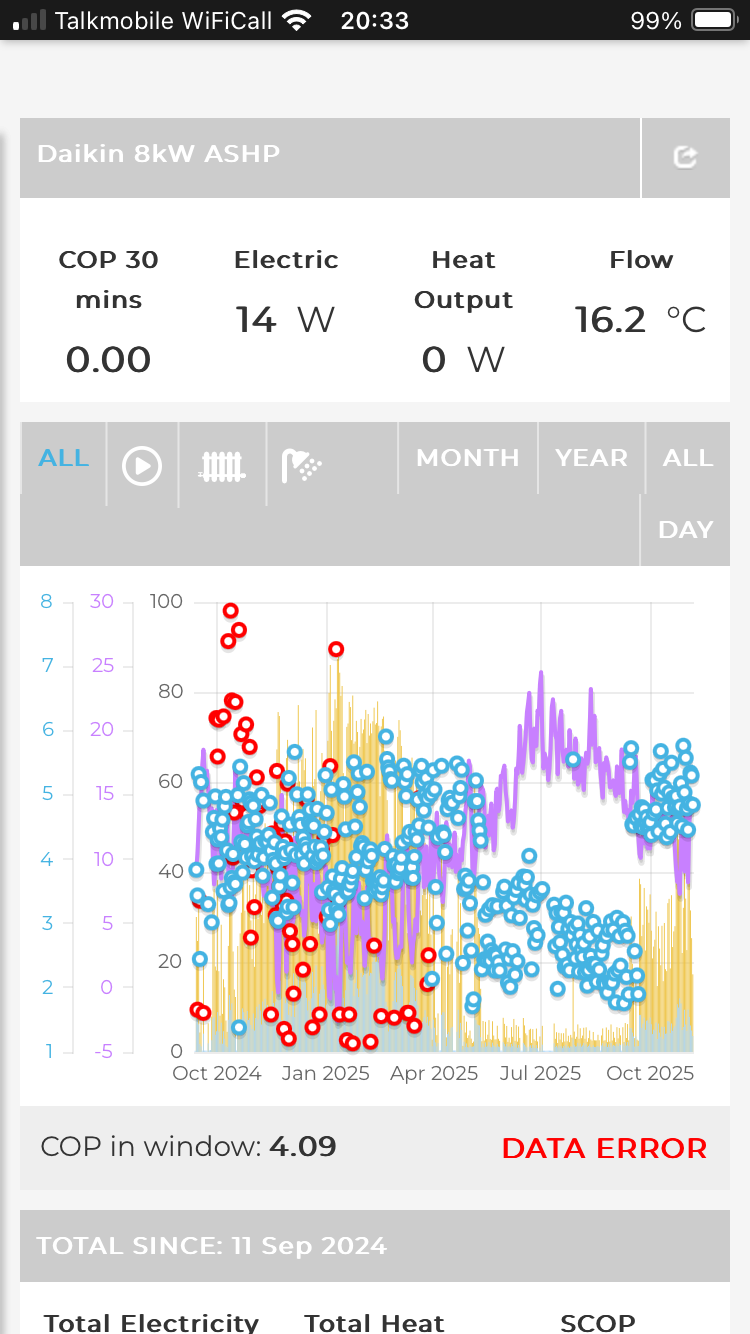
Only if heated to at least same flow temperature as used for DHW.
I think we should differentiate between ‘oxygen’ and ‘nitrogen’.
Oxygen reacts and corrodes and disappears, nitrogen forms bubbles based on Henry’s law during heating. Although those bubbles might cause flow meter problems I don’t believe them to be a big issue.
Radiators act as ‘oxygen trappers’ by corrosion. Anypoint in the cycle with high T and low flow will act as bubble collector for nitrogen. But as the system water cools down is readsorbed in the system volume again.
Hi all
Thankyou for the valuable information with reference to Air in system, which I currently have this issue. Octopus has been back to my property to resolve issue and they have carried out most of what is stated in the guide: Removing Air from Heating Systems — OpenEnergyMonitor 0.0.1 documentation
-
Fill the System: Use the filling loop to fill the system, keeping all AAVs open and bleed all radiators.
-
Increase System Pressure: Raise and maintain the system pressure as high as possible, ideally up to 2.8 bar.
-
Enable the Circulator Pump Air Purge/Vent Cycle:
-
Open All Valves: Ensure all radiator valves are fully open and switch the diverter valve between space heating and DHW modes.
-
Bleed Radiators Again: Keep the AAVs open and bleed the radiators again during this process; top up pressure if required to maintain a high pressure, ideally 2.8 bar.
-
Purge by Zones: only 1 Zone
-
Conduct a low pressure Cook-off
7a. Reduce Pressure: Lower system pressure to 0.7 bar; water under lower pressure can dissolve less gas.
7b. Heat the System: Set the heat pump to its maximum output to raise the system’s temperature as high as possible [2]. Hot liquids dissolve less gas.
7c. Run for 1 Hour: Operate the system at maximum temperature for about an hour with AAVs open.
7d. Restore Working Pressure: Top the pressure back up to the normal working range of 1.5-2 bar.
I now believe I require the following to be installed on my system, this is what I have found based on the recommendation from the Openenergy Monitor guide, would appreciate some feedback.
- Spirovent Deaerator Spiral Vent rv2 (Install on the Flow)
- Spirovent Dirt Separator Spiral trap mb3 (Install on the Return)
I have also suggested a power flush, which I did question during the commissioning why it was not done. I was advised not required.
I have decided to put pen to paper to my assigned Octopus agent and hope they will pass feedback onto the the design team.
Hi Octopus Support
Would you be kind enough to past the following onto the Design engineer for their advice and opinion.
I have done a great deal of research before and post install on the Daikin Altherma Monoblock heat pump.
This is a large investment for me, and as a result the expectation, is the Heat pump system will work efficiently for years to come.
it is clear, that most homeowners that have a heat pump installed may not be checking the efficiency of the system, this is so important for the long-term life and efficiency of the system.
I have stated on many occasions the systems has errors and is not running efficiently the cause of this is Gases / Air (Nitrogen N2 and Oxygen O2) in the system.
During the commissioning of my system, I did want to know why the system was not being power flushed this is a prerequisite of any install, most definitely for a retrofit.
The OpenEnergy monitor is still seeing errors in the system associated to Air in the system, which can over time have a detrimental impact on the systems such as corrosion.
Through my research, I have seen installing the following can help to eradicate Air / Gasses and debri in my system, would appreciate if your Design engineers would be kind enough to advise.
Spirovent Deaerator Spiral Vent rv2 (Install on the Flow)
Spirovent Dirt Separator Spiral trap mb3 (Install on the Return)
.
Please pass this onto to your management as I believe the following list below are all prerequisites and should be factored into the cost of installing an heatpump.
- Power Flush
- Degrasser
- Spirovent Deaerator Spiral Vent rv2 (Install on the Flow)
- Spirovent Dirt Separator Spiral trap mb3 (Install on the Return)
I have both of these fitted.
-
I can thoroughly recommend the SpiroVent Deaerator. I tried bottle vents, radiator vents, etc. none of which seemed to get rid of all the air. The SpiroVent does the job. It may take a few months if you have a particularly stubborn pocket of air, but it will eventually clear it.
-
The Dirt Separator seems to work fine for me, but I have seen criticism on other forums saying other filters do a better job. I get maybe a thimble full of crud out of it every couple of years, some of which is iron based as tested with a magnet.
Another possibility not mentioned is gases produced by biological activity in the system (so H2S).
Unless the system is very old and clogged up (colour of the water drained out is a good indication, if it’s black it’s dirty), then a power flush is an (expensive) overkill. However, it probably would have been a good idea to circulate a system cleaner for a week or so before installation, and then dose the system with inhibitor and biocide after installation.
Thankyou for your feedback Alun
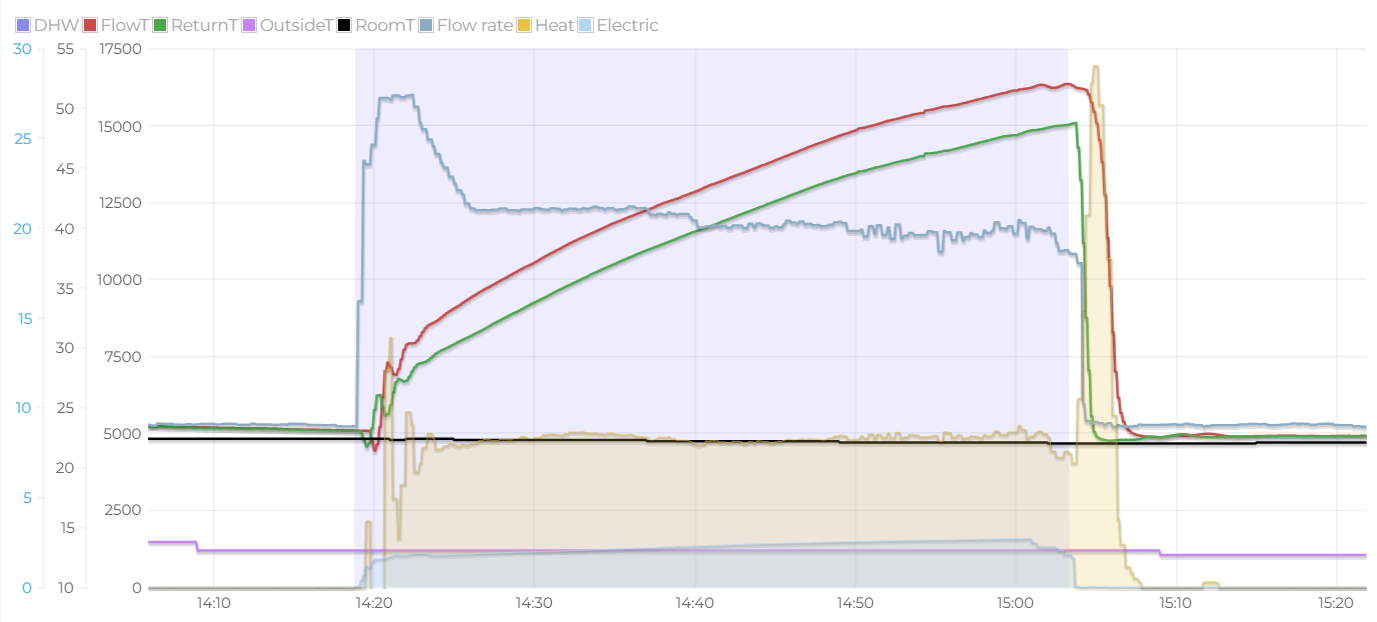
I’ve been wrestling with ‘Heat meter air issue’ since my install and would welcome some advice - HeatpumpMonitor.org
I’d like to think this is residual air that is slowly being removed but as you can see the temperature that the issue rears its head when doing a DHW cycle is getting progressively lower over the past few days.
I ran a CH cycle up to 45c on the 27th as a test, no ‘air issue’ error and this resolved the DHW issue for a couple of days, it started again on the 30th and looks to be getting worse.
- No visible leaks in system and pressure seems to be holding - currently 1.8bar when pump is off.
- This was a retrofit from a gravity fed system so there is the possibility that there could be a small leak under a suspended floor due to the increased pressure. I’ve lifted a good chunk of the floor and found nothing to suggest leaks.
- There were some leaks earlier on new pipework and radiators - all now resolved.
- Spirovent installed on primary flow
- No air at all in any radiators when I bleed them.
- AAV on DHW circuit, periodically opened.
- Air issue only seems to appear during DHW cycles, even if I ran CH at same temperature (45c) it would not trigger the error.
I’d welcome any suggestions on what I can try next. Does the data point more towards an active leak/ingress of air or is this residual air that I need to be more aggressive on purging?
Hi Mart. I feel your pain.
I’m no expert in this, but I think I’ve read that for a pressurised system there’s no incentive for air at atmospheric pressure to enter pipework that is at 1.8bar.
It’s good to fix leaks for their own reasons, but I don’t see the rationale for pursuing them in order to prevent air entering the system.
Could you post some photos of your system showing the cylinder and the location of the heat meter / AAVs?
Hi Glynn, sure.
It obviously knew I was talking about it so decided to behave today! HeatpumpMonitor.org
You can see the the flow was starting to fluctuate at the flow temp hit about 48C so perhaps its slowly getting there. I managed to get a fair amount of air out of the magnetic filter which may have helped.

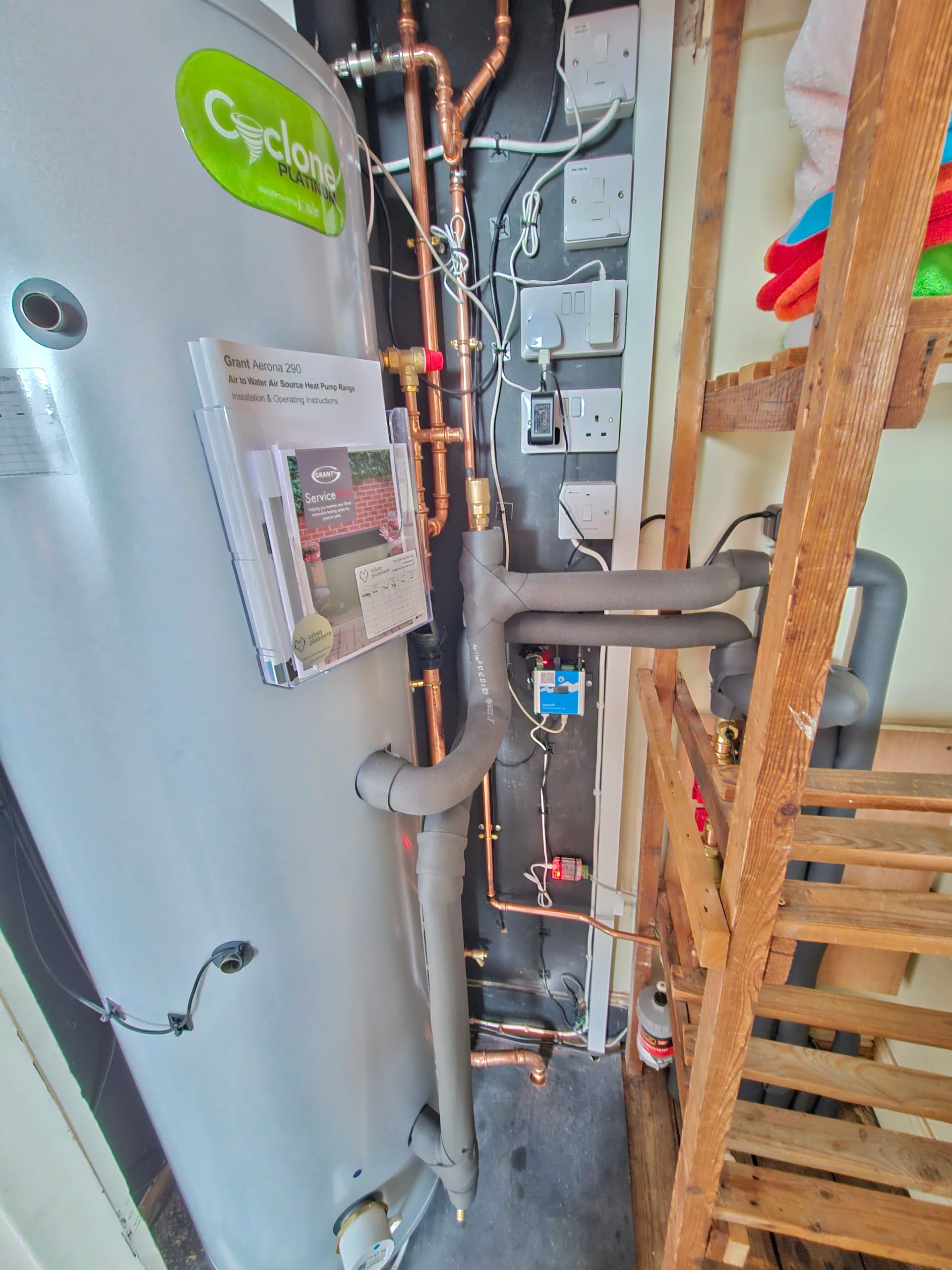
Hi Matt, In case you weren’t aware and would find it convenient, the Axoma display can be dismounted from the pipework sensor part.
My heat meter came with a plastic clip for the display that can be screwed to a surface that’s more in your eyeline.
I didn’t know that. I probably won’t touch it for now as to not temp fate but thanks for letting me know as mounting it higher would make it easier to read.
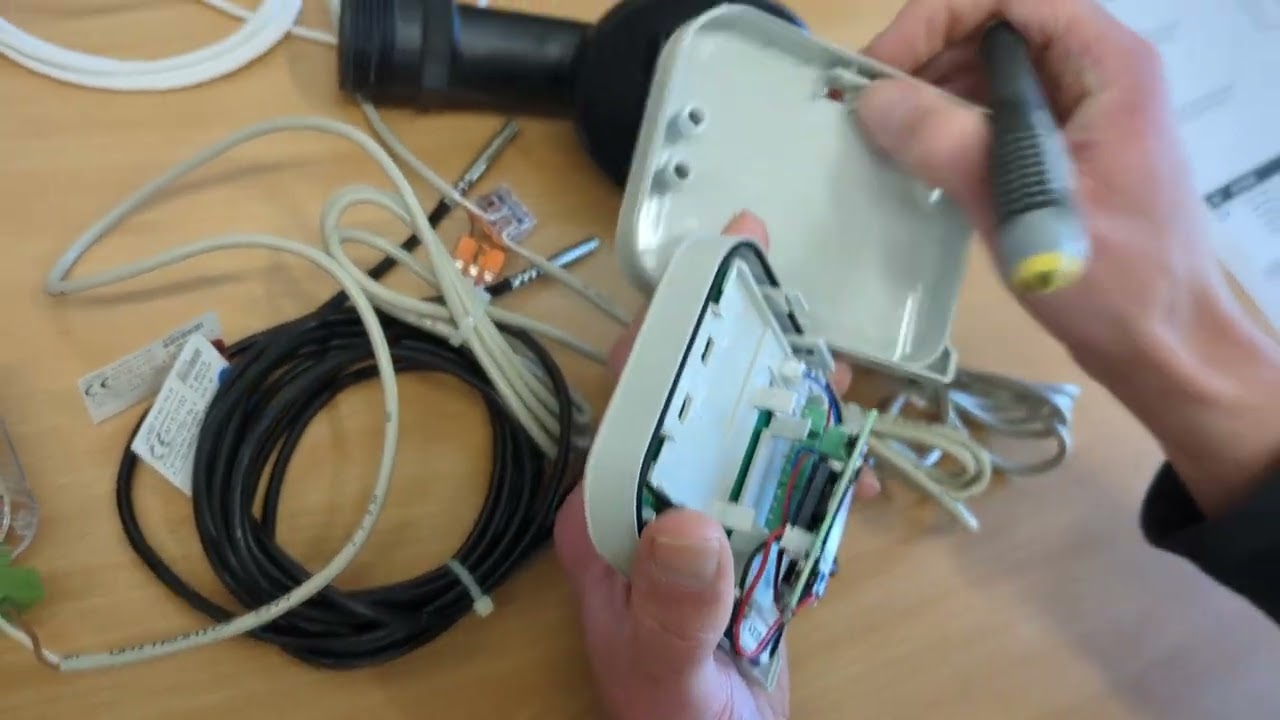
Here’s an OEM video showing the display separated from the flow sensor part.
Great stuff! It sounds like your nearly there with this. Thanks for photos, all looks good. Is the spirovent before or after the heat meter?
Spirovent is after the heat meter. It was kindly added by my installer after the initial installation to help with this issue, I have heard it doing its thing before so does seem to help.
I am having similar problems with my Vaillant system since it was installed in May 2025. The errors only happen on DHW cycle when the flow temp is above 40c. I have performed all the recommended fixes, bleeding the system, purge cycles, boil offs etc. Typically when the errors get bad I let water out of the system to reduce pressure to 0.4 bar. The water is always milky white due to the air in the water I presume. I then perform multiple purge cycles on the Vaillant controller which inevitably leads to air in the rads which I then bleed and re-pressurise the system to 1.5 bar. The system will be okay for a week before the errors on DHW start again. At this point I increase system pressure to 2 bar and the errors stop which can only be stopped by increasing the system pressure again. When I have raised the system pressure to 2.5 bar I have to start the process again/I am currently running this cycle approximately every two week. In early October 2025 I installed a Spirovent at the recommended position on the flow just before the diverter valve but this has made no discernible difference so am now at my wits end. Has anybody any suggestions??
Hi Mark, I can empathise with you situation. I can’t really suggest much but would think continually needing to add water to the system would exacerbate the issue, obviously I understand why you’re doing so.
My problems are still occurring a month later during DHW cycles. Pressure holding steady and no water added. I’ve no idea what could be causing it at this point - corrosion? I went as far as to run the CH house up to 45c to see if I could trigger it to no effect, zero air in any radiator. I also did a legionella cycle as a nuclear option which went about as well as expected HeatpumpMonitor.org
I’m getting a significant amount of air out of the magnetic filter after every DHW but I’ve no idea where it could be coming from.
Is it possible you’ve got a leak and air is getting sucked in? I’d go over all connections and make sure they’re tight. I did all my plumbing myself and I had an issue with a small leak, it wasn’t untill I took the system to a high pressure I found it.
Hi @JamesH I’ve heard it said that a leak could let air in, but I can’t understand why that would happen if the pressure is above 1 bar.
All I can advise is “Keep doing what you are doing”. My very similar efforts were rewarded after 6 months. Haven’t had any recurrence since it first cleared. I would advise to try and minimise the amount of water drawn off when you bleed - because that partially ripened water will be replaced with raw oxygenated water.