Hi guys. Thanks for a wonderful project. I have been living offgrid now going 2 years due to the unstable grid power in my country. I have a 1.8kw offgrid solar setup that pretty much serves my needs. I a nag for logging and although I use to export csv of my PV Generation to pvoutput I wanted a better real-time logging solutions. After some searches I decided to settle for emonpi. I would have loved to get the hardware but for budget considerations.
I tried to Bury myself in as many docs, guides and forum post about emonpi emoncms as I can but I have some questions which I have been unable to find answer for.
Here are my solar equipments:
2 Victron bluesolar mppt charger
1 victron battery monitor bmv 700
1 Axpert 24v 3kva Inverter
My objectives:
Monitor PV generation real time from the 2 victron mppt and keep an historical log
Monitor battery state of charge and keep an historical log of that too
Monitor consumption from the inverter using the serial to USB port.
I also want a system that logs locally but can also log online anytime I am connected to the Internet.
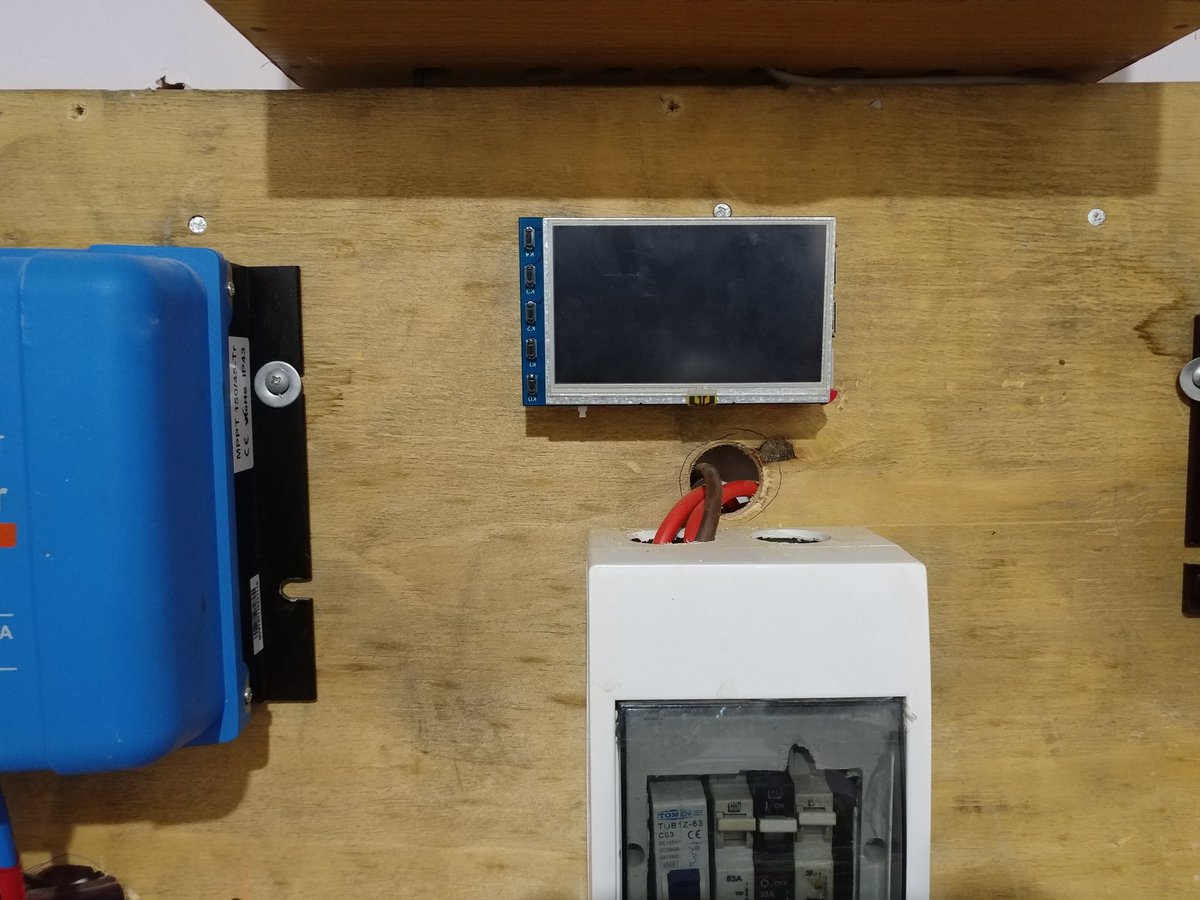
I got a RaspberryPi with a 4.3 480x272 lcd and the idea is to have the local emoncms always on display to view real-time situation report from all the devices connected to the Pi.
I have a RaspberryPi with the above mentioned lcd. I also intend to use the raspberry with a connected hd so as to avoid sd card corruption.
Are my objectives realistic? Would it be possible to have a Pi do monitoring, and log locally and retroactively post online once connected to the Internet. And lastly would it be possible to use emonpi with a RaspberryPi lcd where dashboard of the working system can be glanced at anytime am in the solar inverter room.
Apologies for my long questions and language.