The difference between the condensing temperature and the flow/outlet water temperature.
The difference between the evaporator temperature and the outside air temperature.
and crucially how these DT’s vary with load.
@johncantor gave me a rule of thumb for typical differences:
The condensing temperature is typically +2K above the flow temperature
The evaporator temperature is typically -6K below the outside temperature
It of course makes sense from a physics perspective that these offsets vary with output/load. A heat pump working hard will have greater DT’s across both of these heat exchangers than ones running at low modulation. Basic carnot COP physics suggests that the larger these offsets/DT’s are the lower the theoretical carnot COP potential. Basics — OpenEnergyMonitor 0.0.1 documentation
Does anyone have any data at hand that could help inform a realistic model for these offsets?
I added the following simple variable offset equations to the dynamic heat pump simulator:
For those who have not yet thought any of this through, its just worth mentioning that we generally compare Flow (outlet) temperature with what the compressor ‘sees’ (the condensing pressure), but on the evaporator outside, we comapre the air inlet.. The air outlet is much closer to refrigeant evaporating temperature. (just explaing why one is -2 and the other -6)
Anyhow, the dt between refrigerant (evaorating or condensing) and the other side of the heat exchanger will depend on load, and not necessarily in direct proportion. The dts can be observed on systems with refrigerant pressure sensors. Not sure what units have this.. Not sure if Ecodan still show condensing pressure. Panasonic do on ServiceCloud, but I don’t have access to a working one right now. Ecoair are great for this analysis, but unfortunaltely my one is out of service right now
In my experience, NIBE units are pretty good at reporting data at multiple points around the refrigeration cycle. For example, my NIBE F1145 GSHP reports:
Condenser Temperature (BT12)
Discharge Temperature (BT14)
Liquid Line Temperature (BT15)
Suction Gas Temperature (BT17)
In addition to:
Supply Line Temperature (BT2)
Return Line Temperature (BT3)
Brine In Temperature (BT10)
Brine Out Temperature (BT11)
(I believe the “BT” codes are NIBE-specific parameter names.)
I don’t think the data from my own system will be especially useful - since it’s Ground Source and doesn’t have a variable-speed compressor - but other NIBE installations might have this data available.
@TrystanLea Trystan - I’ve got onboard data from my NIBE ASHP (NIBE F2040 with S40 controller). This data comes direct off the heat pump controller using a USB stick and is at 1 minute intervals - I have daily csv files from January and February 2024. The files have the standard NIBE parameters as shown in list below. I can supplement the data with that from my emonPi set up (heat pump heat, heat pump electricity). Let me know if this is of any use.
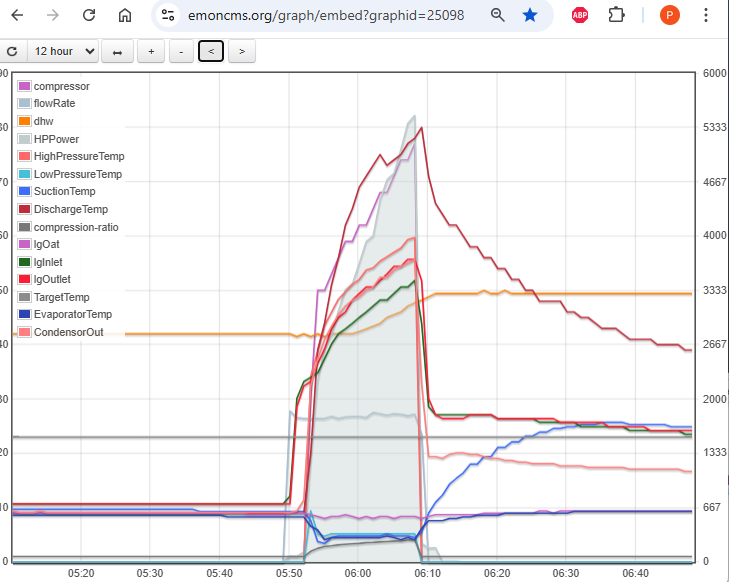
The low/high pressure temps are conversions from low/high pressure sensors converted to temps via interpolating R32 data.
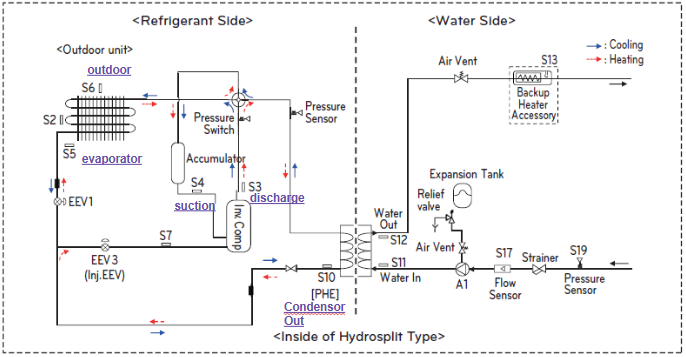
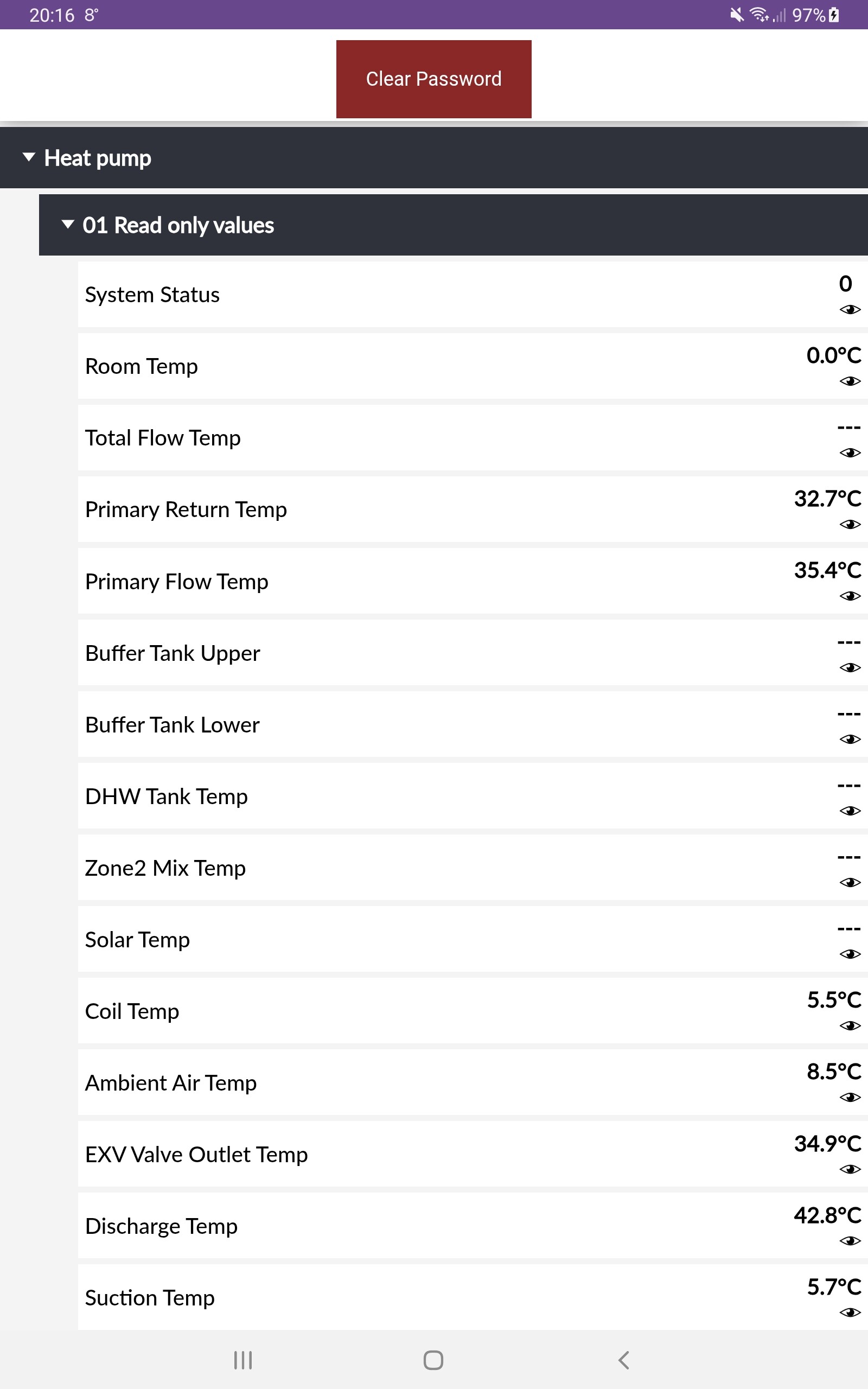
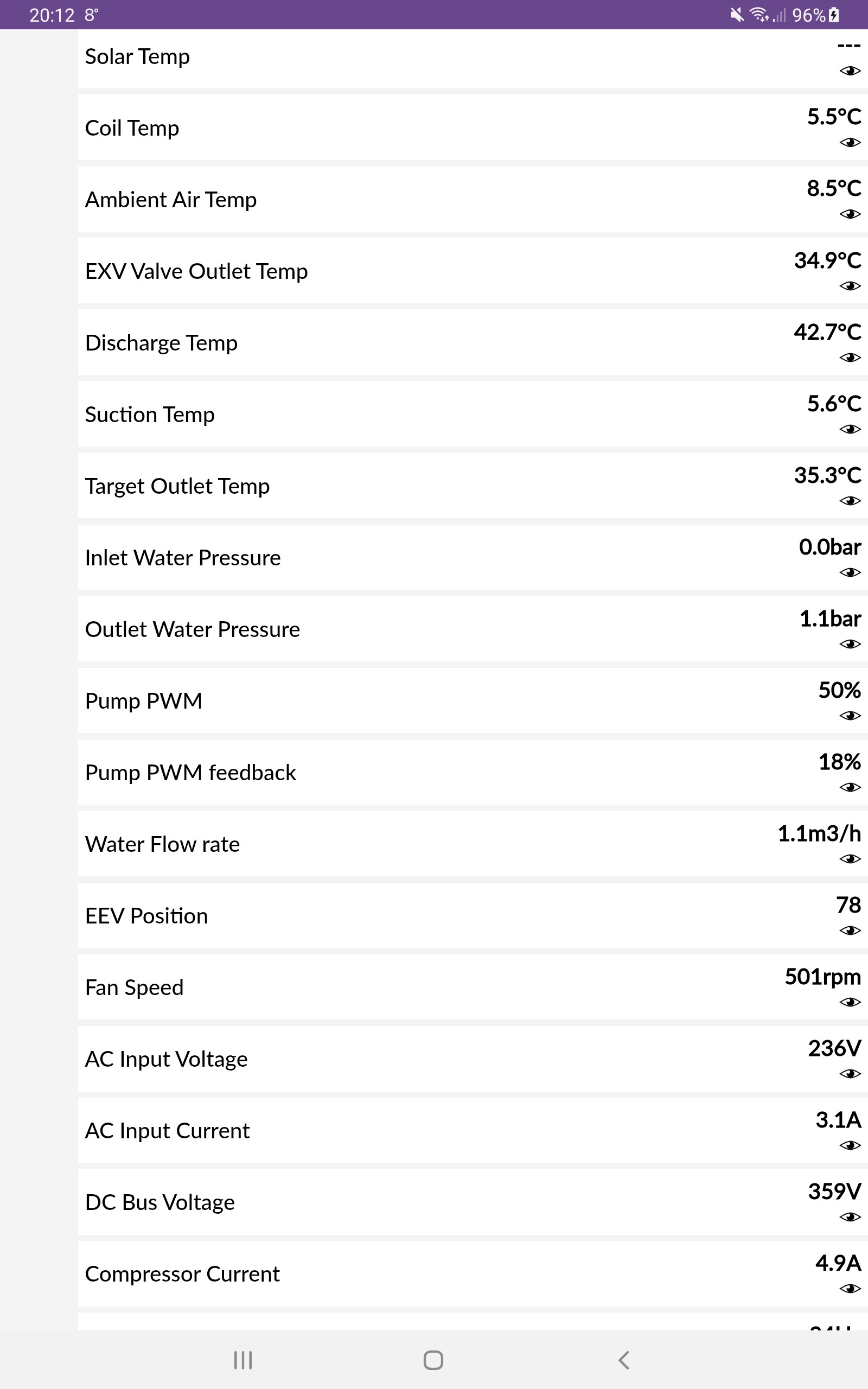
The cycle diagram for the LG is taken from their install manual, I’ve labelled the suction/discharge/exporator & condensor out sensors below. Hopefully the rest are obvious from the feed name. The registers used to obtain this info are not in any official docs I’ve found but from intrepid developers who I believe had access to the LGMV tool to create a sensible register mapping (credit to LG Register documentation · basti242/homeassistant_lg_therma_v_modbus Wiki · GitHub)
(I’d also say that the lgOat (outside air temp) is typically 2 deg higher than reality, measured by other sensor. And their temp sensors only have ~0.5 deg resolution)
I’m continuously monitoring all these values as they come in from my Vaillant heat pump via ebus. Happy to share the data, along with flow & return temperature and whatever other metric you’d like. They are not currently mirrored to emoncms.org but just on my local instance. I can extract the data and send it to you or run some local analytics.
I’m interested in the answers, having looked at Mr cantor’s page(s), but my Grant econet controller does not expose the numbers for easy logging. I can look at instantaneous values, but not store them.
I asked in another thread, which ones to plug in to the carnot cop calculation. Too much choice.
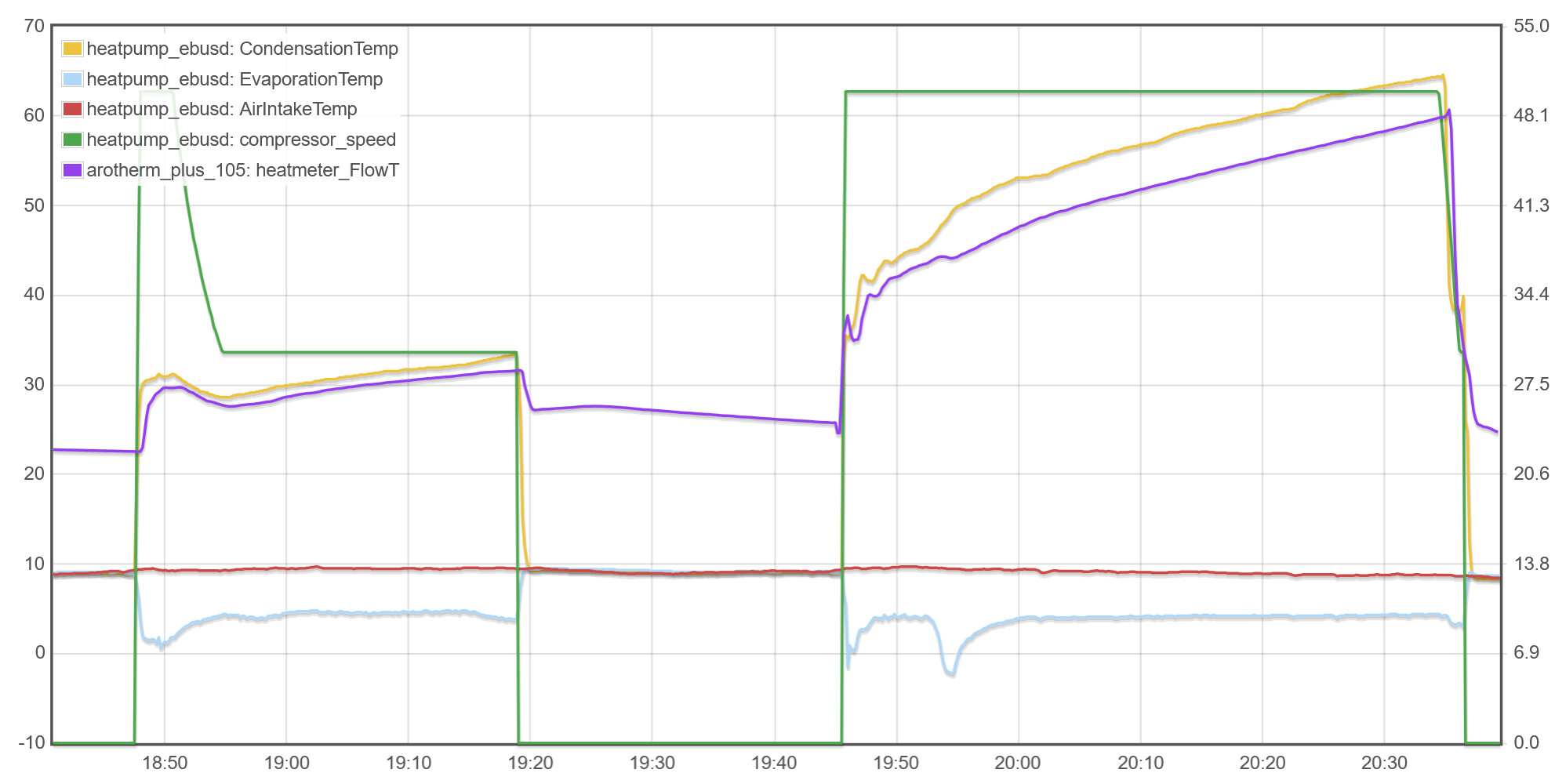
So here’s some representative data from me (Arotherm plus 105/6 10 kW). I can only offer two compressor speed datapoints as my heatpump runs either at 30 rps (heating) or 50 rps (DHW). Due to massive oversizing, heating never requires more than 30 rps besides the initial ramp-up period in a heating cycle.
The typical Vaillant shenanigans of course also apply to their other sensors. I have manually shifted condensation and evaporation temperature to roughly overlap with the air intake temperature during idle periods. Of course this still leaves these values uncalibrated vs. my flow temperature measurements…
In any case, here’s the data. The evaporation temperature is 5K below the intake temperature for both 30 and 50 rps. The condensation temperature is about 1.1 K above flow temperature for 30 rps and 5.5K above flow temperature for the 50 rps DHW run.
So from this limited data it appears that mostly the condensation temperature shifts upwards relative to the flow temperature.
I will try to get a full power DHW cycle in the coming days to add another datapoint.