No, not to my knowledge. Although that might change soon, since I’m about to install an MVHR system in my house. I will (of course) be doing some monitoring!
Agree, measuring airflow is more difficult and more expensive than temperature. But I have seen the EE671 sensor available for less than £100. Have you got any recommendations for other airflow sensors?
Oh exciting. Do you have details of your system yet?
Who is designing your system?
I work in the ventilation team at 21° (formerly Green Building Store) who have been designing, supplying and commissioning MVHR systems for nearly 20 years. We model everything for pressure and crucially sound and provide detailed installation drawings and support. You probably have it sorted already but let me know if we can help.
Well done for finding an air flow sensor for less than £100. I’m currently installing my own system and have been trying to work out what way to go for monitoring. My unit supports Modbus for reading its sensors but I want to add at least one airflow sensor and a few temperature and humidity sensors.
I intend to fit a Vent Axia Sentinel Kinetic Plus B with 150mm primary ducting and 75mm to each room with 125mm extract / supply vents. Some rooms will have 2 x 75mm.
As far as I understand, the Vent Axia is a reliable unit, but quite basic in terms of monitoring and control. But that’s fine, since I intend to fit my own sensors etc. I plan to fit temperature sensors in the primary and secondary supply and extract lines. Interested to hear if you have any suggestions?
The house is far from airtight, but I intend to improve this over time. In the short term, the MVHR will allow me to close the trickle vents, and solve the issue of having no ventilation whatsoever currently in the kitchen and bathroom. The MVHR system will be more to improve air quality and control humidity rather than for energy savings.
You might enjoy this video Glyn, he’s getting quite obsessive about making a hyper efficient MVHR.
My mum has one of these
It works reasonably well, her bathroom previously had significant damp issues as the house is perpetually cold. No mould though as it is too cold for mould.
It does recover heat, but difficult to say how effective it is considering how cold the house is in general.
Hi Glyn, my parents have a Vent Axia Sentinel Kinetic Plus B (from before I worked in MVHR) and it does have some reasonable components (good fans and good heat exchanger) some of the other parts are a bit cheap and prone to problems.
The summer bypass is a plastic part with lots of flaps that seams a bit flimsy and leaky, and there is a thermal actuator that opens and closes them. This has a very thin plastic pin (only a few mm) to connect to the flaps and in my parents unit this snapped leaving the summer bypass partly open through winter. Because of the lack of monitoring in the unit there was no error to warn this had happened.
Also the bypass air route is to the front and back of the exchanger and is separated from the opposite air stream with a bit of foam stuck to the side of the exchanger. This would be ok except that there is nothing stopping you pushing the exchanger in too much allowing air to leak around it and no guide to show when it is pushed in the right amount. It also relies on the front and back covers that are a bit bendy.
Also the plastic tabs that the front cover is screwed into break really easily and how well attached the front is is vital to the unit’s airtightness.
My parents’ exhaust fan died after 4 years, didn’t seem to be the bearings, as can happen in any unit due to the extracted moisture, but rather the electronics so has had to be replaced after eventually getting someone who could supply one.
It’s worth making sure the unit you choose is robust and has good aftersales support even if it doesn’t have lots of bells and whistles. Most important is to make sure, at your normal airflow rate and duct systems’ static pressure, it is quiet enough and has a low power consumption and I would say to make sure it has a summer bypass. If your house is very airtight or if outside air temperatures drop below freezing for prolonged periods a frost protection preheater or some other strategy that doesn’t involve reducing the incoming air is important.
But most important of all is the duct layout to make sure static pressure is low, components are ones that will hold up, enough sound attenuation is used, intake and exhaust well insulated (if inside the house), any ducts in lofts are under the insulation, intake and exhaust grille locations don’t have issues etc.
The only way to know what the static pressure will be and the sound levels at valves in advance is to do a design where these are modelled. Otherwise you end up doing what a lot of MVHR installers do in slinging it in and hoping that the required airflow levels can be achieved with the system being inaudible. If it can’t they either turn down the airflows to make it quiet or leave it at the right airflows but noisy so it gets turned off and now you have no ventilation.
The system then also needs to be well installed but having watched your heat pump installs I don’t think that will be an issue.
Fascinating! That’s an impressive amount of work to built it from scratch.
Thanks, that’s really useful insight to the possible issues with the unit. For better or worse, I’ve now obtained the unit and all the duct work, so I think I’ll continue with the Vent Axia. One of the reasons I choose it was availability of spares, they seem quite common in the UK. So hopefully, any issue will be fixable and I intend to add my own monitoring.
Thanks for tips, very much appreciated. I’ve done my best to calculate the required airflow to each room and make sure the duct work is sized to keep velocity down to a quite level. The unit should only need to run at less than 40% fan during normal extract and less than 50% for boost. I plan to borrow an anemometer for the commissioning to make sure the system is properly balanced.
Agree, insulation of the duct work will be essential since it’s a cold loft. But at least being a bungalow installation shouldn’t be too difficult. I’m considering building an insulated box around the unit itself in the loft. Do you think this is a good idea? I’ve heard it’s not a good idea to blanket the unit itself with insulation.
Yes it’s definitely a good idea to build an insulated cupboard around the unit, just make sure it’s easy to access the unit for filter changes and servicing.
For the supply and extract ducts in the loft don’t just insulate the ducts or lay more insulation over them, lift the current insulation and put this over the top so the ducts are full within your house’s thermal envelope. Make sure there is a fall on your intake and exhaust ducts to outside so condensation and any driving rain runs out to the external grilles.
I was looking at an ancient Genvex 315 VP-C, that someone has in their attic. It is all wired up and piping installed, it still can run and heat, but they can’t use it because it doesn’t have the condensate pipes installed, installing them would require a lot of work!
I’m guessing yours will require some condensate drainage. This unit required u-bends for some reason, maybe they have changed now, but it’s worth thinking about.
Yes unless the unit has an Enthalpy exchanger a condensate drain will need to be connected.
It is recommended you use a dry trap like the HepvO as there will be very little condensate in summer so a u-bend or p-trap would dry out creating an air path for the unit to suck air into instead of pulling from your extract ducts. Air being drawn into the unit can be enough to restrict the condesnate trying to get out if you don’t have an appropriate trap. Keep the trap close on the pipe run to the unit so there is less chance of air leaking in through any joints.
When my old unit went wrong, I ended up fitting a Komfovent unit. No Condensate drain and a modbus interface with loads of info available. As far as I know you can’t get info out of the Vent Axia easily.
A key issue I had was when using flexible insulated pipe on the inlet, you must seal the ends else you can end up with the insulation getting saturated. I replaced it with solid insulated pipe - much better.
I also added a secondary coarse box filter on the inlet before the unit. Amazing how much dirt it removes. Again though, this needed insulating else I got a lot of condensation on the outside of the metal box when it was cold. I stuck on some wide EPDM tape and that does the job nicely.
[edit]
Another aspect is that I drive the rate of flow largely on CO2. Just the two of us oldies, and it runs at 25% with good CO2/RH values. If the 20 somethings come home, I have to put it up (well HA does for me) to 60% to keep the CO2 in check!
Yes, forgot to say, never use flexible duct as it is not smooth (dirt build up and higher pressure) and can be crushed and ripped.
By flexible I don’t mean good quality semi-rigid duct as this has a smooth inner.
For the intake and exhaust do as @borpin says and use some of the rigid insulated duct (e.g. Zehnder ComfoPipe).
Usually we would advise against using an intake grille with a mesh in it as this will get clogged up and when the grille is high up it’s hard to clean. Usually you can just rely on the intake filter at the machine to filter out any bugs and this is easier to get at.
That’s a good tip. I plan to pipe the condensate outside rather than into a waste drain, I was debating if a trap would be required since there’s no chance of foul odours. I didn’t realise the unit could suck air up through the condensate if no trap was present.
Yes, it wouldn’t really matter that much if it was just odours as it’s on the extract side so they would be vented to outside it’s all to allow the condensate to be able to run out and so you don’t waste exhaust fan capacity pulling air from somewhere that isn’t the extract ducts.
Make sure you lag the condensate pipe well if going outside.
I opted for one of these non-return valves Tunvalve Straight Through (Clear) | McAlpine Plumbing which seems to work well and it’s nice to be able to visually check the internal components. The Vent Axia units definitely need something to stop airflow through the condensate drain connection.
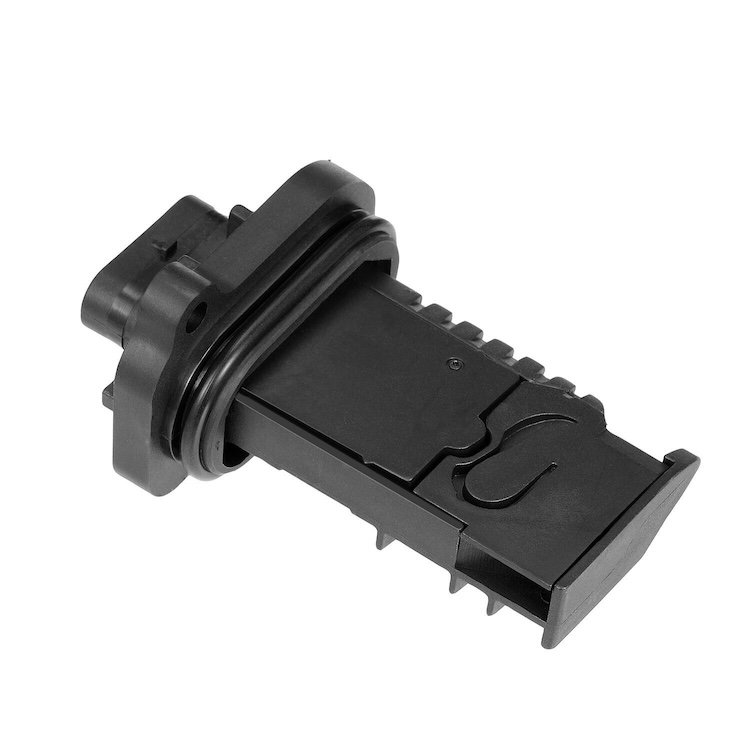
It occurs to me that the Mass Air Flow (MAF) sensors in modern fuel injected engines are effectively just hot wire (or hot film) anemometers. While some MAF sensors are integrated into a section of duct and probably wouldn’t be suitable, there are some which are just a sensor probe that bolts into an existing duct - something like this:
Yep, I have this exact tunvalve on the condensate drain of our Zehnder CA155WM MVHR unit.
This particular model is another ‘budget’ unit, with no apparent monitoring or diagnostic mechanisms, so I’d be very interested to see what @glyn.hudson comes up with!