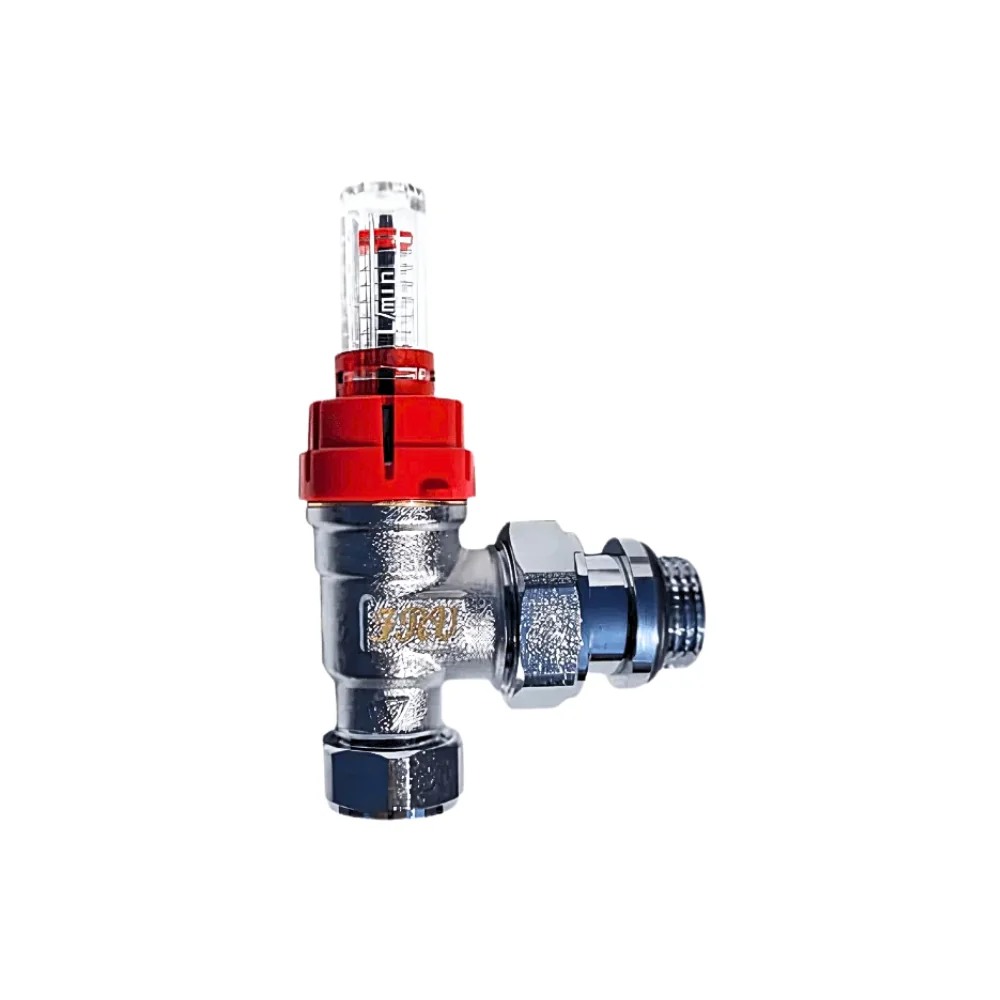
I’ve recently had my Vaillant 5kw gen2 heat pump installed and commissioned (just awaiting documentation, so starting the slow learning curve. Anyway, I’d spotted these on a recent YouTube video by Urban Plumbers, and having had difficulty balancing radiation’s before, thought they would be worth a go.
Anyway, I’ve got those fitted to all my radiators and currently both they and the Trvs are fully open as I have an open loop designed system. We have UFH downstairs and in a couple of the bathrooms, radiators everywhere else. We’ve noted over the last couple of days once the house has made it to temperature is that the upstairs is a fraction too warm compared to the downstairs (yes I know heat rises) and we have a low (0.35) flow curve set.
I’ve been reading extensively on how to get best performance and I know throttling with trv is bad for performance but what I was wondering was if using these fav to slightly tweak the flow would reduce flow through the upstairs radiators slightly whilst allowing for slightly more flow downstairs?
They do give a table with a set flow rate based on delta t and delta t room temp along with radiatior Size, so do I tweak them to the recommended settings?
Yes, I would use the table as a starting point rather than a final setting, and set each valve to the flow rate for its radiator size and design delta T. Then try reducing the upstairs radiators a little at a time and give it a day or two to settle, since the rooms respond slowly. Keep the TRVs fully open while you balance, otherwise you will be chasing two controls at once.
Steve, I would treat those valves as lockshields: set the design flow on each radiator, and leave the TRVs as room limiters, not as the way you balance the system.
Approved Document L, Volume 1 (2021 edition, including the 2023 amendments), section 8, is the official commissioning route for fixed building services in dwellings. Paragraph 8.1 says they must be commissioned so that they use no more fuel and power than is reasonable in the circumstances, by testing and adjusting as necessary and in accordance with the manufacturer’s instructions. A notice of completion of commissioning then has to go to the building control body, confirming that the results are reasonably in accordance with the design (8.4). The documentation you are awaiting ought to include this record, or later settings will be hard to check.
I would not set the valves from a generic table alone. The flow on each radiator should come from that room’s heat loss and the temperature difference you are actually running, then be measured and written down. During balancing, leave the TRVs fully open. Closing them to tweak an open-loop heat pump usually raises resistance, cuts flow and can push the machine into a higher flow temperature or into cycling.
For the upstairs being a fraction warmer than the downstairs underfloor heating, I would close the upstairs regulating valves only a little, then check that the downstairs loops still have their share of flow and that the heat pump is not short-cycling. Once you have the commissioning papers, compare any later changes with the original settings.
Having paid a small fortune to get the heat pump installed, you should go back to installer to do the balancing, that is part of the job you just paid for? Why are you spending more money?
I’m not, these were fitted as part of the renovation at my request. As for the installer, there’s a few issues there so will do the balancing myself. I’ve just followed the guidelines in glyn’s video based on my calculated heatlosses.
Ok slightly bemused here. Made all the calculations to tweak them tonight, but when I came to it there appears to be no change?
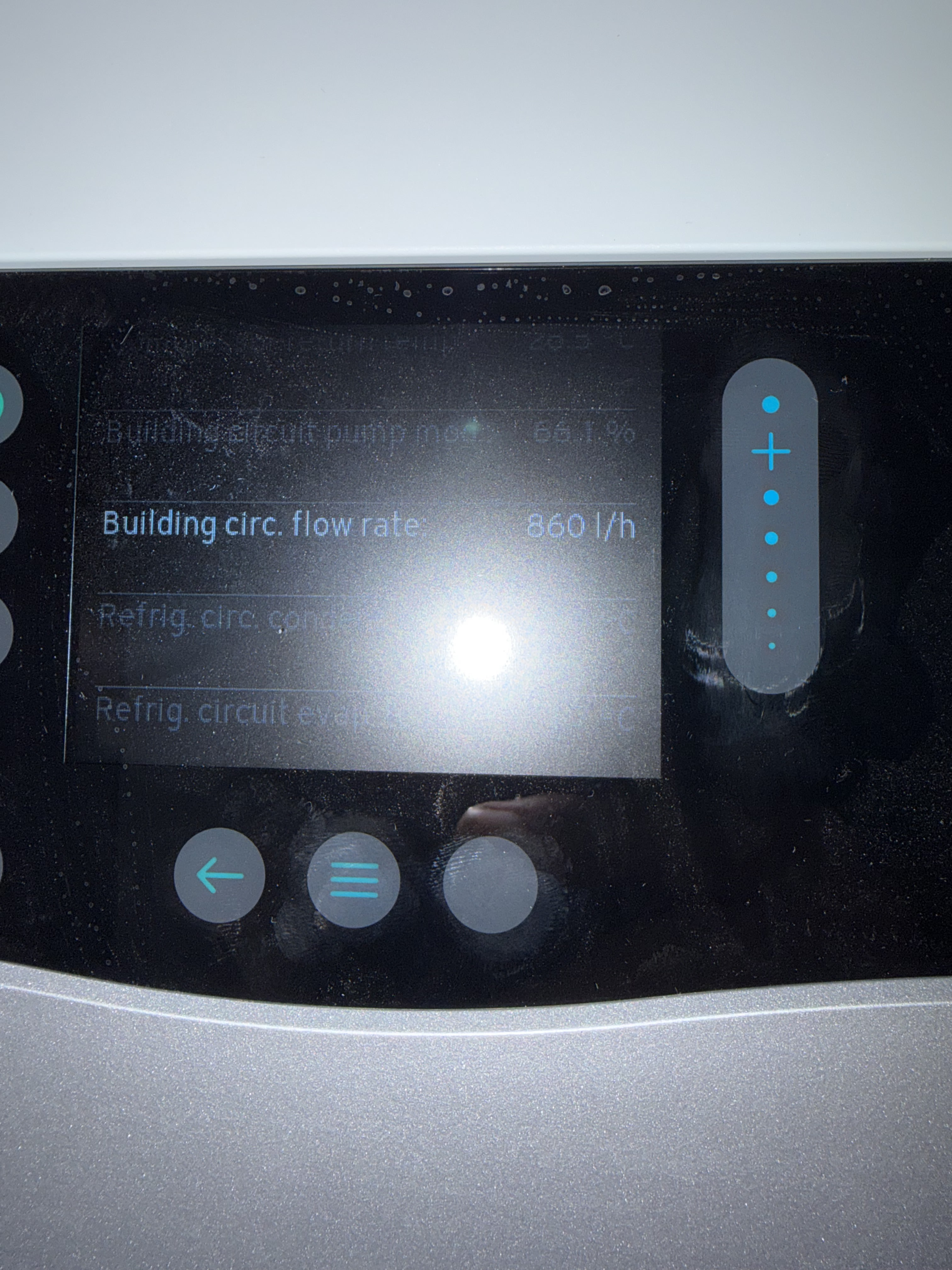
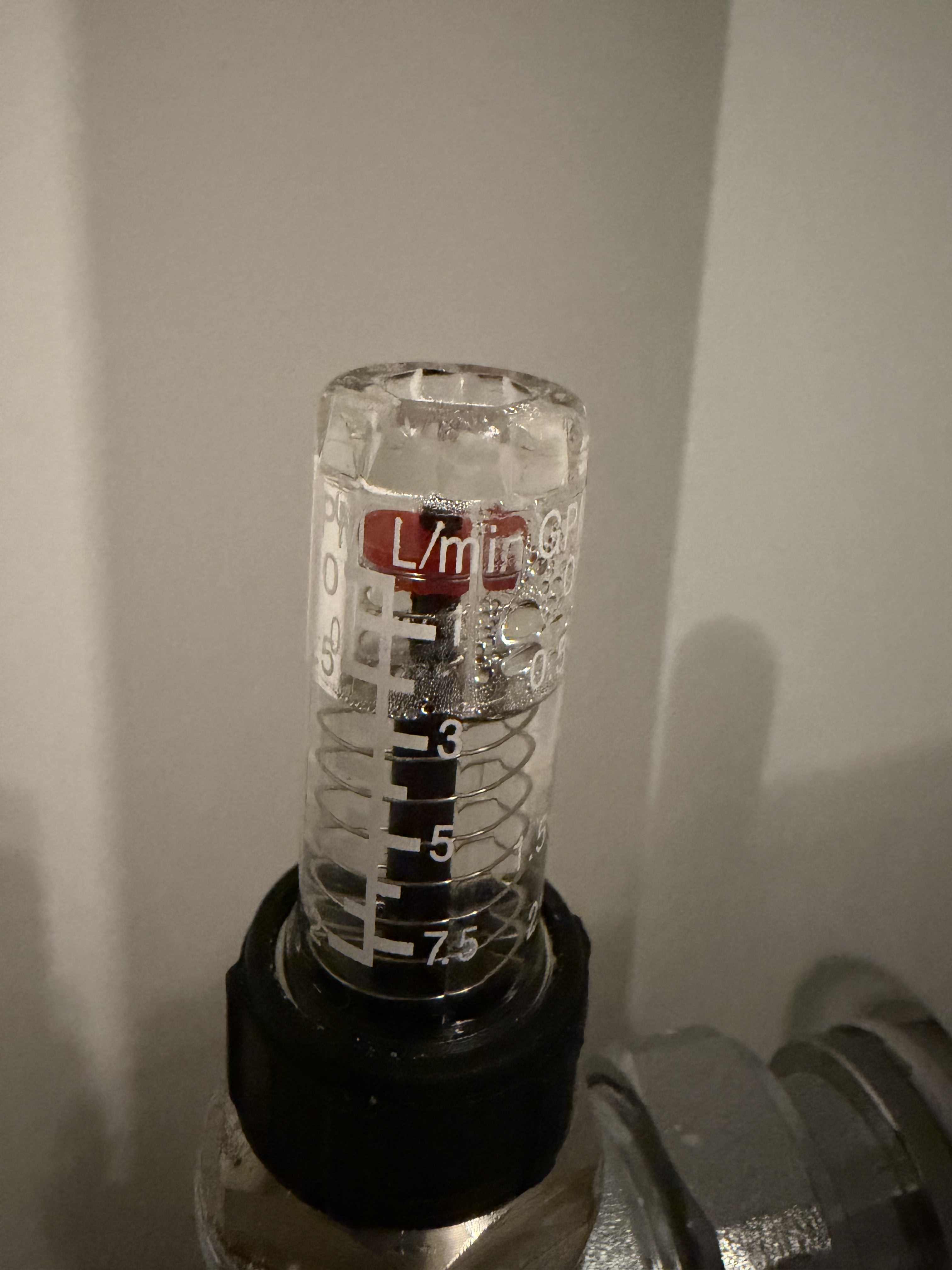
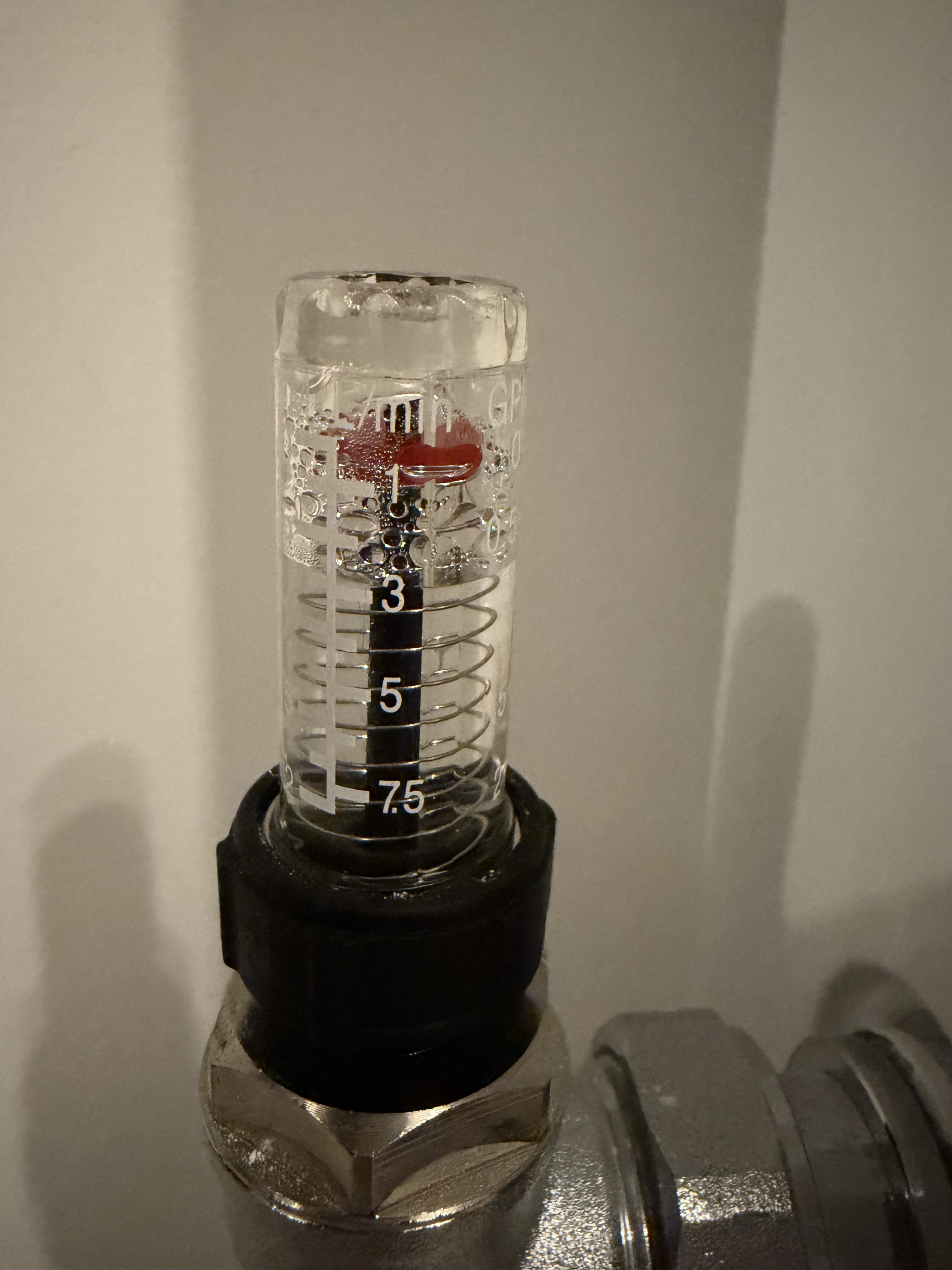
FRV are fully open, but there appears to be condensation inside and no flow actually shown (except their must be as the radiators get warm, and heat pump shows the maximum flow rate around the system). Almost looks like the spring is too distended? (As in doesn’t the red marker float on the water?)
Appears to show the same flow when either shut or closed? @glyn.hudson - I’ve seen your YouTube video where you explain these.. any ideas?
Looking at your pictures the number on the scale increases as you go lower down, so the red thing is supposed to compress the spring as the flow increases. You sure you’ve got the flow going the right way through them (just a thought)
Most modern TRVs don’t care whether they are on the flow or return. If you have an old one fitted the wrong way round then you will soon know since when it gets close to closed there will be unmissable water hammer. Cheapest way to find out which is flow and return is to let the system get cold, start it up and nip round all the radiators feeling the inlet/outlet pipes. The flow side will get hotter first.
I might have worked it out. It states on the firepower heating pdf that they do two versions of this now. I looked and mine are going up to 7.5L/min so maybe there isn’t the resolution I need and I need the smaller one which is a max of 2.5l/min?
When I worked out the flow rates based on the published factor I don’t have anything faster than 1.4?
Could be. Might be worth closing all the TRVs except one so you force all the flow through one radiator and see if the FRV on that radiator registers a flow. That would confirm your theory.
That single-radiator test is the quickest way to settle it — with everything else shut, the gauge on the open radiator should show the full pump flow, and if it still does not move, the indicator itself is stuck or the valve is the wrong version for your flow range. Worth doing before swapping anything out, since it also tells you whether the upstairs-downstairs imbalance is just a balancing issue.