Also a cheap DIY option for flushing the system. These pumps can shift a fair bit of water if pressure not too high.
And for getting air out of UFH
After a week or so with no heat meter errors I am starting to get air problems again. Presumably there must be a section of pipe holding some trapped air which is gradually re absorbed into the water.
So plan is to try mk2 version - I got some spray nozzles so can try spraying the water through the vacuum tube.
So I rigged up the new version where the water is sprayed in at the top of the degassing tube. Lots of froth going on and gas can be vented by switching the pump off and letting the tube fill up to push the gas out. Doing it all manually at the moment. I have fitted a vacuum gauge so I can see how good a vacuum I can pull. When testing with cold tap water the pump can pull down to -0.8 bar , When fed with water from the heating circuit it is less effective , I assume due to the gas in the water, will be interesting to see if the vacuum gets better as the gas is drawn out. A larger vacuum chamber would certainly be better I feel to give more time for bubbles to rise.
Here is the spray nozzle assembly. In fact I ran with the atomiser removed as the throughput would be very low, so the nozzle just directs two jets of water onto the side of the tube too form a thin film on the surface of the tube.
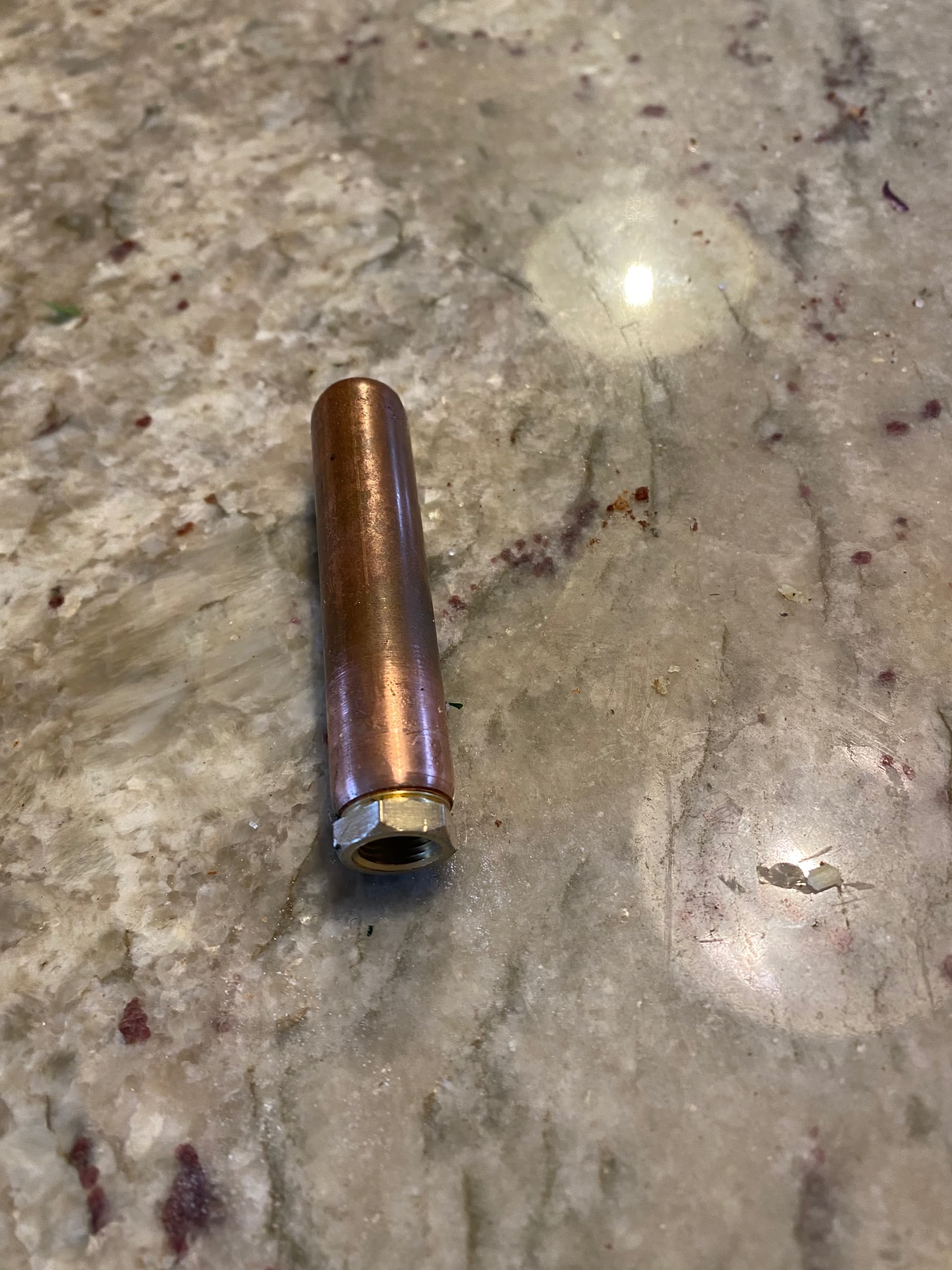
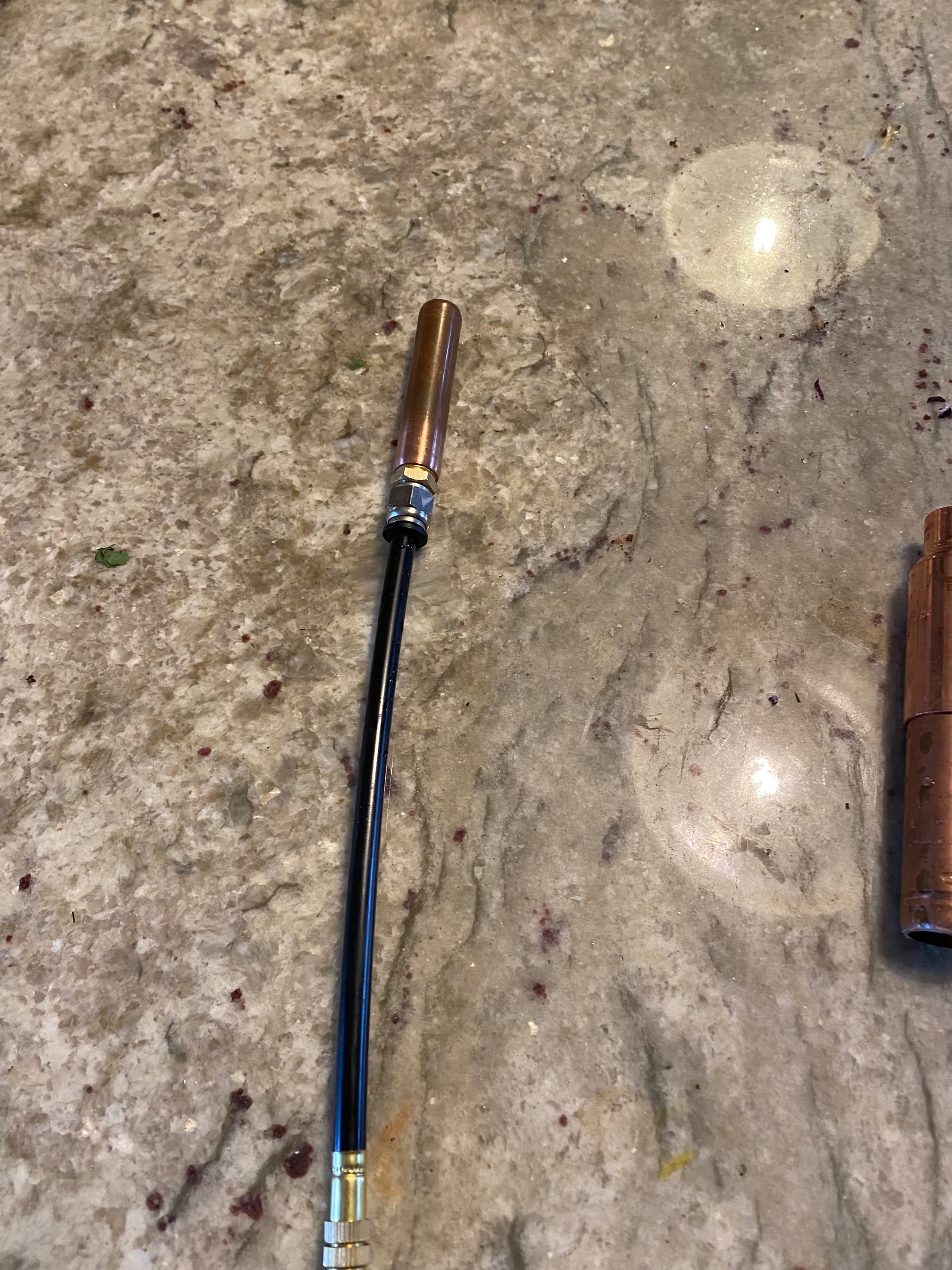
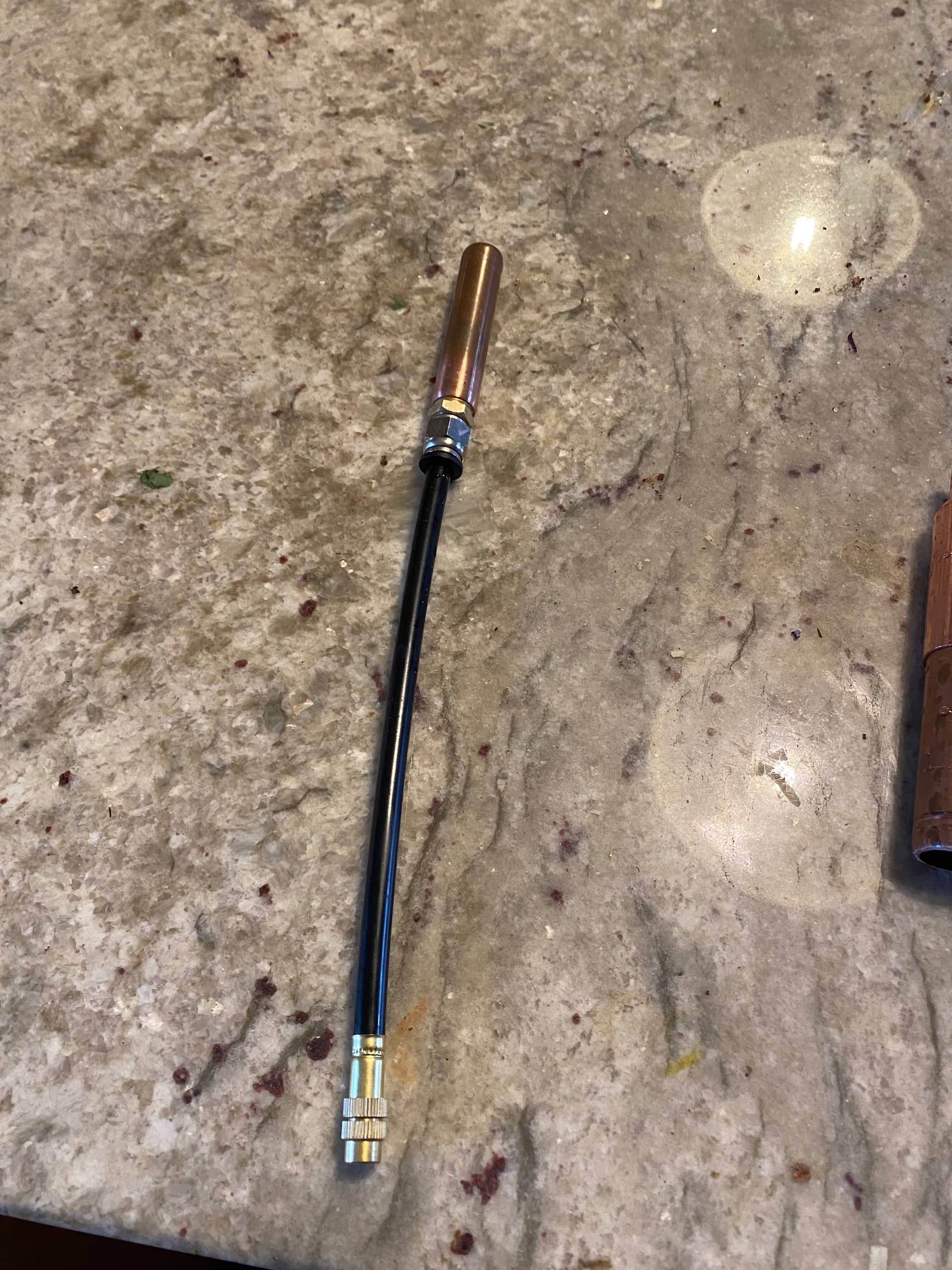
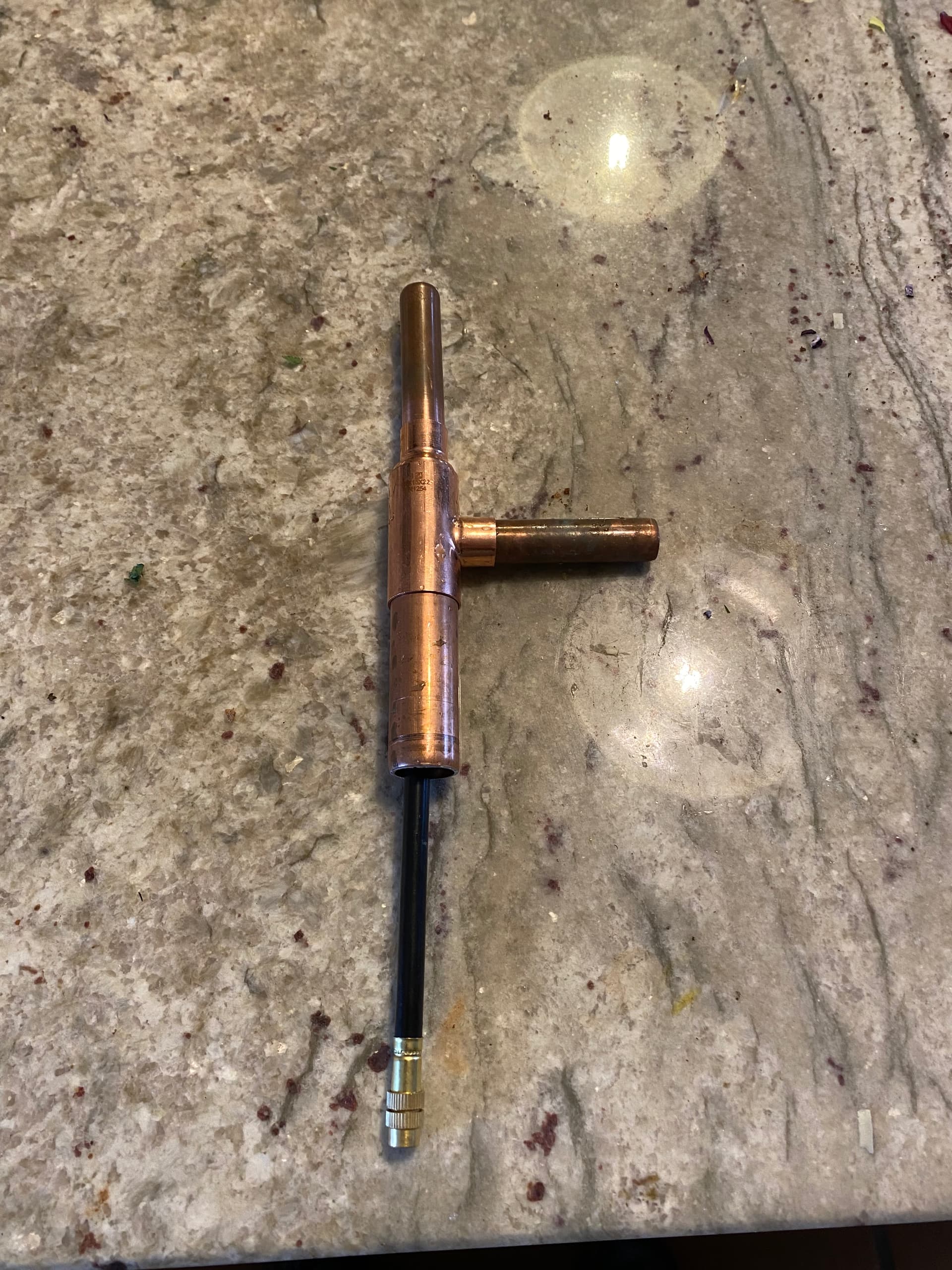
The side tube forms the vent
Link to YouTube video - sorry too big to upload directly to this site.
And the good news - after even just a short session of degassing - about an hour, my latest hot water run was heat meter error free😀. I think there is more to get out still.
Now I have the vacuum gauge I can check for vacuum tightness. After an hour with the pump switched off I still had -200 Mbar of vacuum.
I would fix a tube on the air outlet and put it in the bottom of a glass of water so you can see the air being removed.
I assume you are running with the heighest flow temperature that is reasonable for your system while running the deairer.
Hi
Yes I had the vent into a glass of water and you can see the air bubbling out. I’m finding that 40 deg C is hot enough due to the much lower pressure. I am going to have another session today to see how much more air can be removed. My heat meter is happy at the moment.
BR
1 Like
My design (that have have never had a reason to implement) is a “Willis external immersion heater” with a SpiroVent micro-bubble air separators above it, connected between flow/return (eg on end of UFH manifold) and balanced so it gets a very slow flow rate.
Set immersion as high as possible (80c+), but verify that water (once mixed with main flow) returning to heatpeat is well under 35c to keep UFH happy. (Idealy use temporarily pipework at get the Willis and SpiroVent at the top of the loft.)
If have old UFH mixer and pump, could setup like Blogs| buildhub.org.uk (but with spirovent added)
Could also use mixer set and buffer (plump so can be removed for normal operation) to run heatpump at max flow temperature while feeding UFH.
On your setup an simple auto air vent with the pump on a traditional time switch set to 15min on with 15 minute off would automate a few days run.
Yes a pre heater could be a good improvement - albeit with maybe need to think about pressure relief etc. Perhaps preheating combined with a pressure drop to atmospheric pressure. could be a good solution which removes the complication of dealing with a vacuum.
I was thinking about an auto air vent but do they work under vacuum? My understanding is they just have a float which closes the vent when water reaches the float, I think you would need a non return valve after the AAV, I presume this is what the professional unit has.
Not sure I would feel confident to let it run unattended but this would be a good goal if it turns out that this process has to be repeated, I am assuming/hoping that eventually all the air will be gone and no new air can get in???
If I could be bothered it would be interesting to set up a test rig - with a circulation pump, expansion vessel, pipe and a radiator with a Willis heater in lieu of heatpump, could then play about with different ideas to find best solution without messing with heating system.
I’m sure there is a good low cost solution here just needs optimisation. It’s quite impressive how much air is dissolved in the water- it’s no wonder the heat meter struggles with it.
1 Like
=> I was thinking about an auto air vent but do they work under vacuum?
Good point, they will not seal out the outside air when under vacuum, so would need a one way value before them.
Thinking about your idea with Willis heater- I like it👍 much simpler and no noisy pump. I think as you say providing the bypass flow to it is quite low then it should not add too much extra heat to the main flow.
My only question marks
- what is the degassing effect of 80 deg heat but still at full system pressure v say 40 deg heat at some lower pressure or vacuum, even if not as good it may be good enough to let the heat meter work.
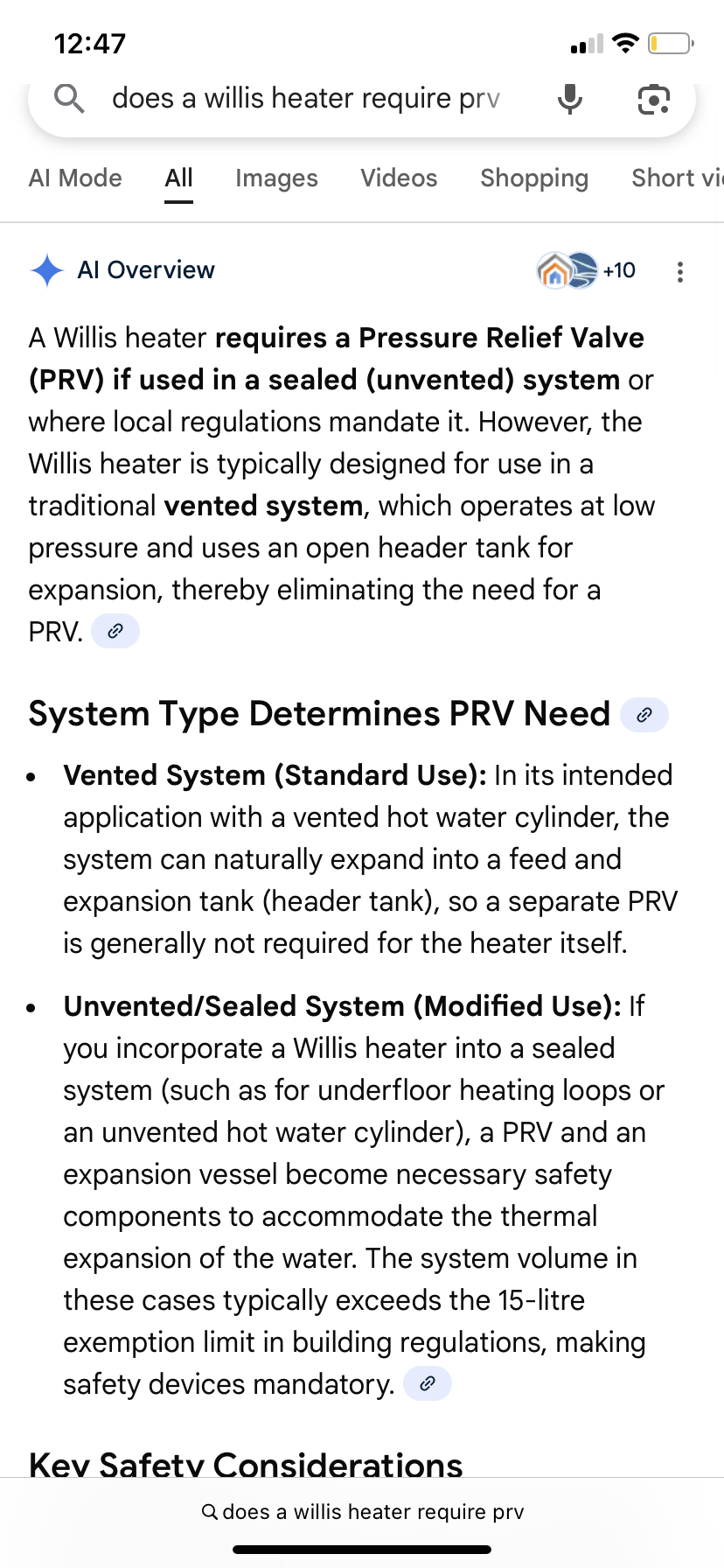
- Just safety - I guess Willis has built in thermostat and high temp trip out, main heating system should have pressure relief but if there are isolation valves to the Willis then I don’t think this can be relied upon , so do we need a seperate prv and it had to have a safe place to vent. Maybe Willis had such low volume it is not an issue??? Any G3 qualified plumbers out there?.
https://assets.publishing.service.gov.uk/media/5a81a884e5274a2e8ab552a5/160321_Part_G_FAQ.pdf
All in here, just needs interpretation