There’s these - stainless, but clips.
Hi André,
I’m also very interested in this, any chance you’ll have 2 more of the controllers left?
Cheers
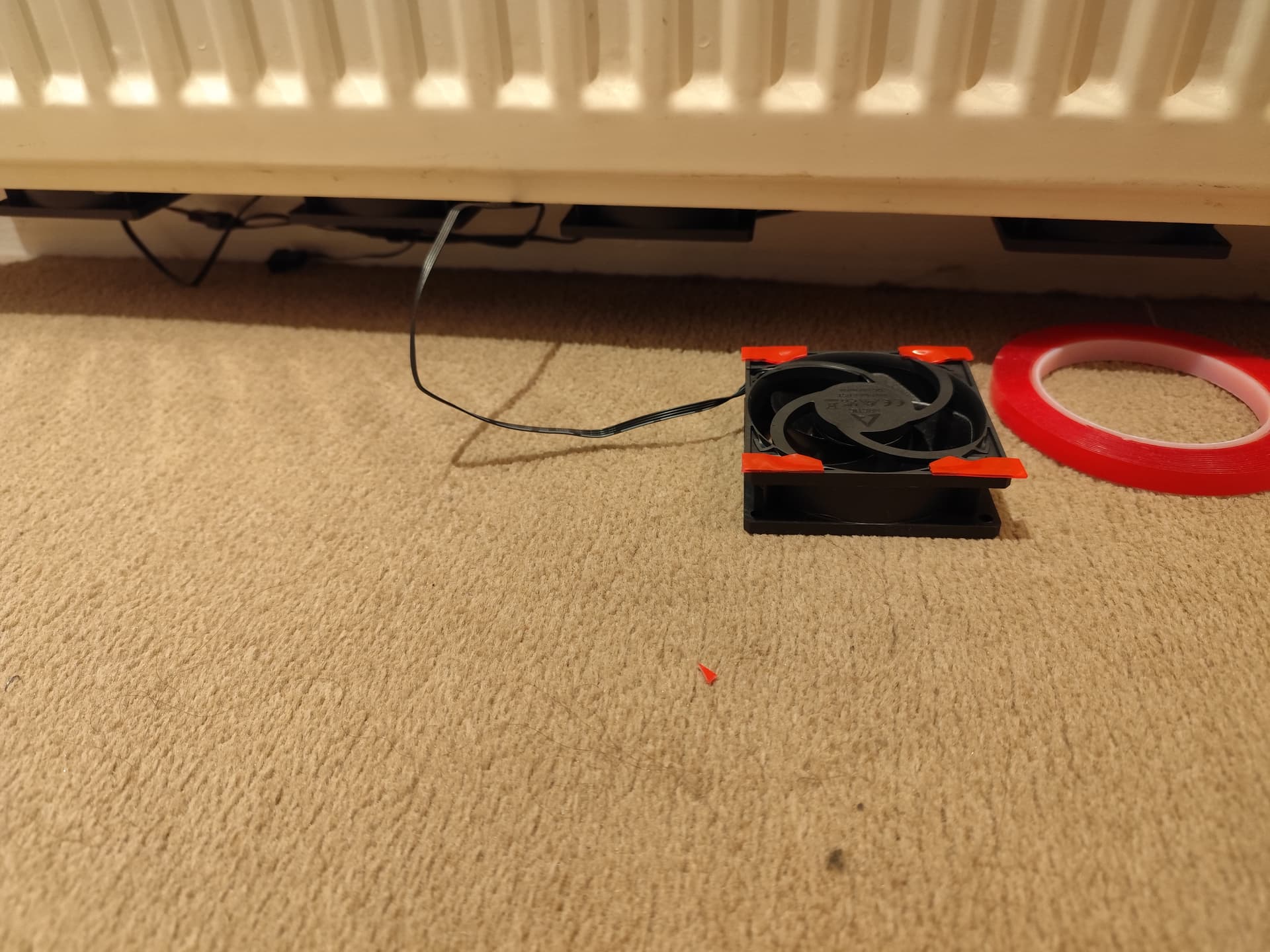
So I went ahead and bought the X5 Arctic fans from Amazon.
Also bought an adjustable controller…
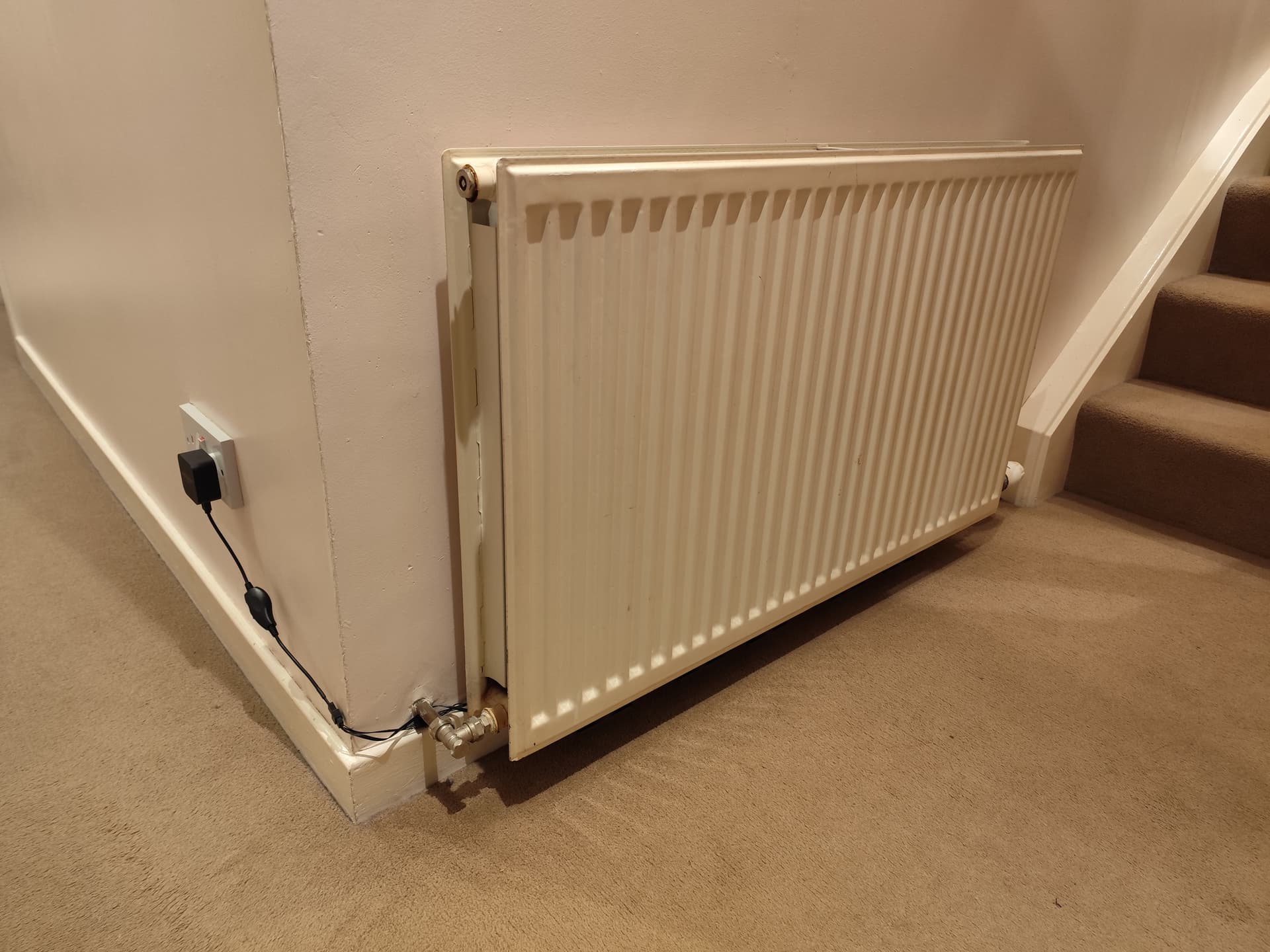
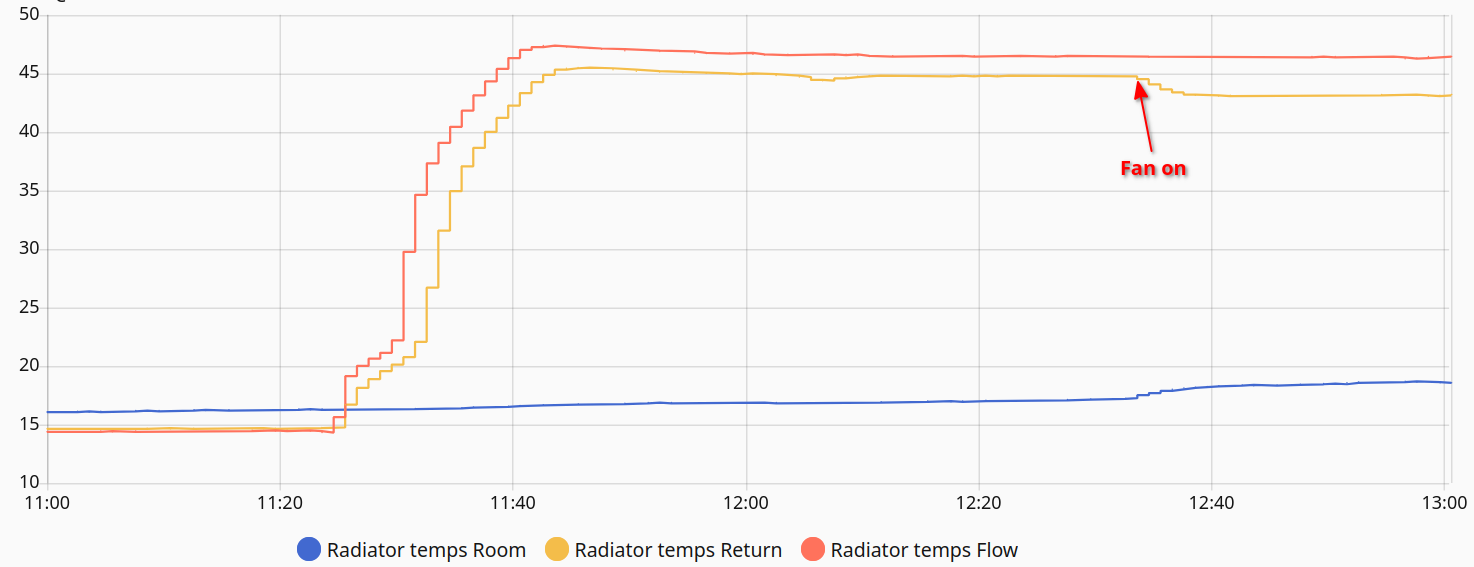
All hooked up under a big K2 radiator with an old 10W usb plug and working perfectly. The adjustable controller is handy as the fan speed can be lowered until the noise is at a reasonable level. Even after reducing there’s still a noticeable draft of warm air coming out the top so happy days.
Possibly doubled the output of the radiator for £27.
Hi Andre,
I, too, would be interested if you ever commission another batch.
Thanks
Hi André,
If you have any of these left I’d be keen to take one too.
Many thanks
I’m currently out but ordering a new batch doesn’t make sense as the microcontroller modules I was using are kind of hard to get right now so I need to do a small redesign. I’ll update here once I have something. Sorry!
No worries, thanks
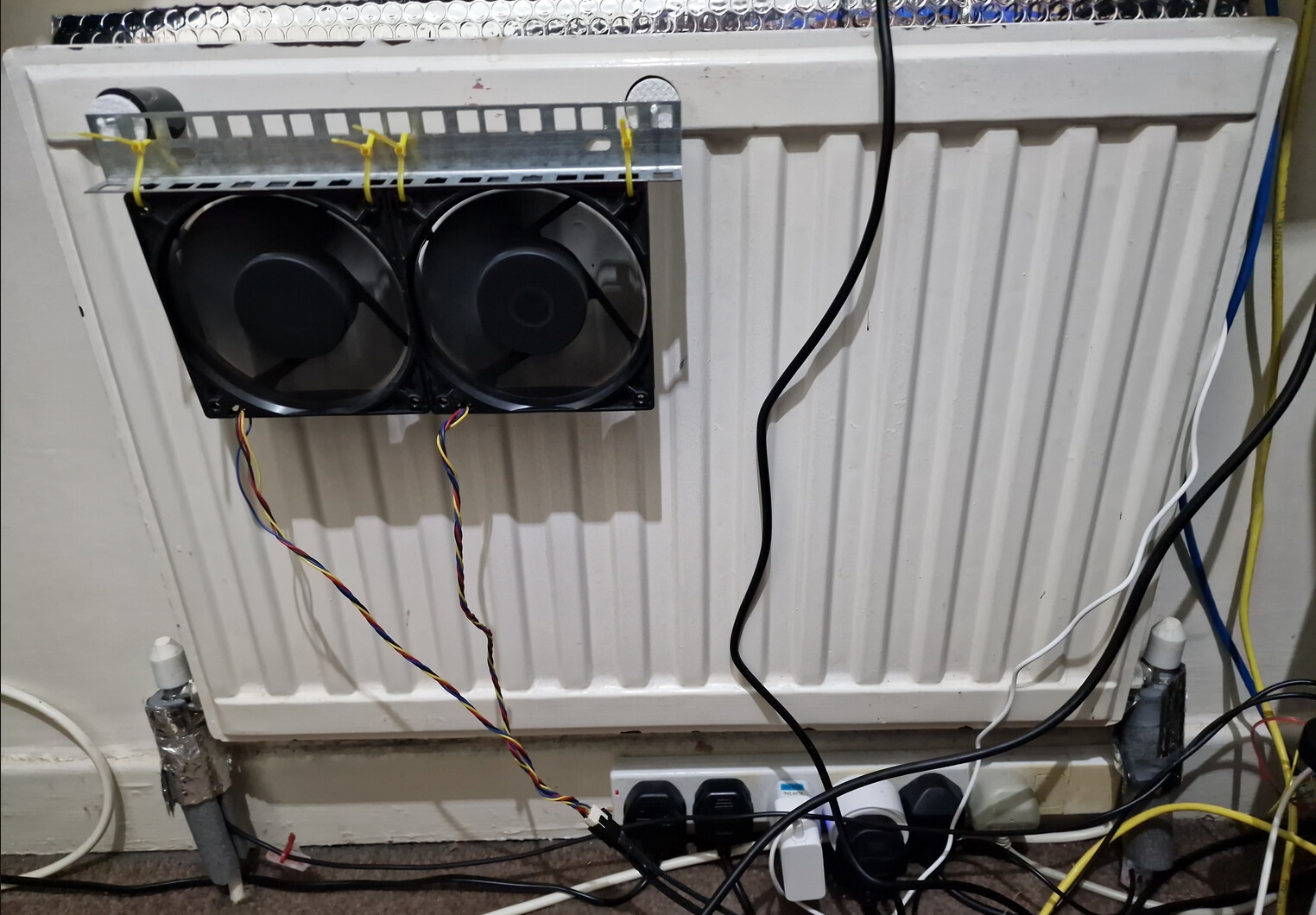
I released a new version of the code. v1.3 finally supports the LED: On boot it is red and turns green once connected to Wifi.
And just to keep the ball rolling - another new feature by request: Nighttime scheduling, which allows you to turn the fans automatically on and off at specific times.
Also a nasty bug with the web interface was fixed - thanks @ectoplasmosis for the diligent bug reporting  .
.
I’ve been following this thread and may have another approach. You can get get ESP8266 microcontroller boards which are both Wi-Fi capable and programmable, and these have a large number of input and output pins available. There are also h-bridge motor driver boards that these plug in to, rated up to an amp or so on each of two or four channels depending on the particular board. Speed control is done by the h-bridge being driven from an in-build PWM pin on the ESP8266 board. They are very cheap (a couple of pounds each) on Aliexpress. I’ve used them for 12v model train control, but it strikes me that they could just as easily be used to drive 12v fans. The beauty of this approach is that you can (a) generate code so the motor control can be done from a phone on the same network (including such things as speed control, simple on/off or times of operation) and (b) the program running on the ESP8266 can be updated over Wi-Fi, making tweaks easy. In addition, adding a temperature sensor to one of the spare pins would be easy to do. The only slight issue is that you’d need a 12v supply for the motor drive and a 3v supply for the ESP8266 board…..
A slightly more expensive route is to use an “Arduino” Wemos D1 board and associated piggy back h-motor borad, which has the advantage of an in built 12v to 5v regulator for the board so you only need a 12v supply. The form factor is different to the ESP8266 board and slightly larger.
Hi Peter & welcome to the community!
Thanks for your ideas! My setup is in some ways quite similar to your proposal. I’m using an ESP32, which is the 8266’s successor. Speed control is handled via PWM, however not by modulating the 12V directly but by using the dedicated PWM line in 4-wire PC fans. I thought about driving the power line with PWM as you suggest but decided against it since driving those fans with the relatively long wires would result in quite some EMI.
Voltage conversion is handled by a buck converter module from 12 V down to 5V for the ESP32 module, which has an internal linear regulator to get to 3.3V. of course you could also directly downconvert to 3.3V.
Everything can be controlled from the phone via a web interface or integrated into Home Assistant.
I have a handful of additional ideas to improve the setup but need to find the time. Actually integrating an ESP32 module onto the PCB instead of having an expensive plugin module and using a different 12V switching solution are the highest priority. I’m happy about all contributions to the repository!