Might be worth updating mine there have been significant control updates to the cosy firmware.


Mine is dominated by hot water calls, I charge a 300L tank to 55C every day.
What does the MID meter data report for these periods? Please post side-by-side screenshots
Here’s a datapoint for the Cosy 6 in Thurcroft
Our MID monitoring for this unit started in March 25, the unit was installed in Jan 25, so we would expect our monitoring to show a higher SCOP since it missed out a lot of cold weather running in Jan/Feb. However, the Octopus scop is over-reporting by at least 9.5%
@Swwils comparative figures from the mid meters:
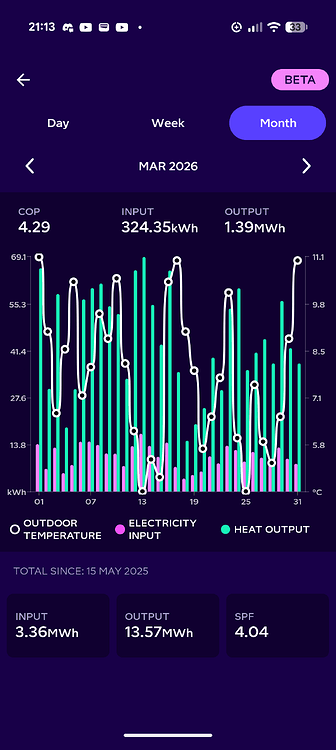
March 2026
Electricity MID: 325.5 kWh (vs 324.35)
Heat MID: 1304 kWh (vs 1390)
COP: 4.00 (vs 4.29 cosy app)
Apr 2026
Electricity MID: 117.0 kWh (vs 114.59)
Heat MID: 474.0 kWh (vs 502.06)
COP: 4.05 (vs 4.38 cosy app)
Looks pretty consistent ~ 0.3 cop difference.
I think loss across that should be pretty small ~0.01-0.05 COP.
Your all time COP is also tracking consistently with a 0.3 COP difference, 3.71 on HeatpumpMonitor, 4.04 on the cosy app.
I’ve decided to remove the Rotherham Cosy example for now, we’re going to investigate that one in more detail as don’t want to mislead if it’s actually explainable by a combination of long pipework and/or anything at our end.
Reviving this thread now we’re into heating season.
I have a Shelly EM-50 CT clamp on the Cosy’s supply which reports a big difference with the figures from Octopus.
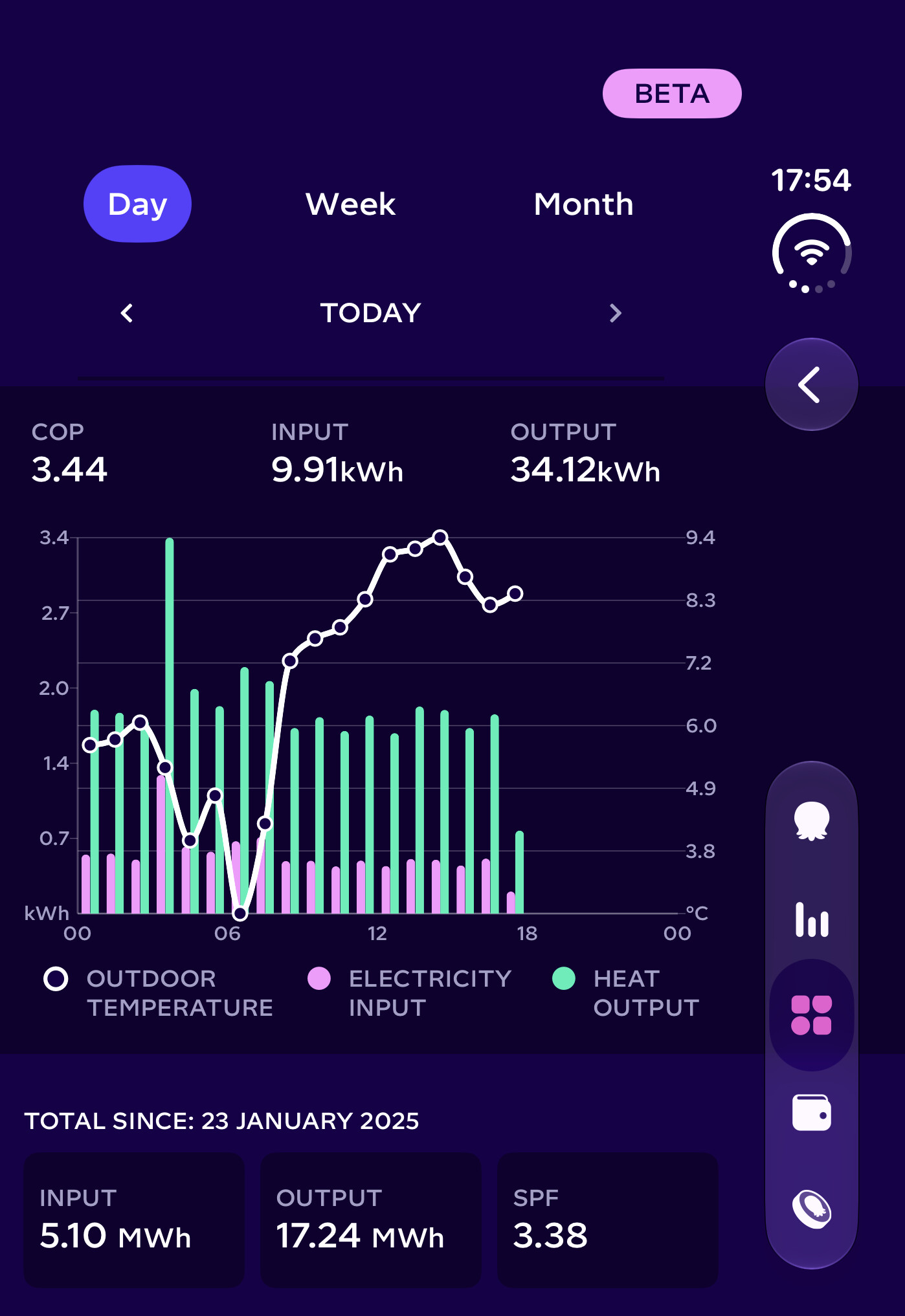
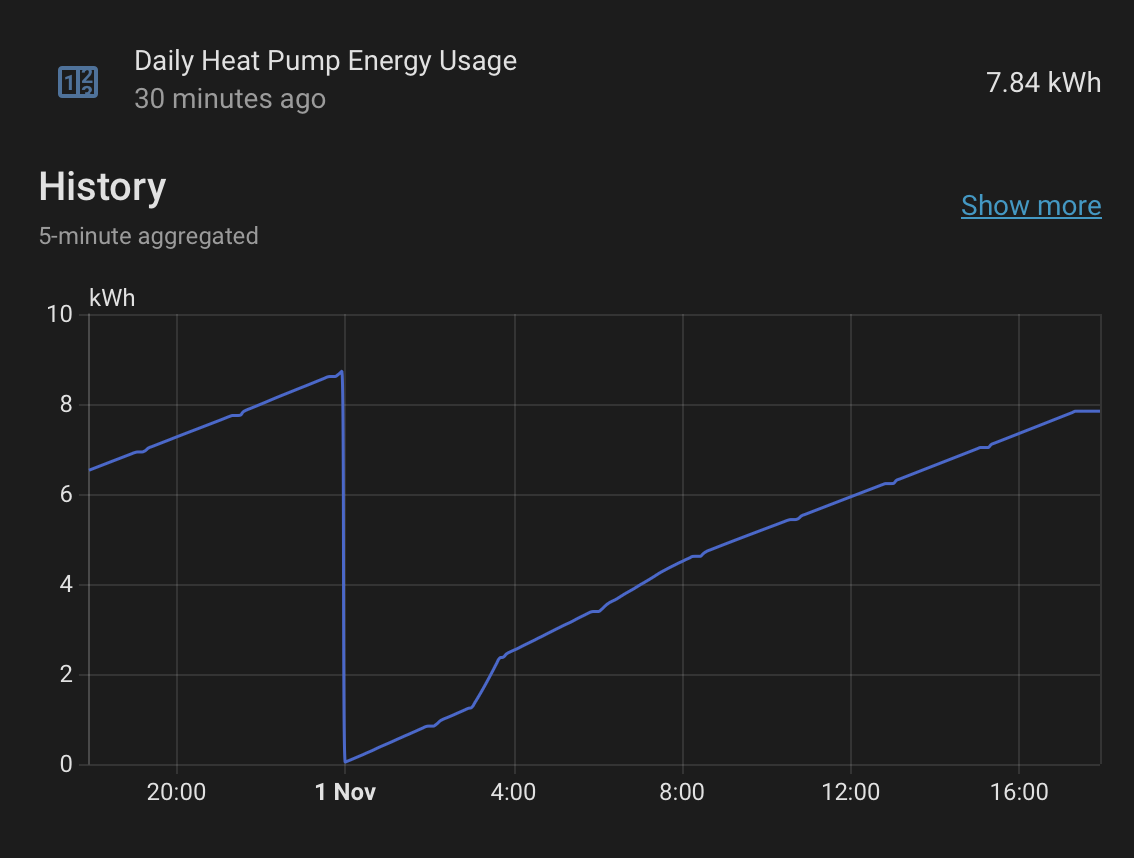
For today for instance, where outside temp has been between 3 - 10degC the Cosy reports it using 9.91kWh to product 34.12kWh of heat. My CT clamp reports that only 7.84kWh having been used. This turns a reported COP of 3.44 into a COP of 4.37.
For last month, it reported 227.67kWh being used but my CT clamp reports 193.2kWh. This is for a reported output of 902.75kWh of heat. This would turn a reported COP of 3.96 into a COP of 4.67.
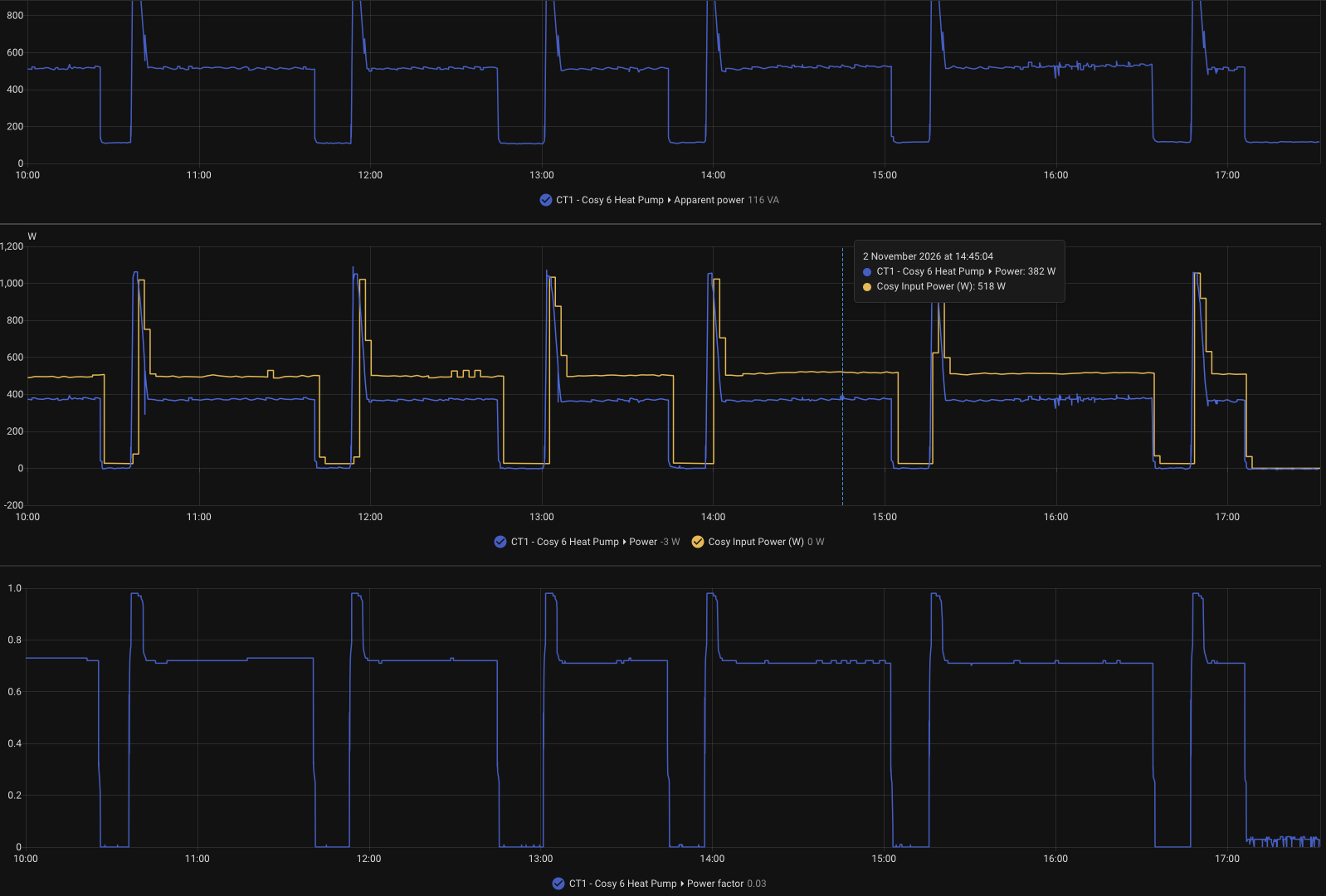
I’ve posted on this forum and others before, but believe the Cosy measures apparent power rather than active power. When the heat pump modulates down from full compressor load the reactive power increases. When you look at the apparent reported by the Shelly CT it matches exactly the power input from the Cosy API, which again reaffirms my belief their monitoring is wrong.
To add, I run my weather comp so that it only just gets to the set temperature of 21.5degC, so it runs for longer periods. Octopus prefer you to run it slightly hotter where you basically never get it to modulate down.
I’ve raised this directly with Octopus which says they monitor active power, but evidence suggests otherwise. Now whether the heat output is accurate is another question.
Can you turn everything off at your consumer unit other than heatpump, take meter reading, go out for a day, take 2nd reading.
Eg use your electricity meter as the “source of truth”.
But maybe not fridge and freezer?
Thanks for posting, however, this thread is for comparison with MID meters. Shelly CTs don’t have MID certification and can have significant inaccuracy e.g 5% has been reported, therefore comparing with a Shelly reading introduces even more variables!
I did this today, with only the Cosy powered from the grid whilst the heat pump was in ‘steady state’. The Octopus Home Mini, Starlink and network gear were powered by their UPS and for a period of 10 minutes the reading from the meter was within 1% of the Shelly reading. The reading from the Cosy was still way out.
As above reply, I measured usage by the Cosy with the meter as the source of truth and the power usage was within 1% of the Shelly. Cosy’s own readings were way out.
What I see is that the Cosy’s reported power input tracks with the Shelly active and apparent power values when it is near unity PF during the ramp as the compressor starts up. When the VSD begins to modulate compressor speed, the PF obviously drops and so does the Shelly active power. But the Cosy power input stays in line with the Shelly apparent power reading, which makes me think it is measuring VA not W.
The 150W difference when modulated down would be too greater difference for a measurement error.
When I get a spare moment I will put some feeds in my unit that are the ocotpus API numbers so you can compare the MID vs those.