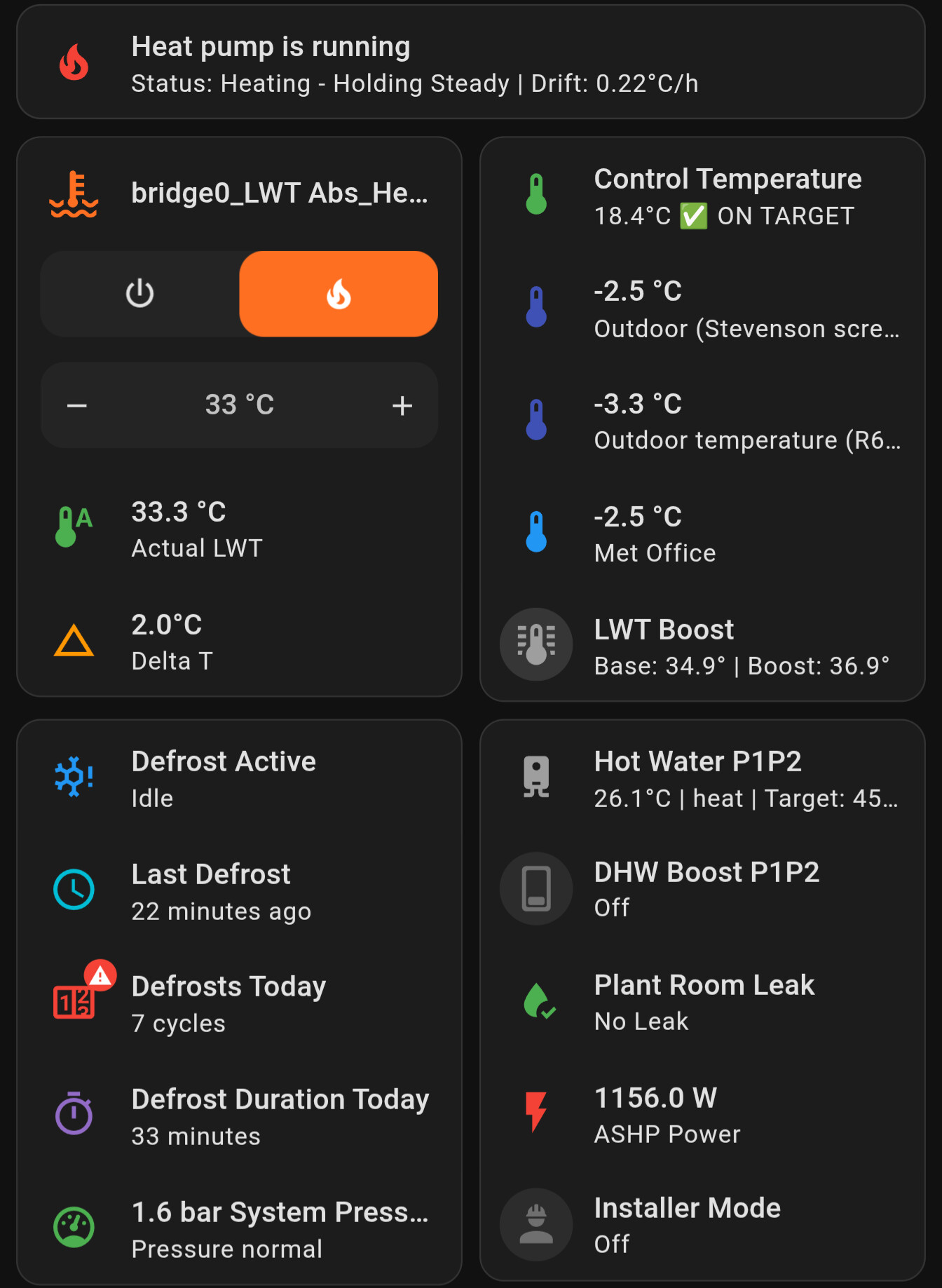
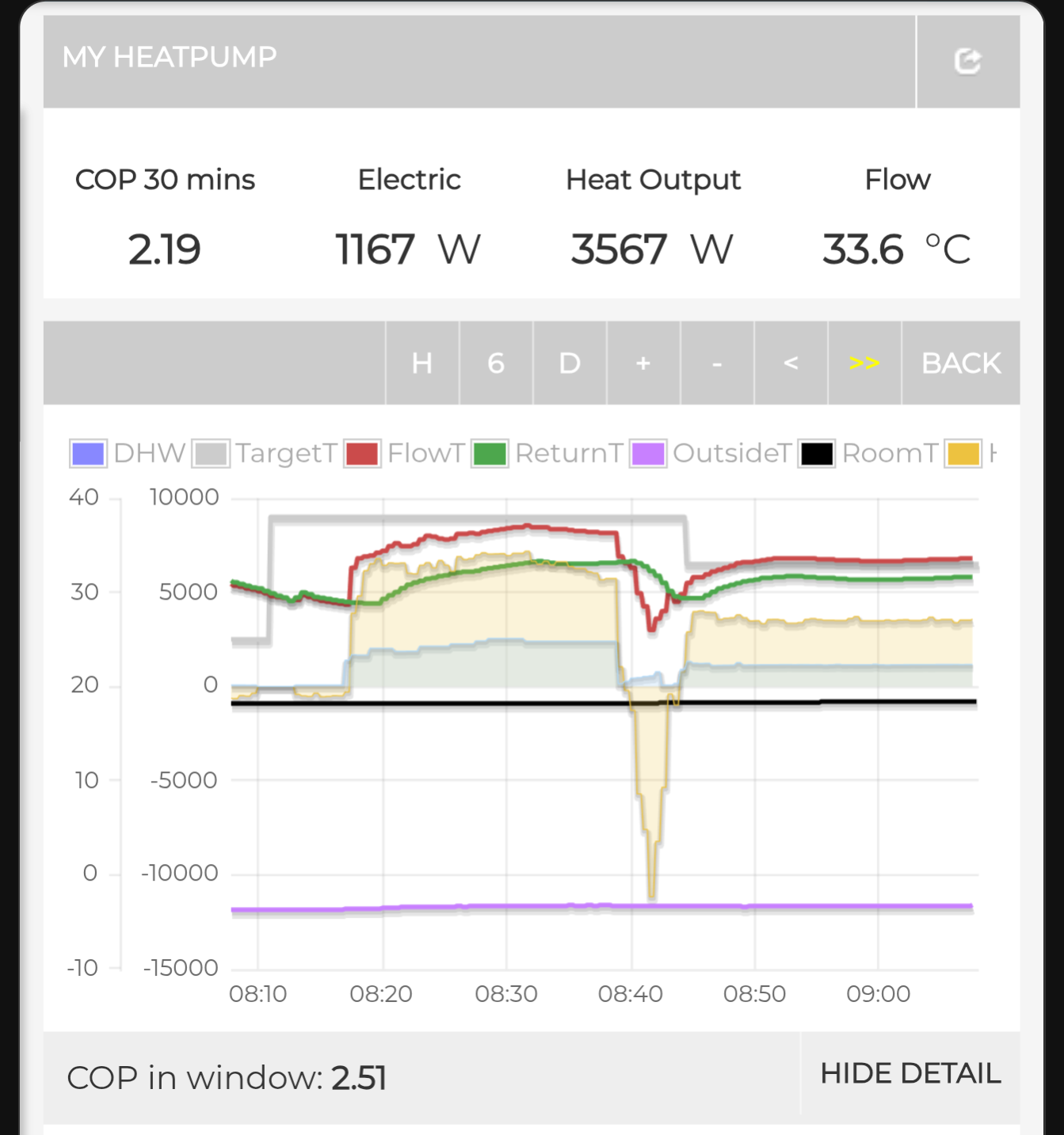
It is possible to turn DHW on and off with the Onecta API, for which I believe there is a HA integration. I do this with my own integration, and usually want to have “one shot” operation where the HP should stop heating the DHW once it is up to temperature (most days I do not reheat).
If your Python is any good, it isn’t too hard to DIY, but the authentication process requires some careful working through.
The Daikin documentation of the Onecta API is not too bad, but I think you do need to create a developer account to access it.
yes you turn it on and off using the power mode using the onecta app
Yes, that entity is from the Daikin API in home assistant
I have some notes and python code at
GitHub - divenal/python-onecta: python class to connect to Daikin Onecta cloud interface
if it’s of interest to anyone.
Dave -
I use https://redirectmeto.com/ to handle the redirects
It will work with a “private” IP address on your LAN.
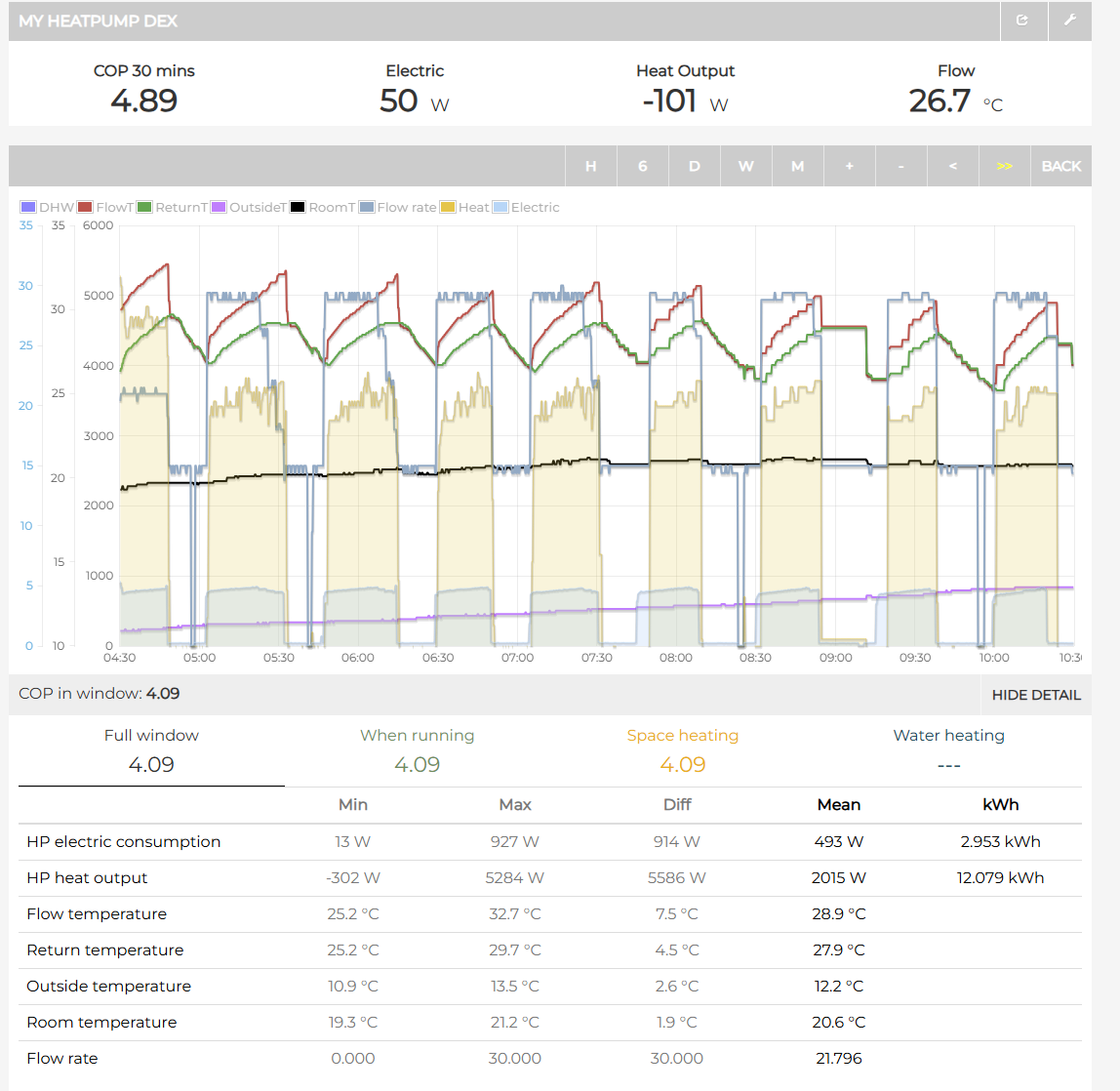
is this a 9 kw + heat pump , and do you have internal temperature control active or on pure weather comp ,
Yes it’s a 9kw.
Temp control at 21c but highest it’s been is 21.2c so thermostat isn’t turning it off.
DeltaT is high at 8 or 10, can’t remember exactly. Modulation at 5. Pump speed 60%. Quiet mode.
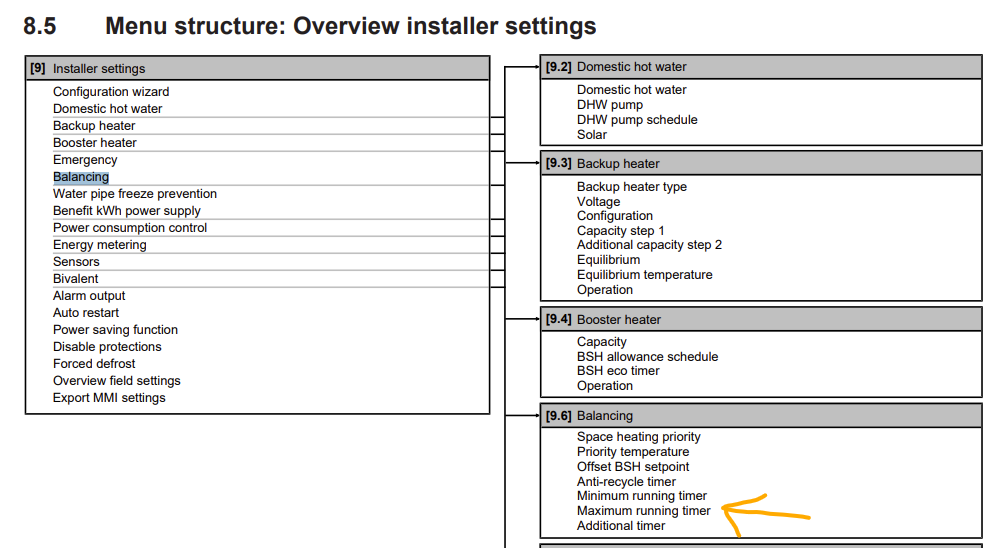
hi @Chris_Hill is this the setting, and did it work?
I’ve had some good success using Matt’s advice from this thread to reduce my defrosts. I basically increased the delta from 4 to 8 and it’s made a huge difference. It’s been running since 2:00 this morning now with no defrost and no cycling. Holding the target flow temp much better too. Made the change around 22:00 last night. Thanks for the great advice Matt!
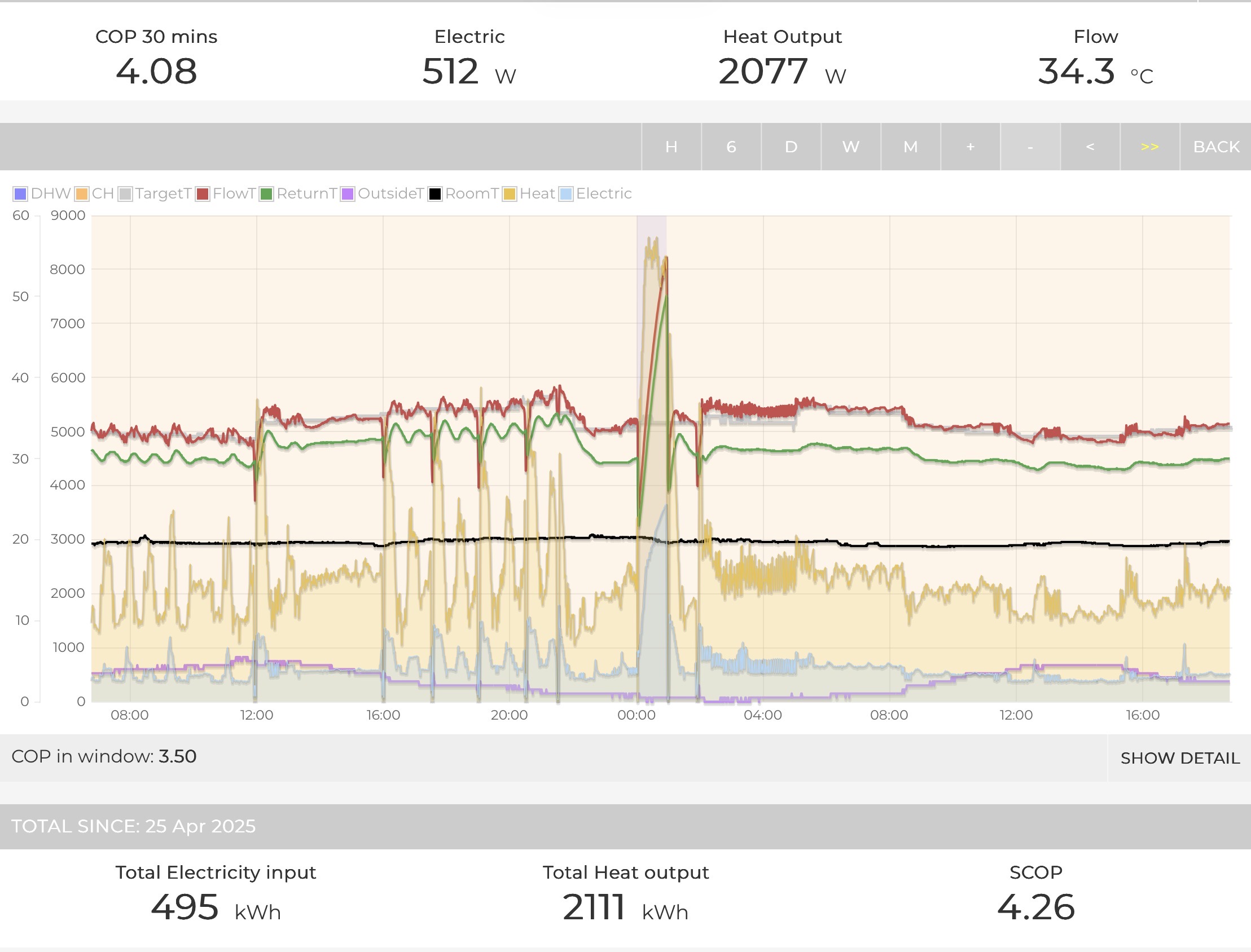
Must admit, I’m a bit baffled as to why increasing the DT results in fewer defrosts and less cycling (by the looks of things). I would assume that an increased DT also results in lower SCOP as the flow temp has to be increased to acheive the same leaving water temperature. @agileoctopus which system is yours on HPM I’d be interested to have a look? I’ve got a 6kW altherma currently.
Increased dT is a side affect of reduced flow rate.
It is limiting the flow rate that reduces the power on start up and that reduces defrosting.
The power is limited by the lower flow rate, that means the return doesn’t rise so fast and there is no need to overshoot the set flow temperature so much to keep the dT under control. Basically taming the aggressive start up of these Daikin heat pumps.
In my experience, that is.
If I am experiencing a lower SCOP I cannot say it is noticeable 
Ahh ok so your theory (findings) being that by limiting the max pump speed, it won’t allow it to try and ramp up so much on start ups. Is just limiting the pump speed enough then or would I need to also increase the dT? I only need about 12l/min at design temp so reducing to 60% is no issue at all.
I run at the biggest dT I can get to keep the flow rate as low as possible at all times.
I also limit the pump speed so the start ups are as gentle as possible.
My experience is that this gives the best efficiency and least chance of icing.
But that only works in my installation, it may work in others too, but not all I suspect.
I never need more than 4kW of heat so my restrictions have no impact on my heating requirements.
If I needed more heat I would have to rethink.
I also do this at very low flow temperatures as I have large radiators.
The key is monitoring, experimenting and understanding what is most efficient if that is the aim.
I have now reached the stage where I don’t touch anything, it has been like this for over a year.
I just keep an eye on it to make sure nothing is going wrong but no more. I think I have extracted the best performance I can from it, the house is warm enough at all times. I just turned it on when it got cooler and I will turn it off next year when I no longer need it.
I have had no issues for over 12 months and the SCOP for the last 12 months ifs 5.02.
Job done and I have moved on
How do you do this?
It also delivers more heat in to house with a lower DT so the heat pump might work a bit harder to increase the flow temp up but its delivering more heat in to the house
Installer mode > Space heating > Pump limitation
Choose 1, 2, 3 or 4 depending on how much you want to limit the initial pump speed. I use 4.
The option ‘during sampling’ only restricts the speed when it isn’t actively heating and you have Pump operation mode in ‘Sample’.
Doing a few more experiments to try and reduce the defrost cycles further ,
when a defrost cycle starts i have automated the LWT to reduce to -3 to reduce the load on the heat pump straight after the defrost cycle
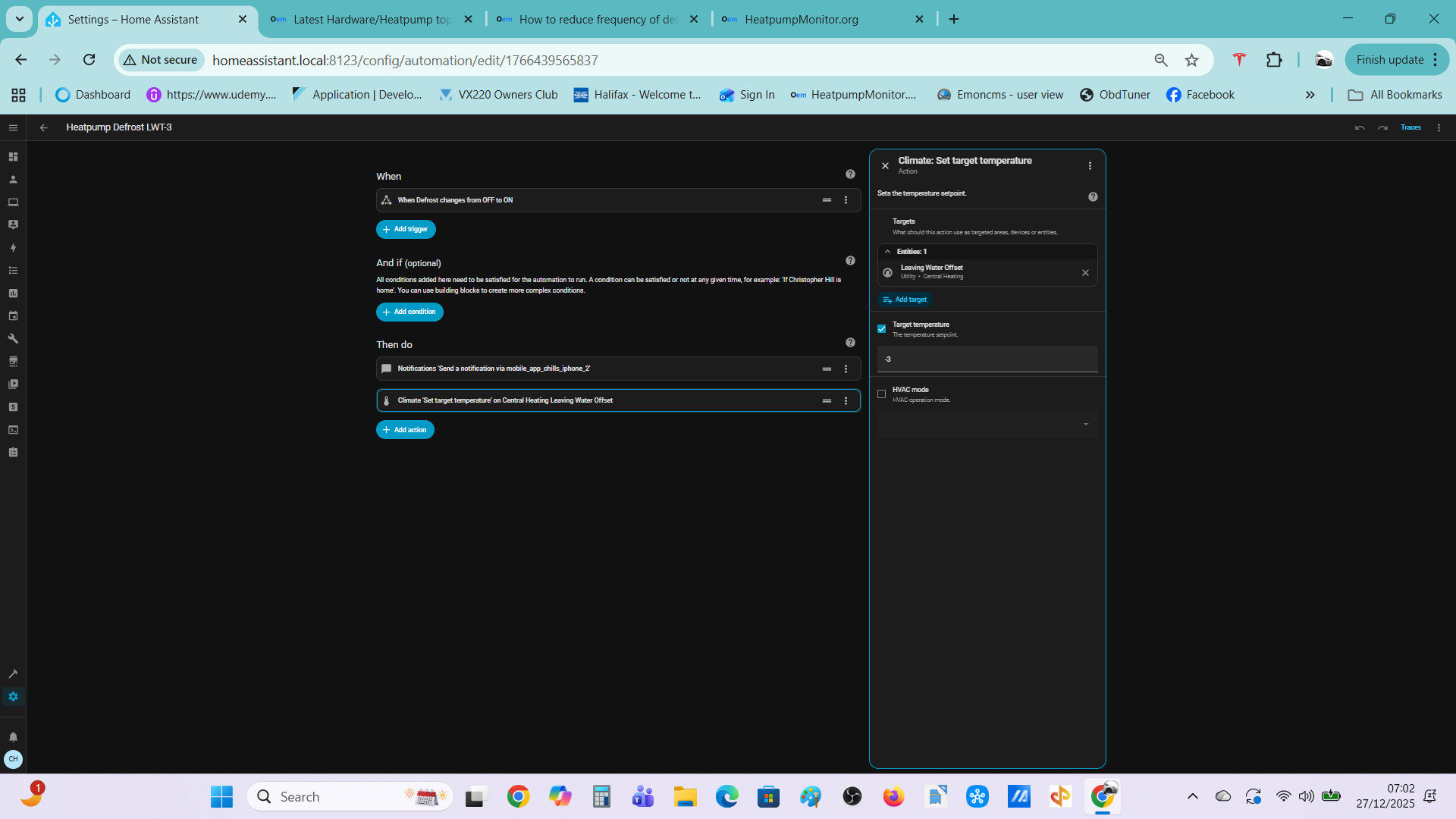
i am not suffering as much as last year so all the above techniques definitely help
i am using other LWT automations to fine tune the weather curve dependant for solar gain and home occupancy so eventually the LWT will come back to where its needed (details below) but will reduce load on the heat pump for long enough to delay the defrost cycle further (i hope )