Hello all, I’m the developer of WattDate, a free, open-source (AGPL) tool that simulates a home for a full year, half-hour by half-hour, on each Octopus tariff and ranks them by net annual cost. I’m starting a small invite-only alpha and think this group is well placed to test it, because many of you already have monitored data to compare against.
What it models: solar arrays (size, tilt, direction, from PVGIS yields), a battery (capacity, power limit, 90% round trip, 20% reserve, optional wear cost), an EV (miles, charging window, whether it may draw on solar and the battery), and a heat pump. Heat pump demand follows the day’s mean outside temperature (Open-Meteo, ERA5), with part of it going to hot water, and it can shift early or late within a comfort range. The everyday load shape comes from the Low Carbon London data unless you load your own half-hourly usage file. Each tariff is run at a rule-based level (a careful owner’s settings) and an optimal level for comparison. Tariffs covered: standard variable, Go, Intelligent Go, Cosy, Flux, Intelligent Flux and Agile.
The images are from a sample home. The energy-flow diagram shows where a year of energy comes from and goes to. The two key days show half-hourly behaviour on a cold winter day on Cosy and on the sunniest day on Intelligent Flux, with import and export price strips underneath so the battery’s timing can be checked.
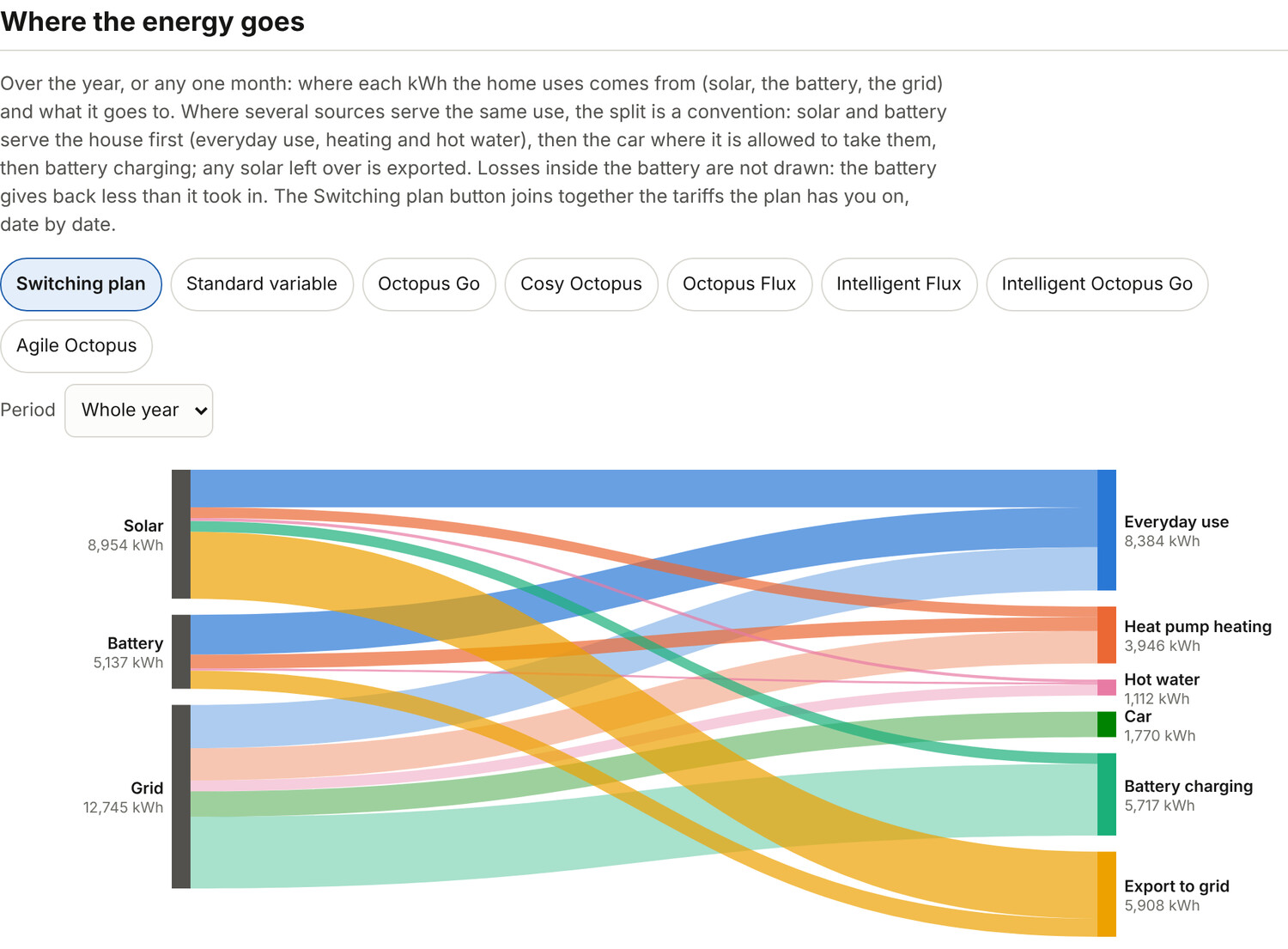
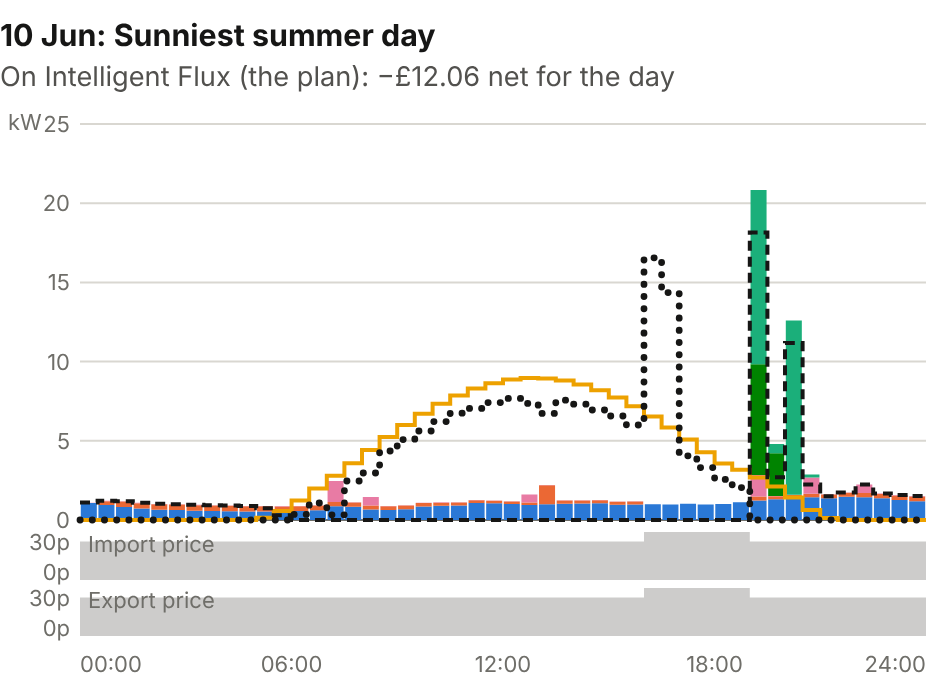
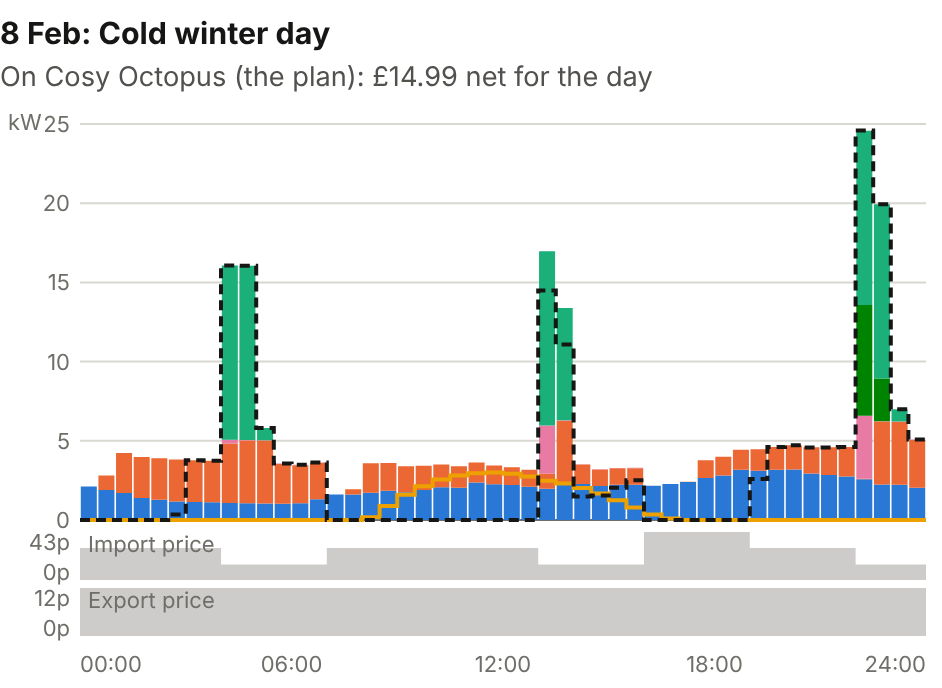
What I’d most like from testers here: compare the model with your own monitoring. Does the annual import, export and battery cycle count land close to your data? Does the heat pump’s winter daily shape look right? Does the battery behave sensibly at the Flux and Intelligent Flux peaks? Where it departs from your numbers is what helps most.
It’s estimates for a typical year, not advice, and it assumes today’s published rates held constant. It runs entirely in your browser, and in the alpha the only thing that leaves it is what you choose to send back: the report it saves and a few lines of feedback.
To try it, request an invitation here. There is a longer write-up with more screenshots on Substack. I’ll reply to questions here.